Lewis: July 1, 1806
Tuesday July 1st 1806. This morning early we sent out all our hunters. set
Sheilds at work to repair some of our guns which were out of order Capt.
Clark & my self consurted the following plan viz. from this place I
determined to go with a small party by the most direct rout to the falls
of the Missouri, there to leave Thompson McNeal and goodrich to prepare
carriages and geer for the purpose of transporting the canoes and baggage
over the portage, and myself and six volunteers to ascend Maria’s river
with a view to explore the country and ascertain whether any branch of
that river lies as far north as Latd. 50 and again return and join the
party who are to decend the Missouri, at the entrance of Maria’s river. I
now called for the volunteers to accompany me on this rout, many turned
out, from whom I scelected Drewyer the two Feildses, Werner, Frazier and
Sergt Gass accompanied me the other part of the men are to proceed with
Capt Clark to the head of Jefferson’s river where we deposited sundry
articles and left our canoes. from hence Sergt Ordway with a party of 9
men are to decend the river with the canoes; Capt C. with the remaining
ten including Charbono and York will proceed to the Yellowstone river at
it’s nearest approach to the three forks of the missouri, here he will
build a canoe and decend the Yellowstone river with Charbono the indian
woman, his servant York and five others to the missouri where should he
arrive first he will wait my arrival. Sergt Pryor with two other men are
to proceed with the horses by land to the Mandans and thence to the
British posts on the Assinniboin with a letter to Mr. Heney whom we wish
to engage to prevail on the Sioux Chefs to join us on the Missouri, and
accompany them with us to the seat of the general government. these
arrangements being made the party were informed of our design and prepared
themselves accordingly. our hunters killed 13 deer in the course of this
day of which 7 were fine bucks, deer are large and in fine order. the
indians inform us that there are a great number of white buffaloe or
mountain sheep of the snowey hights of the mountains West of this river;
they state that they inhabit the most rocky and inaccessible parts, and
run but badly, that they kill them with great ease with their arrows when
they can find them. the indian warrior who overtook us on the 26th Ult.
made me a present of an excellent horse which he said he gave for the good
council we had given himself and nation and also to assure us of his
attatchment to the white men and his desire to be at peace with the
Minnetares of Fort de Prarie. we had our venison fleeced and exposed in
the sun on pole to dry. the dove the black woodpecker, the lark
woodpecker, the logcock, the prarie lark, sandhill crain, prarie hen with
the short and pointed tail, the robin, a speceis of brown plover, a few
curloos, small black birds, ravens hawks and a variety of sparrows as well
as the bee martin and the several speceis of Corvus genus are found in
this vally.
Windsor birst his gun near the muzzle a few days since; this Sheilds cut
off and I then exchanged it with the Cheif for the one we had given him
for conducting us over the mountains. he was much pleased with the
exchange and shot his gun several times; he shoots very well for an
inexperienced person.
The little animal found in the plains of the Missouri which I have called
the barking squirrel weighs from 3 to 31/2 pounds. it’s form is that of
the squirrel. it’s colour is an uniform light brick red grey, the red
reather predominating. the under side of the neck and bely are lighter
coloured than the other parts of the body. the legs are short, and it is
wide across the breast and sholders in propotion to it’s size, appears
strongly formed in that part; the head is also bony muscular and stout,
reather more blontly terminated wider and flatter than the common
squirrel. the upper lip is split or divided to the nose. the ears are
short and lie close to the head, having the appearance of being cut off,
in this particular they resemble the guinea pig. the teeth are like those
of the squrrel rat &c. they have a false jaw or pocket between the
skin and the mustle of the jaw like that of the common ground squrrel but
not so large in proportion to their size. they have large and full
whiskers on each side of the nose, a few long hairs of the same kind on
each jaw and over the eyes. the eye is small and black. they have five
toes on each foot of which the two outer toes on each foot are much shoter
than those in the center particularly the two inner toes of the fore feet,
the toes of the fore feet are remarkably long and sharp and seem well
adapted to cratching or burrowing those of the hind feet are neither as
long or sharp as the former; the nails are black. the hair of this animal
is about as long and equally as course as that of the common grey squrrel
of our country, and the hair of the tail is not longer than that of the
body except immediately at the extremity where it is somewhat longer and
frequently of a dark brown colour. the part of generation in the female is
placed on the lower region of the belly between the hinder legs so far
forward that she must lie on her back to copolate. the whole length of
this animal is one foot five inches from the extremity of the nose to that
of the tail of which the tail occupyes 4 inches. it is nearly double the
size of the whistleing squirrel of the Columbia. it is much more quick
active and fleet than it’s form would indicate. these squirrels burrow in
the ground in the open plains usually at a considerable distance from the
water yet are never seen at any distance from their burrows. six or eight
usually reside in one burrow to which there is never more than one
entrance. these burrows are of great debth. I once dug and pursued a
burrow to the debth of ten feet and did not reach it’s greatest debth.
they generally associate in large societies placing their burrows near
each other and frequently occupy in this manner several hundred acres of
land. when at rest above ground their position is generally erect on their
hinder feet and rump; thus they will generally set and bark at you as you
approach them, their note being much that of the little toy dogs, their
yelps are in quick succession and at each they a motion to their tails
upwards. they feed on the grass and weeds within the limits of their
village which they never appear to exceed on any occasion. as they are
usually numerous they keep the grass and weeds within their district very
closely graized and as clean as if it had been swept. the earth which they
throw out of their burrows is usually formed into a conic mound around the
entrance. this little animal is frequently very fat and it’s flesh is not
unpleasant. as soon as the hard frosts commence it shuts up it’s burrow
and continues within untill spring. it will eat grain or meat.
Entities mentioned in this entry
Auto-extracted from the entry text. Hover any entity for context.
Terrain360 · the place today
Travelers' Rest near present-day Lolo, MT in 360°
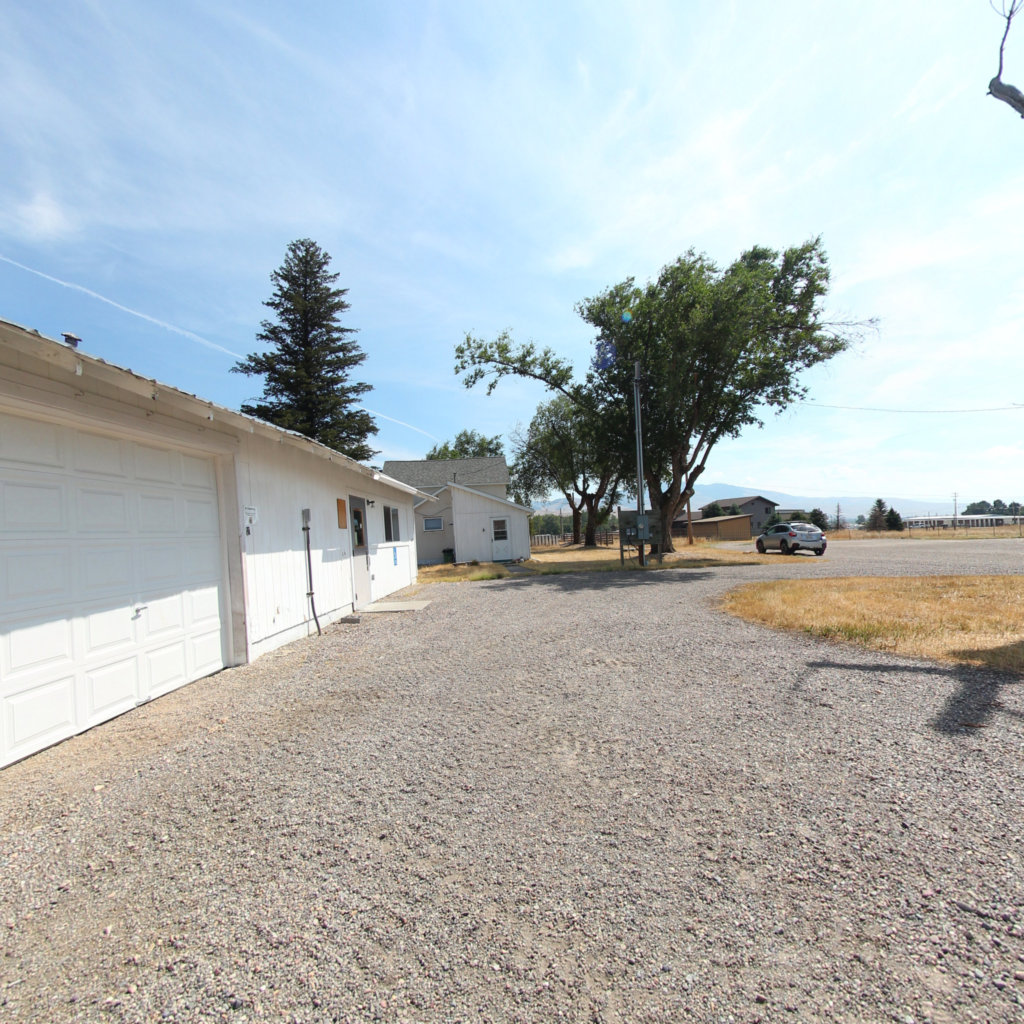
10 frames across 0.3 mi of the route around this location
Analyses
- Four Pens at Travelers’ Rest: Dividing the Corps for the Homeward Reconnaissance
- Silas Goodrich: The Expedition’s Fisherman
- York: The Enslaved Man Who Crossed a Continent
- Thomas Jefferson: The Distant Architect of the Voyage of Discovery
- Hugh McNeal: A Private’s Long March
- The Mandan Nation: Heart of the Upper Missouri
Artwork
Help improve this record
See something that needs correcting, or know a source we are missing? The archive gets better through its readers.


