
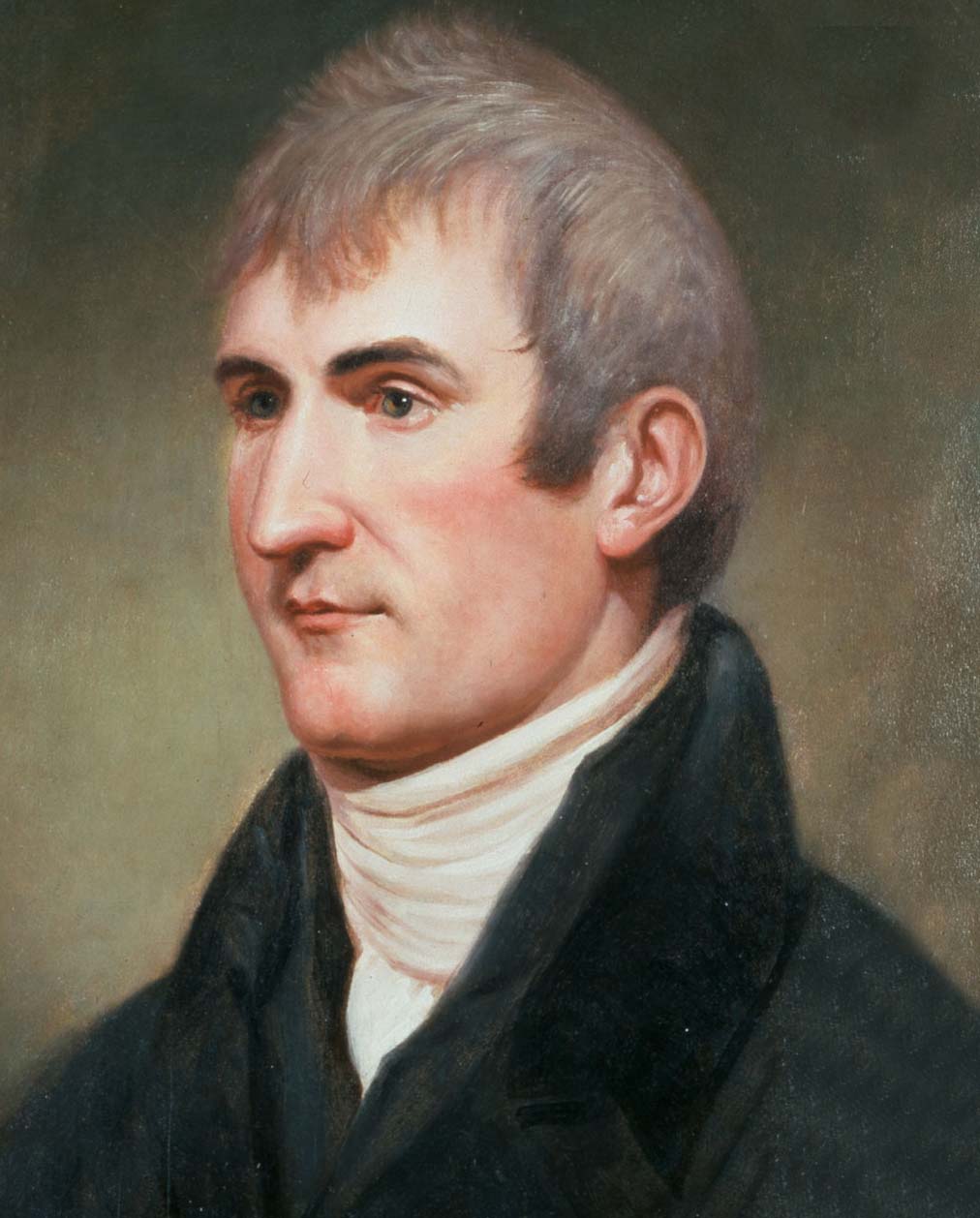


The entries of May 15, 1806, from Camp Chopunnish on the Kooskooskee (Clearwater) River offer an unusually clear demonstration of how the four principal journal-keepers of the Lewis and Clark expedition partitioned their attention. All four men witnessed the same morning — Reubin Fields’s pre-dawn sighting of a bear, the return of Labiche’s hunting party with carcasses killed the previous day, the comings and goings of Nez Perce visitors — yet each narrator transmuted the day into a distinctly different document.
Lewis the Naturalist, Clark the Borrower
The most consequential passage of the day is Meriwether Lewis’s extended meditation on bear taxonomy. Examining the female and two cubs Labiche had killed, Lewis presses toward a conclusion he had been circling for months:
These bear gave me a stronger evidence of the various coloured bear of this country being one speceis only, than any I have heretofore had. The female was black with a considerable proportion of white hairs intermixed and a white spot on the breast, one of the young bear was jut black and the other of a light redish brown or bey colour.
Lewis builds a careful comparative argument: the pelts are longer and finer than those of the common black bear, the talons are blunted from digging roots, and — crucially — bears of every color have been observed together, mating and bearing mixed-colored litters. He even anticipates the taxonomic absurdity of splitting them: “if we were to attempt to distinguish them by their collours and to denominate each colour a distinct speceis we should soon find at least twenty.”
William Clark’s entry for the same day reproduces Lewis’s observations almost verbatim in places — “These bear give me a Stronger evidence of the various Coloured bear of this Country being one Specie only, than any I have heretofore had” — confirming the well-documented pattern in which Clark copied Lewis’s natural-history passages into his own journal. But Clark does not stop there. Where Lewis trails off into pharmacology (attributing the men’s headaches and colic to an unaccustomed diet of roots), Clark turns outward, recording details Lewis omits entirely: a party of fourteen Nez Perce hunters passing camp at 1 P.M. “on their way to the leavel uplands to run and kill the deer with their horses and Bows and arrows,” some of them carrying “deers heads Cased for the purpose of decoying the deer.”
Ordway’s Fortifications, Gass’s Weapons
The two sergeants record a wholly different camp. John Ordway, characteristically attentive to logistics and defense, describes the party converting an abandoned Nez Perce house pit into a strongpoint:
we made a shelter to put our baggage in down in a large celler where had formerly been a wintering house & has been a large village at this place, we formed our Camp around this celler so as in case of an alarm we can jump in the celler and defend ourSelves.
Ordway alone notes the rendering of “5 gallons of bears oil” into a keg reserved for the coming mountain crossing — a quartermaster’s detail that captures the expedition’s forward planning. Clark corroborates the fortification in passing (“our little fortification also completely Secured with brush”) and adds the practical detail of a “bowry made to write under,” which Ordway also mentions as built specifically “for our officers.”
Patrick Gass, writing for an eventual reading public, uses the day as a hook for an ethnographic digression on Plateau weaponry. After noting that the surrounding plains resemble “a meadow before it is mowed,” he pivots to a Nez Perce visitor wearing the scalp of a Shoshone enemy decorated with “six thumbs and four fingers,” and from there to a generalized description of Indigenous arms from the Mandan villages westward:
The war-mallet is a club with a large head of wood or stone; those of stone are generally covered with leather, and fastened to the end of the club with thongs or straps of leather and the sinews of animals.
Gass’s published Journal regularly performs this kind of synthesizing move — collapsing a single day’s encounter into a paragraph of summary ethnography — a register entirely absent from the captains’ field notes.
What Each Narrator Misses
The cross-narrator comparison exposes characteristic blind spots. Lewis, absorbed in ursine taxonomy and the medical complaints of his men, says nothing of the deer-decoy hunting party that fascinates Clark. Clark, in turn, omits Ordway’s bear-oil keg and Gass’s macabre scalp. Gass alone names the host nation “Cho-no-nish” and frames the long war between the Nez Perce and the Shoshone as historical context, while Ordway alone treats the cellar-fortification as a tactical decision rather than mere shelter. Read together, the four entries reconstruct a day no single journal preserves intact — and demonstrate why the expedition’s documentary value depends on reading its narrators against one another.


