Lewis: May 15, 1806
Thursday May 15th 1806. This morning early Reubin Fields in surching for
his horse saw a large bear at no great distance from camp; several men
went in pursuit of the bear, they followed his trail a considerable
distance but could not come up with him. Labuish and Shannon set out with
a view to establish a hunting camp and continuing several days, two others
accompanyed them in order to bring in the three bear which Labuish had
killed. Drewyer and Cruzatte were sent up the river; Sheilds R. Feilds and
Willard hunted in the hills near the camp they returned in the evening
with a few pheasants only and reported that there was much late appearance
of bear, but beleived that they had gone off to a greater distance. at 11
A.M. the men returned with the bear which Labuich had killed. These bear
gave me a stronger evidence of the various coloured bear of this country
being one speceis only, than any I have heretofore had. The female was
black with a considerable proportion of white hairs intermixed and a white
spot on the breast, one of the young bear was jut black and the other of a
light redish brown or bey colour. the poil of these bear were infinitely
longer finer and thicker than the black bear their tallons also longer and
more blont as if woarn by diging roots. the white and redish brown or bey
coloured bear I saw together on the Missouri; the bey and grizly have been
seen and killed together here for these were the colours of those which
Collins killed yesterday. in short it is not common to find two bear here
of this speceis precisely of the same colour, and if we were to attempt to
distinguish them by their collours and to denominate each colour a
distinct speceis we should soon find at least twenty. some bear nearly
white have also been seen by our hunters at this place. the most striking
differences between this speceis of bear and the common black bear are
that the former are larger, have longer tallons and tusks, prey more on
other animals, do not lie so long nor so closely in winter quarters, and
will not climb a tree tho eversoheardly pressed. the variagated bear I
beleive to be the same here with those on the missouri but these are not
as ferocious as those perhaps from the circumstance of their being
compelled from the scarcity of game in this quarter to live more on roots
and of course not so much in the habit of seizing and devouring living
animals. the bear here are far from being as passive as the common black
bear they have attacked and faught our hunters already but not so fiercely
as those of the Missouri. there are also some of the common black bear in
this neighbourhood. Frazier, J. Fields and Wiser complain of violent pains
in their heads, and Howard and York are afflicted with the cholic. I
attribute these complaints to their diet of roots which they have not been
accustomed. Tunnachemootoolt and 12 of his young men left us this morning
on their return to their village. Hohastillpilp and three old men remained
untill 5 in the evening when they also departed. at 1 P.M. a party of 14
natives on horseback passed our camp on a hunting excurtion; they were
armed with bows and arrows and had decoys for the deer these are the skins
of the heads and upper portions of the necks of the deer extended in their
natural shape by means of a fraim of little sticks placed within. the
hunter when he sees a deer conceals himself and with his hand gives to the
decoy the action of a deer at feed; and thus induces the deer within
arrowshot; in this mode the indians hunt on foot in the woodlands where
they cannot pursue the deer with horses which is their favorite method
when the ground will permit.we had all of our horses driven
together today near our camp, which we have directed shall be done each
day in order to familiarize them to each other. several of the horses
which were gelded yesterday are much swolen particularly those cut by
Drewyer, the others bled most but appear much better today than the
others.
we had our baggage better secured under a good shelter formed of grass; we
also strengthened our little fortification with pine poles and brush, and
the party formed themselves very comfortable tents with willow poles and
grass in the form of the orning of a waggon, these were made perfectly
secure as well from the heat of the sun as from rain. we had a bower
constructed for ourselves under which we set by day and sleep under the
part of an old sail now our only tent as the leather lodge has become
rotten and unfit for use. about noon the sun shines with intense heat in
the bottoms of the river. the air on the tom of the river hills or high
plain forms a distinct climate, the air is much colder, and vegitation is
not as forward by at least 15 or perhaps 20 days. the rains which fall in
the river bottoms are snows on the plain. at the distance of fifteen miles
from the river and on the Eastern border of this plain the Rocky Mountains
commence and present us with winter it it’s utmost extreem. the snow is
yet many feet deep even near the base of these mountains; here we have
summer spring and winter within the short space of 15 or 20 miles.Hohastillpilp
and the three old men being unable to pass the river as the canoe had been
taken away, returned to our camp late in the evening and remained with us
all night.
Entities mentioned in this entry
Auto-extracted from the entry text. Hover any entity for context.
Terrain360 · the place today
Camp Chopunnish (Long Camp), waiting for snow to melt in 360°
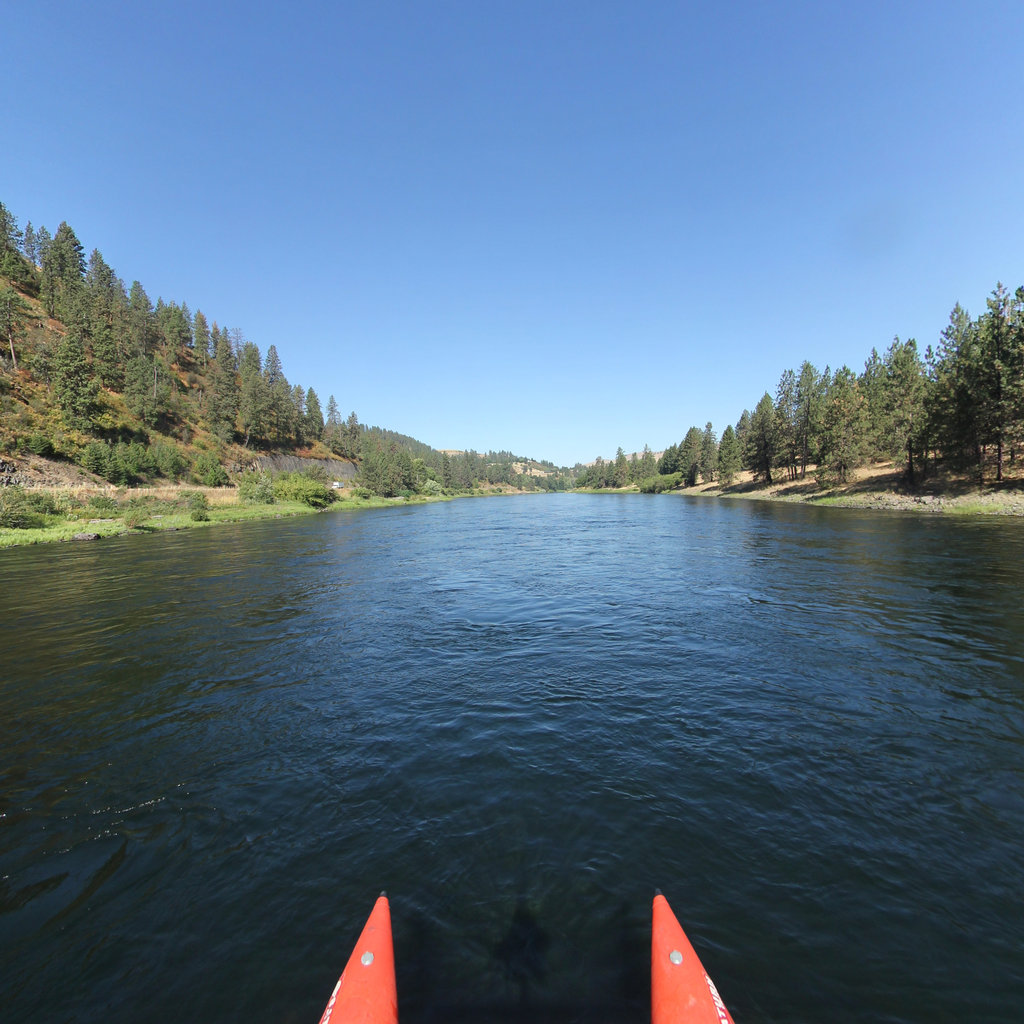
10 frames across 1.6 mi of the route around this location
Analyses
- Crossing the Koos-koos-ke: Bears, Horse Surgery, and a Six-Thumbed Trophy
- One Bear, Many Colors: Naturalist Inquiry and Camp Life at the Long Camp
- Pierre Cruzatte: Fiddler, Waterman, and the Man Who Shot Meriwether Lewis
- York: The Enslaved Man Who Crossed a Continent
- George Shannon: The Youngest Soldier of the Corps of Discovery
- The Captain’s Eye: Meriwether Lewis as Naturalist, Quartermaster, and Reluctant Diarist
Artwork
Help improve this record
See something that needs correcting, or know a source we are missing? The archive gets better through its readers.


