

A Short Day, Halted by Wind
The mechanical facts of May 12, 1805 are uncontested across all five journals: an early start in calm weather, pine-and-cedar hills on the north bank (the first timbered hills the party had seen in some time, as Gass emphasizes), a midday halt opposite a willow island, and a violent northwest wind that ended progress before the afternoon was out. Gass logs the distance at thirteen and a half miles; Ordway and Whitehouse both leave the mileage blank. Clark notes the wind shifted from east to northwest around half past one and “blew verry hard all the latter part of the day, which obliged us to Lay by.”
The Ordway-Whitehouse pairing is, as often, nearly verbatim. Both record that “Capt Clark killed a beaver in the River,” both note the hunter’s deer on the south-side bottom, both leave the same blank for mileage, and both close with “Squwls” or “Squawls of rain this evening.” Whitehouse’s entry is essentially a lightly recopied Ordway, confirming the documented dependency between the two enlisted journals.
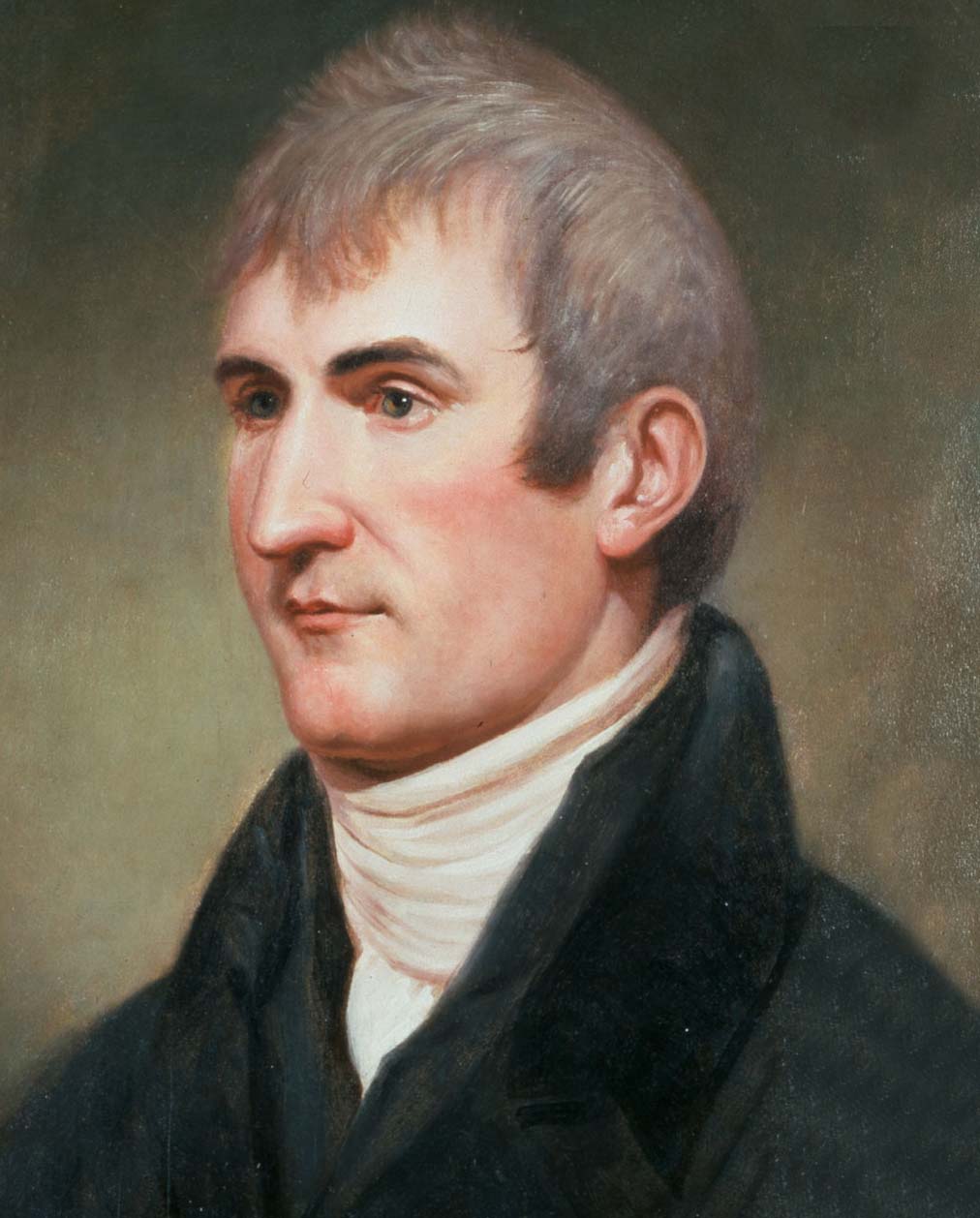
Lewis Alone with His Espontoon
Lewis’s entry dwarfs the others and turns the day into something none of the enlisted men hint at. He had walked on shore — Clark confirms this offhand (“Capt. Lewis walked on Shore this morning”) — and used the solitude for both exercise and natural history. The famous self-portrait arrives without fanfare:
thus equiped I feel myself more than an equal match for a brown bear provided I get him in open woods or near the water, but feel myself a little diffident with respect to an attack in the open plains, I have therefore come to a resolution to act on the defencive only, should I meet these gentlemen in the open country.
The grizzly encounters of the preceding weeks have visibly recalibrated his confidence. The phrase “these gentlemen” is wry, but the resolution to act “on the defencive only” is a genuine tactical retreat from the bravado of late April.
From there Lewis moves into a long botanical treatment of the choke cherry, dating its bloom to May 9, classifying it (“Pentandria Monogynia”), comparing it to the Morillar cherry, and cataloging Indigenous preparations — eaten fresh, pounded with the seed, boiled with roots or meat or “with the prarie beans and white-apple,” sun-dried on skins, formed into cakes, stored in parchment bags. None of the other four narrators mention choke cherry at all. Clark, writing the same hills, gives them one sentence: “the earth of a lightish brown and but indifferent.”
What Each Narrator Preserved
Gass alone supplies the day’s mileage and frames the pine-and-cedar hills as a landscape event — “the first timber of any kind we have seen on the hills for a long time.” Lewis, walking the ridges, corroborates the observation in finer grain: pine on the north summits, cedar on the south faces and ravines, choke cherry in the gully heads. Ordway and Whitehouse preserve the small-river crossing on the north side that Lewis and Clark omit, and the evening hunt that brought in elk and deer. Clark uniquely times the wind shift and notes that the rain, when it came near sunset, fell “only a fiew drops at a time for about half the night” while the wind “Continued violent all night” — a meteorological detail Gass compresses to “some rain fell.”
The cross-narrator picture is therefore stratified by interest. The enlisted journals deliver logistics: hunters, kills, the island, the halt, the squalls. Clark delivers the river and the weather. Lewis, given a Sunday’s walk and a forced afternoon in camp, delivers the day’s intellectual content — a grizzly-bear policy and a monograph on Prunus virginiana. Remove any one narrator and the day shrinks; remove Lewis and it becomes indistinguishable from a dozen other wind-bound afternoons in the Breaks.


