Lewis and Clark Memorial Column
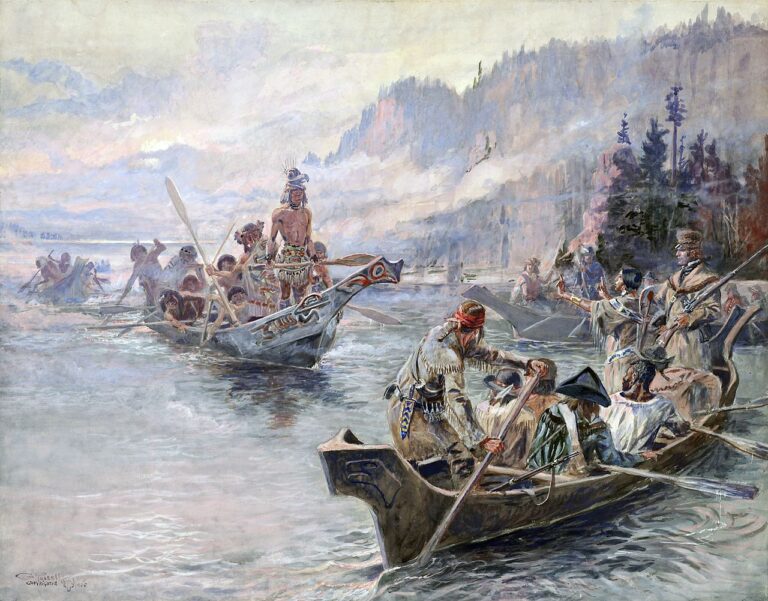
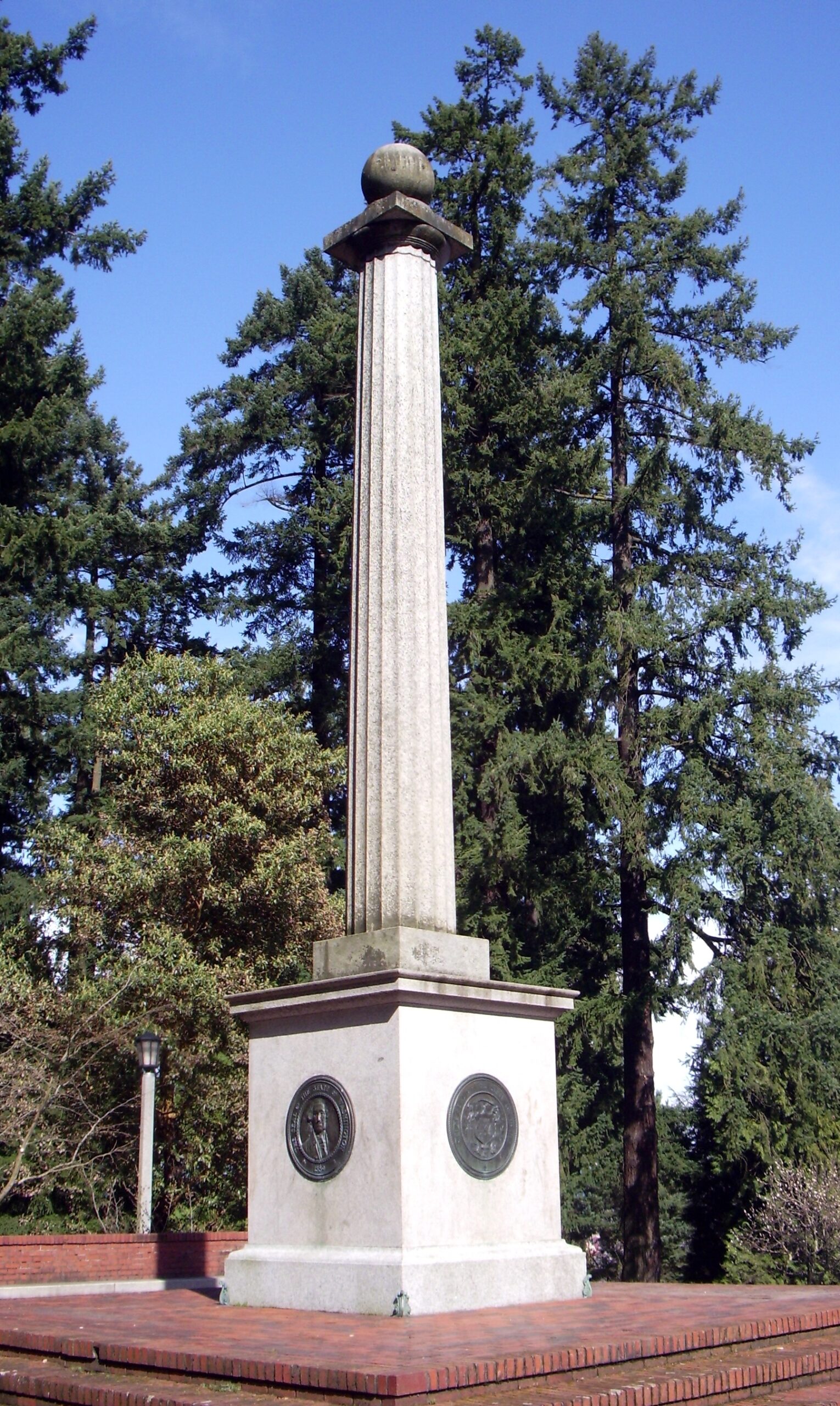
The Lewis and Clark Memorial Column is a freestanding commemorative monument rising approximately 34.5 feet from a base cut from Snake River granite. The shaft is bronze and tapers slightly toward its top, where it terminates in a sculptural finial. Relief panels and inscriptions along the column reference the Corps of Discovery, its leaders, and members of the expedition party. Unlike narrative paintings of the expedition, the column treats Lewis and Clark in the abstract, commemorative mode favored for civic monuments of the period — a vertical marker meant to be read at a distance and circumnavigated on foot rather than studied as a single image.
The column was erected in 1908 in Portland, Oregon, four years after the Lewis and Clark Centennial Exposition of 1905, which had drawn more than 1.5 million visitors to the city and reshaped Portland’s civic identity around its connection to the expedition’s Pacific terminus. The expedition had wintered at Fort Clatsop, roughly 95 miles to the northwest, from December 1805 to March 1806, and the lower Columbia region became central to Oregon’s claim on the centennial commemorations. The 1908 column belongs to a wave of permanent memorials commissioned in the wake of the Exposition, as fairgrounds were dismantled and boosters sought lasting public markers to replace the temporary plaster monuments of the fair.
Otto Schumann was a Portland-based stonecutter and monument maker whose firm produced architectural and cemetery work in the Pacific Northwest in the late nineteenth and early twentieth centuries; the Lewis and Clark column is among the most visible public commissions associated with his shop. The work survives in Portland and is typically discussed alongside the city’s other expedition-era memorials, including the Sacajawea statue by Alice Cooper installed in Washington Park during the 1905 Exposition. Within the broader Lewis and Clark memory tradition, the column is significant less as an individual artistic statement than as material evidence of how Portland institutionalized the centennial: converting a temporary world’s fair narrative into permanent civic sculpture during the years 1905–1910.