The Silk Robe
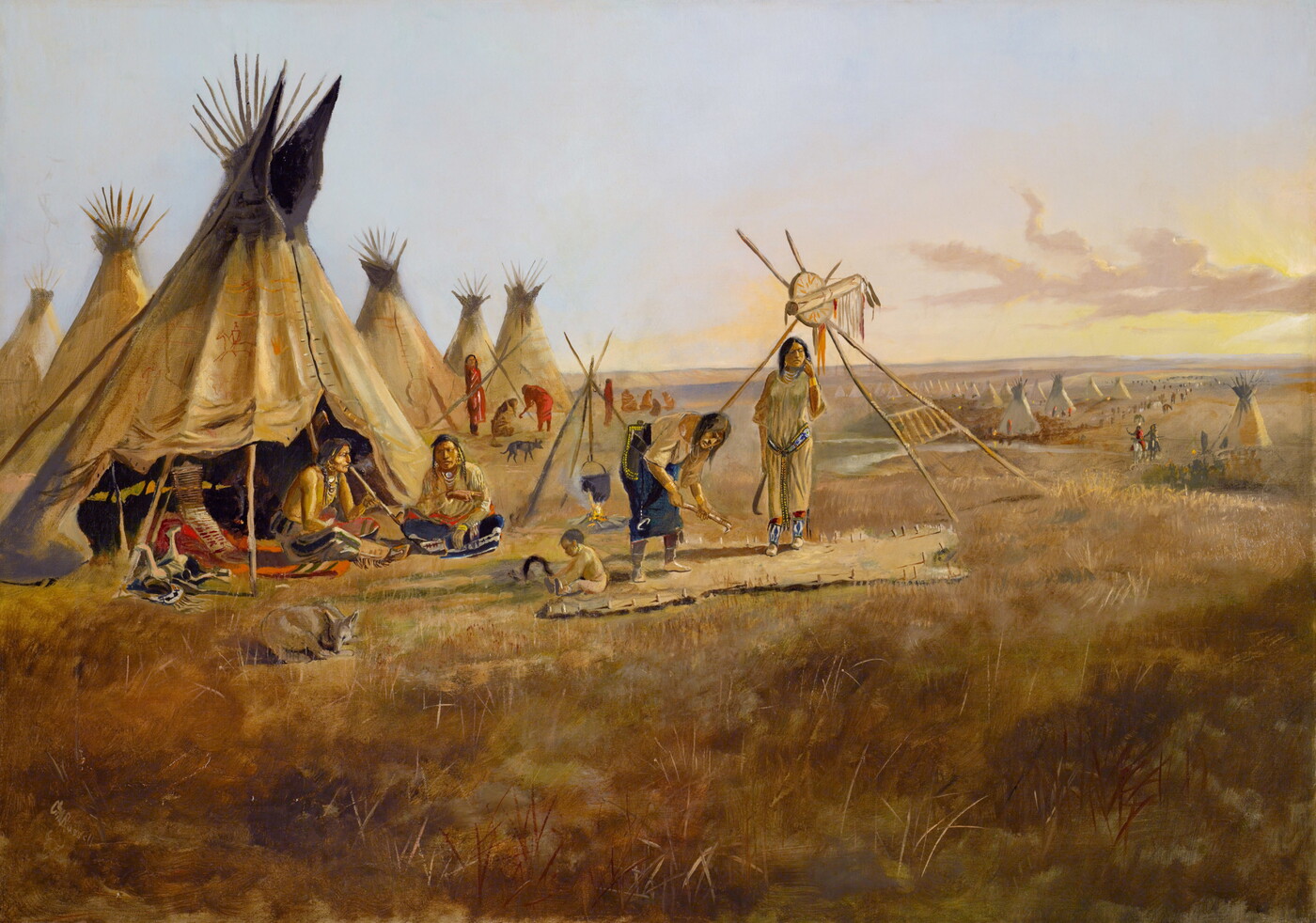
Charles M. Russell’s The Silk Robe shows a Plains Indian encampment scene centered on the labor-intensive process of preparing a buffalo hide. A woman kneels on the stretched skin, scraping its surface with a hafted tool to soften and finish the leather—the painstaking work that transformed a raw hide into the supple, fur-side robe prized in the inter-tribal and Euro-American trade. Around her, the camp continues its routines: figures in conversation, a mounted man, dogs, and the conical lodges of a summer camp arranged across an open prairie. Russell uses a warm palette of tans, ochres, and dusty greens, with the horizon kept low to emphasize the openness of the northern plains. The composition is built around the diagonal of the staked hide, which pulls the viewer’s eye into the activity of the camp.
The painting dates to 1890, early in Russell’s professional career. He had come to Montana as a teenager in 1880, worked as a wrangler and night herder through the 1880s, and lived for several months during the winter of 1888–1889 with Blood (Kainai) people in Alberta. That experience sharpened his attention to the material culture and daily work of Plains tribes and shaped a series of camp-life pictures he produced around 1890, of which The Silk Robe is among the most carefully observed. By focusing on women’s labor in hide preparation rather than on combat or the hunt, the painting documents an aspect of Plains economy then being eroded by the collapse of the buffalo herds and the confinement of tribes to reservations.
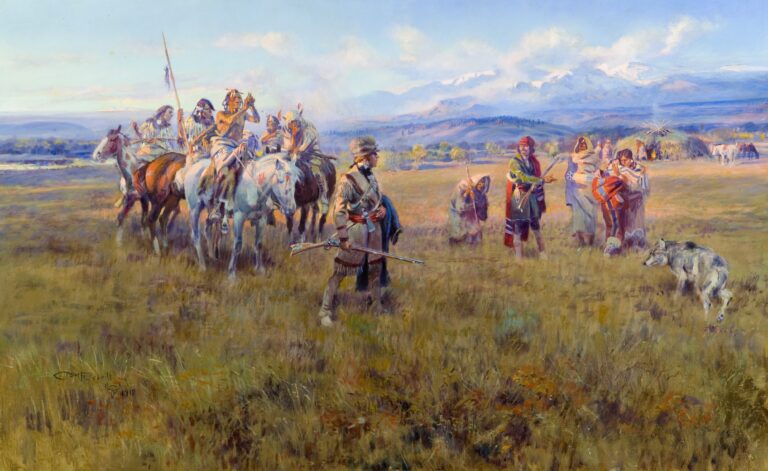
Russell (1864–1926) would go on to become the foremost painter of the northern plains and Rocky Mountain frontier, eventually producing the large mural Lewis and Clark Meeting the Indians at Ross’ Hole for the Montana State Capitol in 1912. The Silk Robe belongs to the Amon G. Carter Collection at the Amon Carter Museum of American Art in Fort Worth, Texas, an institution built around Carter’s holdings of Russell and Frederic Remington and central to the scholarly study of both artists.