Clark: February 10, 1806
Hunters Collins and Wiser came back empty-handed, while Willard returned from the Salt Camp after badly cutting his knee with his tomahawk; he had killed four elk two days earlier but could no longer work. Willard reported that Bratten was unwell and Gibson was so sick he could neither sit up nor walk, requesting to be brought to Fort Clatsop. Colter also returned. The party continued drying meat. Clark devoted much of the entry to describing two unfamiliar Columbia River trees resembling white ash and white maple.
Monday February 10th 1806 Collins and Wiser returned without killing any
Elk. Willard arrived late this evening from the Salt Camp, he had cut his
knee very badly with his tomahawk. he had killed four Elk not far from the
Salt Camp, the day before yesterday, which he had butchered and took a
part of the meat to the Camp, but haveing Cut his Knee was unable to be
longer Servisable at the works & had returned. he informed us that
Bratten was very unwell, and that Gibson was So Sick that he could not Set
up or walk alone, and had desired him to ask us to have him brought to the
Fort. Colter also returnd. this evening. continue the opperation of dryin
our meat.
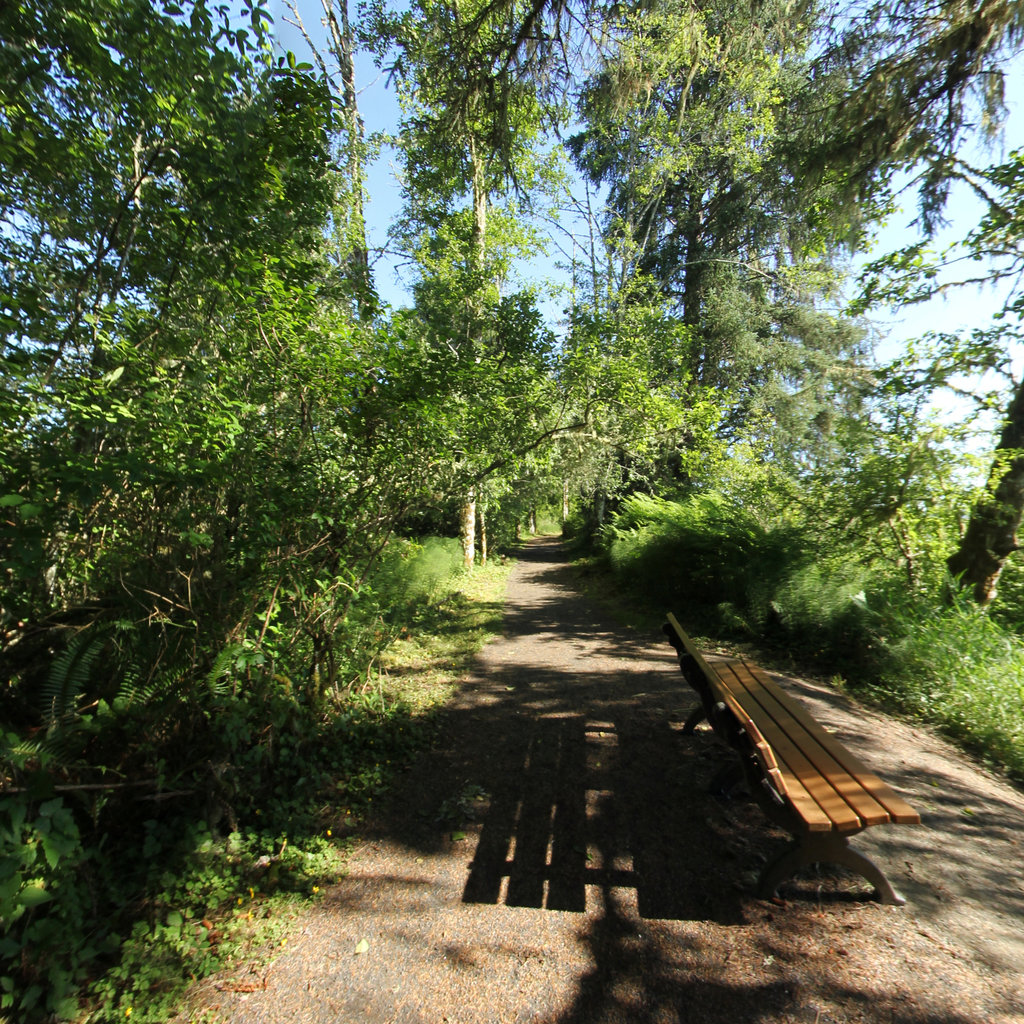
There is a tree common to the Columbia river below the enterance of
Cataract River which in its appearance when divested of its folage, much
resembles the white ash; the appearance of the wood and bark is also that
of the ash. it’s Stem is Simple branching and diffuse. the lief is
petiolate, plane, scattered palmate lobate, divided by four deep Sinusus;
the lobes are repand or terminate in from 3 to 5 accute angular points,
while their margins are indented with irregular and Somewhat Circular
incissures. the peteole is Celindric Smoth and 7 inches long. the leaf 8
inches in length and 12 in bredth. this tree is frequently 2 & 3 feet
in diamieter, and rises to 50 or 60 feet high-the froot is a winged Seed
Somewhat like the maple. In the Same part of the countrey there is also
another groth, which resembles the white maple in its appearance, only
that it is by no means so large, seldom being more than from 6 to 9 inches
in diamieter, and from 20 to 30 feet high; they frequently grow in
clusters as if from the same bed or root, Spreading and leaning outwards.
the twigs are long and Slender. the Stems simple branching. the bark Smoth
and in Colour resembles that of the white maple. the leaf is patiolate,
plain, scattered nearly circular, with it’s margin cut with accute anglar
incissures of an inch in length and from 6 to 8 in number, the accute
angular points formed, by which incissures, are crenate, or cut with small
angular incissures. or in this form. it is 3 inches in length, and 4 in
width. the petiole is cilendric smoth and 11/4 inches long. the froot or
flour I have not as yet found out &c.
Read this entry in modern English AI-translated
Monday February 10th 1806. Collins and Wiser returned without killing any elk. Willard arrived late this evening from the Salt Camp; he had cut his knee very badly with his tomahawk. He had killed four elk not far from the Salt Camp the day before yesterday, which he had butchered, and he took part of the meat to the camp, but having cut his knee, he was unable to be any longer useful at the works and had returned. He informed us that Bratten was very unwell, and that Gibson was so sick that he could not sit up or walk alone, and had asked him to request that we have him brought to the Fort. Colter also returned this evening. We continue the operation of drying our meat.
There is a tree common to the Columbia River below the entrance of Cataract River which, in its appearance when stripped of its foliage, much resembles the white ash; the appearance of the wood and bark is also that of the ash. Its stem is simple, branching, and spreading. The leaf is petiolate, flat, scattered, palmate, and lobed, divided by four deep sinuses; the lobes are wavy or terminate in from 3 to 5 acute angular points, while their margins are indented with irregular and somewhat circular incisures. The petiole is cylindrical, smooth, and 7 inches long. The leaf is 8 inches in length and 12 in breadth. This tree is frequently 2 and 3 feet in diameter, and rises to 50 or 60 feet high. The fruit is a winged seed somewhat like the maple. In the same part of the country there is also another growth, which resembles the white maple in its appearance, only that it is by no means so large, seldom being more than from 6 to 9 inches in diameter, and from 20 to 30 feet high. They frequently grow in clusters as if from the same bed or root, spreading and leaning outwards. The twigs are long and slender. The stems are simple and branching. The bark is smooth and in color resembles that of the white maple. The leaf is petiolate, flat, scattered, nearly circular, with its margin cut with acute angular incisures of an inch in length and from 6 to 8 in number; the acute angular points formed by these incisures are crenate, or cut with small angular incisures, or in this form. It is 3 inches in length and 4 in width. The petiole is cylindrical, smooth, and 1 1/4 inches long. The fruit or flower I have not as yet found out, etc.
This modernization is AI-generated for accessibility. The original above is the authoritative version.
Entities mentioned in this entry
Auto-extracted from the entry text. Hover any entity for context.