Clark: July 5, 1804
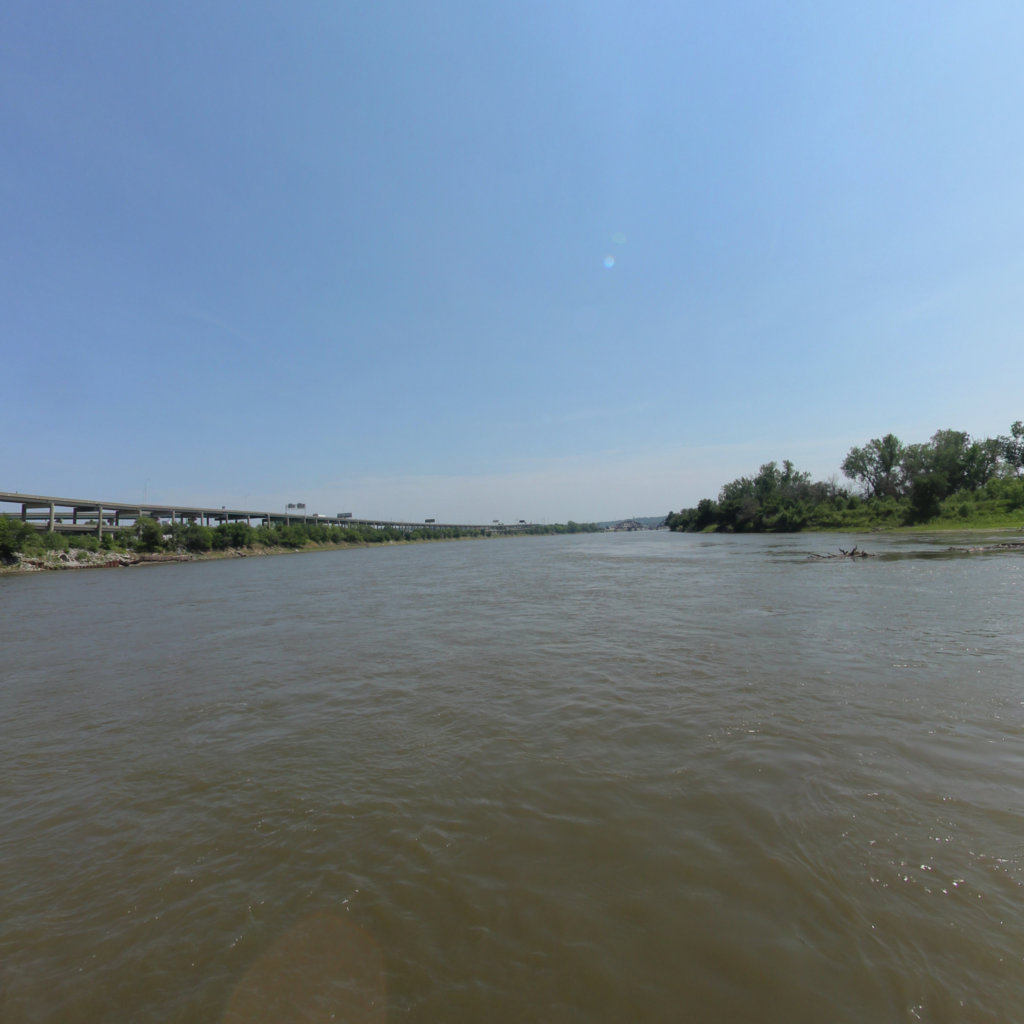
The expedition departed early, swimming a horse across the river and passing the site of an old Kansas village. Clark speculated that warfare had pushed the tribe further onto the plains, and noted historical references to French officer M. de Bourgmont visiting the village in 1724. The boat ran aground three times on sandbars and driftwood without damage. They stopped for dinner at a beaver house, where Lewis's dog Seaman drove the beavers out. They camped on the left bank, noting abundant grapes, berries, roses, and elk sign, but fewer deer.
July the 5th 1804 Set out verry early this morning, Swam the horse across
the river, proceeded on for two miles under the bank where the old Kansas
town formerly stood The Cause of those people moveing from this place I
cannot learn, but naterally conclude that War has reduced their nation
& compelled them to retire further into the Plains with a view of
defending themselves & opposeing their enemey (more effectuall) on
hors back (I neglected to mention yesterday that the Lake on the S. S. was
large Say 3/4 me. wide & 7 or 8 long one creek & Several brooks
running into it from the hills, it contains Great quantities of Sun fish
& Gosling’s from which we gave it the name,) passed Some verry bad
Sand bars Situated parrelel to each other, (1) the Boat turned three times
once on the ____ of a Drift wood. She recved no proceiviable damage, we
came to for Dinner at a Beever house, Cap Lewis’s Dog Seamon went in &
drove them out. the high Lands on the L. S. is open, a few trees
Scattering (2) passed a Small Creek on the L. S. in the 1s bend to the
left I call yellow oaker creek from a bank of that Mineral just above. we
camped on the L. S. under a high bank Latd. 39° 25′ 41″ North
on the banks of this river I observe great quants of Grapes, berries &
roses Deer is not So plenty in this three days past as they were below
that. Elks are plenty about those Praries. Some Buffalow Sign.
—
July 5th Thursday 1804 Set out verry early, proceeded on near the bank
where the old village Stood for two miles, (Swam the hors found a few days
ago) passed Some bad Sand bars, The Origan of this old village is
uncertain M. de Bourgmont a French officer who Comdd. a fort near the Town
of the Missouris in about the year 1724 and in July of the Same year he
visited this Village at that time the nation was noumerous & well
desposed towards the french Mr. Du Pratz must have been badly informed as
to the Cane opposd this place we have not Seen one Stalk of reed or cane
on the Missouries, he States that the “Indians that accompanied M De
Bourgmont Crossed to the Canzes Village on floats of Cane”
Those people must have been verry noumerous at that time as Mr. De B. was
accompanied by 300 Warriers, 500 young people & 300 Dogs of burthen
out of this Village
The Cause of Those Indians moveing over to the Kanzis river I have never
lerntwe passed Some bad Sand bars, Situated parrelel to each other
(1) The Boat turned twice on the quick Sand & once on a raft of Drift,
no procievable damage Prarie Contine on the high land on the L. S. passd a
Small Creek (2) on L. S. in the first bend to the L S. I call Yellow-Oaker
Creek from a quantity of that Mineral in a bank a little above
The river Continue to fall a littleI observe great quantities of
Summer & fall Grapes, Berries & Wild roases on the banksDeer
is not so plenty as usual, great Deel of Elk Sign. (Wind from S E)
Read this entry in modern English AI-translated
July 5th, 1804. Set out very early this morning. Swam the horse across the river, then proceeded on for two miles under the bank where the old Kansas town formerly stood. I cannot learn the cause of those people moving from this place, but I naturally conclude that war has reduced their nation and compelled them to retire further into the plains, with a view of defending themselves and opposing their enemy more effectively on horseback. (I neglected to mention yesterday that the lake on the south side was large—say 3/4 of a mile wide and 7 or 8 long—with one creek and several brooks running into it from the hills. It contains great quantities of sunfish and goslings, from which we gave it the name.)
Passed some very bad sandbars situated parallel to each other (1). The boat turned three times, once on the ____ of a piece of driftwood. She received no perceivable damage. We came to for dinner at a beaver house. Capt Lewis's (Capt. Lewis's) dog Seaman went in and drove them out. The highlands on the left side are open, with a few scattered trees (2). Passed a small creek on the left side in the first bend to the left, which I call Yellow Oaker Creek from a bank of that mineral just above. We camped on the left side under a high bank. Latitude 39° 25' 41" North.
On the banks of this river I observe great quantities of grapes, berries, and roses. Deer have not been so plentiful in these last three days as they were below. Elk are plentiful about those prairies. Some buffalo sign.
---
July 5th, Thursday, 1804. Set out very early. Proceeded on near the bank where the old village stood for two miles (swam the horse we found a few days ago). Passed some bad sandbars. The origin of this old village is uncertain. M. de Bourgmont, a French officer who commanded a fort near the town of the Missouris in about the year 1724, visited this village in July of the same year. At that time the nation was numerous and well disposed towards the French. Mr. Du Pratz must have been badly informed as to the cane opposite this place; we have not seen one stalk of reed or cane on the Missouri. He states that the "Indians that accompanied M. de Bourgmont crossed to the Kansas village on floats of cane."
Those people must have been very numerous at that time, as Mr. de B. was accompanied by 300 warriors, 500 young people, and 300 dogs of burden out of this village.
I have never learned the cause of those Indians moving over to the Kansas river. We passed some bad sandbars situated parallel to each other (1). The boat turned twice on the quicksand and once on a raft of drift, with no perceivable damage. Prairie continues on the highland on the left side. Passed a small creek (2) on the left side in the first bend to the left, which I call Yellow-Oaker Creek from a quantity of that mineral in a bank a little above.
The river continues to fall a little. I observe great quantities of summer and fall grapes, berries, and wild roses on the banks. Deer are not so plentiful as usual; a great deal of elk sign. (Wind from southeast.)
This modernization is AI-generated for accessibility. The original above is the authoritative version.
Entities mentioned in this entry
Auto-extracted from the entry text. Hover any entity for context.