Clark: May 25, 1806
Sunday 25th May 1806 rained moderately the greater part of last night and
this morning untill 6 A.M. The child is not So well to day as yesterday. I
repeeted the Creem of tarter and the onion poltice. I caused a Swet to be
prepared for the Indn. in the Same hole which bratten had been Sweeten in
two days past Drewyer Labiech and Peter crusatt Set out hunting towards
the quarmash grounds if they can cross the Creek which is between this and
that place, which has been the bearrer as yet to our hunters. Jos. & R
Fields crossed the river to hunt on the opposit side. Goodrich went to the
2d village to purchase roots a fiew of which he precured. he informed us
that only 8 persons remained in the Village. the men were either hunting
on Lewis’s river fishing, & the women out digging roots. he saw
Several fresh Salmon which the nativs informed him Came from Lewis’s river
and were fat and fine. one of our men purchased a Bear Skin of the nativs
which was nearly of a Cream Coloured white. this Skin which was the Skin
of an animal of the middle Size of bears together with the defferent Sizes
colours &c. of those which have been killed by our hunters give me a
Stronger evidence of the various Coloured bear of this country being one
Species only, than any I have heretofore had. the poil of these bear were
infinately longer finer & thicker than the black bear their tallons
also longer & more blunt as worn by digging roots. the white redish
brown and bey Coloured bear I saw together on the Missouri; the bey &
Grizly have been Seen and killed together here. for these were the Colours
of those which Collins killed on the 14th inst. in short it is not common
to find two bear here of this Species presisely of the same colour, and if
we were to attempt to distinguish them by their colours and to denomonate
each colour a distinct Species we Should Soon find at least twenty. the
most Strikeing difference between this Species of bear and the Common
black bear are that the former are large and have longer tallens, hair,
and tushes, prey more on other animals, do not lie so long or so closely
in winter quarters, and will not Climb a tree, tho ever so hardly pursued.
the varigated bear I believe to be the Same here with those of the
Missouri but these are not so ferocious as those on the Missouri perhaps
from the Circumstance of their being compeled from the scercity of game in
this quarter to live more on roots and of course not so much in the habit
of Seizing and debowering liveing animals. the bear here is far from being
as passive as the common black bear, they have atacked and fought our
hunters already but not so feircely as those of the Missouri. There are
also some of the Common black bear in this neghbourhood tho no So Common
as the other Species.
we attempted to swet the sick indian but could not Suckceed. he was not
able either to Set up or be Supported in the place prepared for him. I
therefore deturmined to inform the Nativs that nothing but Sefere Swetts
would restore this disabled man, and even that doubtfull in his present
Situation. in the evening Shields & gibson returned haveing killed a
Sandhill Crane only. they Saw a female bear, & 2 Cubs & Several
deer. they Shot the bear and a deer both of which made their escape.
Gibson told me that the Cubs were of different Colours one jut black and
the other of a whiteish Colour-. 4 indians Continue with us, one return to
their village to daey
Entities mentioned in this entry
Auto-extracted from the entry text. Hover any entity for context.
Terrain360 · the place today
Camp Chopunnish (Long Camp), waiting for snow to melt in 360°
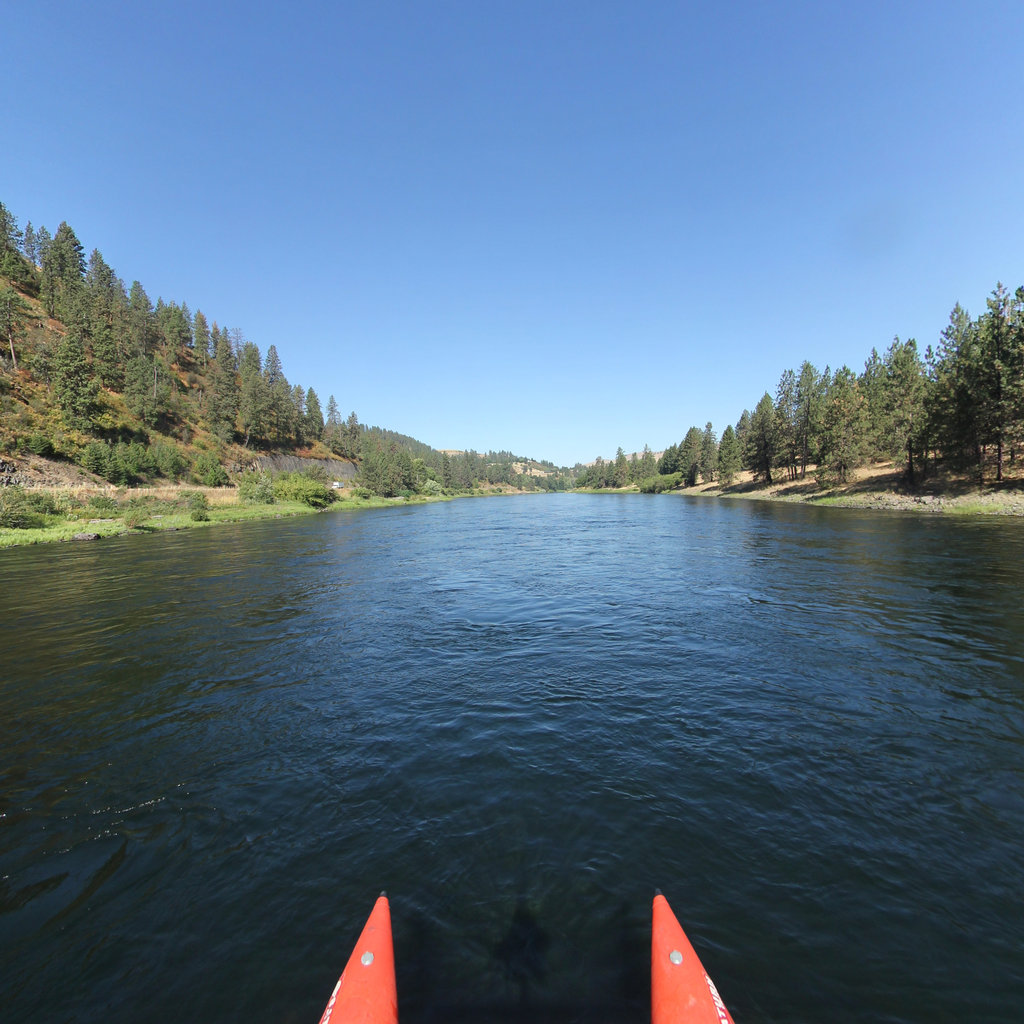
10 frames across 1.6 mi of the route around this location
Analyses
- A Sweat That Failed and a Bear of Many Colors
- Silas Goodrich: The Expedition’s Fisherman
- Pierre Cruzatte: Fiddler, Waterman, and the Man Who Shot Meriwether Lewis
- François Labiche: Hunter, Waterman, and Interpreter of the Corps of Discovery
- William Bratton: Hunter, Saltmaker, and Patient of the Corps of Discovery
- Jean Baptiste Charbonneau: The Infant Traveler of the Corps of Discovery
Artwork
Help improve this record
See something that needs correcting, or know a source we are missing? The archive gets better through its readers.


