Clark: November 2, 1805
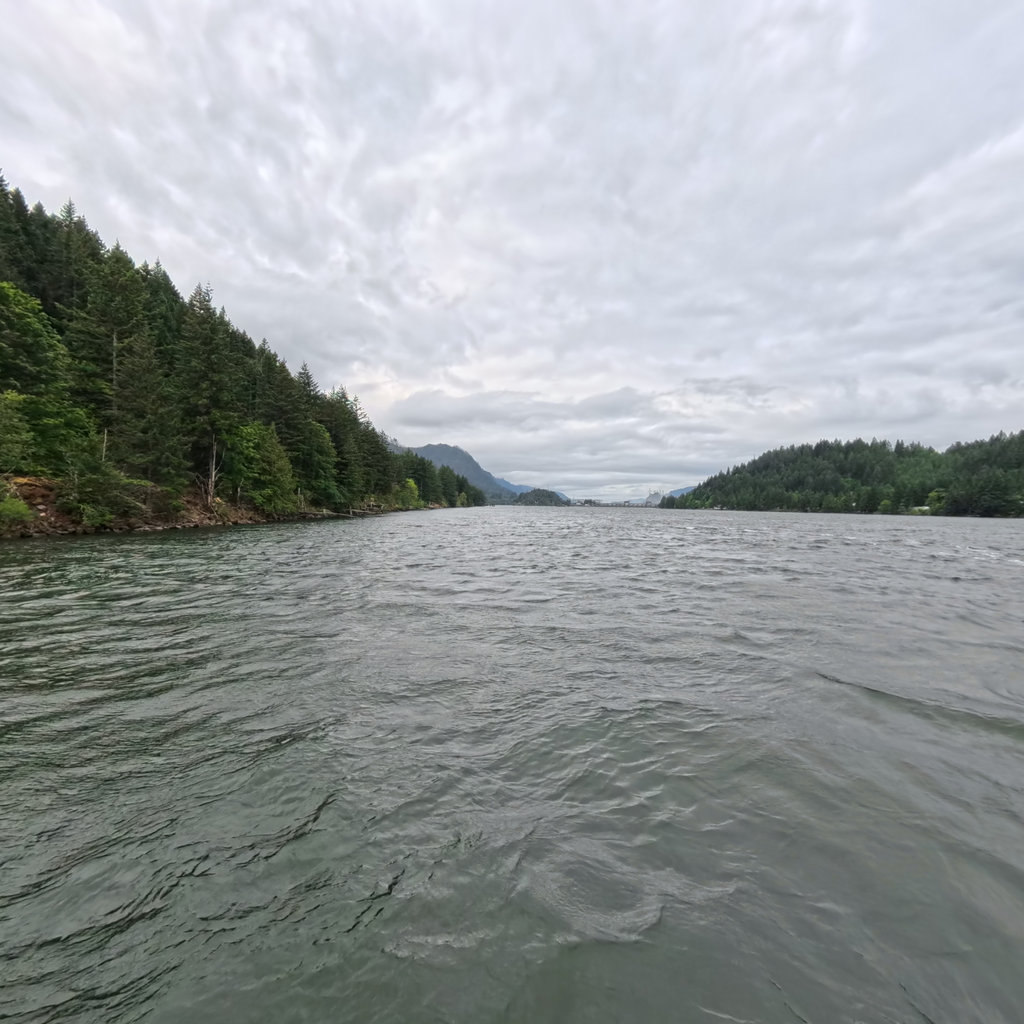
The expedition portaged baggage about 1.5 miles around a dangerous rapid below the Great Shute, sending non-swimmers overland while running the canoes through with only minor damage. Seven Native women crossed the portage carrying dried fish and bear grass, and four men came down by canoe. After a meridian altitude reading and breakfast, the party pushed on past more rapids, islands, and a nine-house village. Hunters Labiche, Joseph Fields, and Collins killed 18 geese and brant. They noted a 9-inch tide and camped under a high rock after traveling 29 miles.
Novr. 2d Saturday 1805 Meridian altitude 59° 45′ 45″ made a portage of
about 11/2 miles with half of the Baggage, and run the rapid with the
Canoes without much damage, one Struck a rock & Split a little, and 3
others took in Some water 7 Squars Came over the portage loaded with Dried
fish & Beargrass, Soon after 4 men Came down in a Canoe after takeing
brackfast, & after taking a meridian altitude we Set out Passed 2 bad
rapids one at 2 & the other at 4 mile below the Isd on Lard. and upper
end of Strawberry Island on the Stard. Side from the Creek end of last
Course
We Labiech killed 14 Geese & a Brant, Collins one Jos. Fields & R
3 those gees are much Smaller than Common, and have white under their
rumps & around the tale, The tide rises here a fiew 9 Inches, I cannot
assertain the prosise hite it rises at the last rapid or at this placeof
Camp.
The Indians we left at the portage passed us this evening one other Canoe
Come up
—
November 2nd Saturday 1805 Examined the rapid below us more pertcelarly
the danger appearing too great to Hazzard our Canoes loaded, dispatched
all the men who could not Swim with loads to the end of the portage below,
I also walked to the end of the portage with the carriers where I delayed
untill everry articles was brought over and canoes arrived Safe. here we
brackfast and took a Meridn. altitude 59°45’45” about the time we were
Setting out 7 Squars came over loaded with Dried fish, and bear grass
neetly bundled up, Soon after 4 Indian men came down over the rapid in a
large canoe. passed a rapid at 2 miles & 1 at 4 miles opposit the
lower point of a high Island on the Lard Side, and a little below 4 Houses
on the Stard. Bank, a Small Creek on the Lard Side opposit Straw berry
Island, which heads below the last rapid, opposit the lower point of this
Island passed three Islands covered with tall timber opposit the Beatin
rock Those Islands are nearest the Starboard Side, imediately below on the
Stard. Side passed a village of nine houses, which is Situated between 2
Small Creeks, and are of the Same construction of those above; here the
river widens to near a mile, and the bottoms are more extensive and
thickly timbered, as also the high mountains on each Side, with Pine,
Spruce pine, Cotton wood, a Species of ash, and alder. at 17 miles passed
a rock near the middle of the river, about 100 feet high and 80 feet
Diamuter, proceed on down a Smoth gentle Stream of about 2 miles wide, in
which the tide has its effect as high as the Beaten rock or the Last
rapids at Strawberry Island,Saw great numbers of waterfowl of
Different kinds, Such as Swan, Geese, white & grey brants, ducks of
various kinds, Guls, & Pleaver. Labeach killed 14 brantjoseph Fields 3
& Collins one. we encamped under a high projecting rock on the Lard.
Side, here the mountains leave the river on each Side, which from the
great Shute to this place is high and rugid; thickly Covered with timber
principalley of the Pine Species. The bottoms below appear extensive and
thickly Covered with wood. river here about 21/2 miles wide. Seven Indians
in a Canoe on their way down to trade with the nativs below, encamp with
us, those we left at the portage passed us this evening and proceeded on
down The ebb tide rose here about 9 Inches, the flood tide must rise here
much higherwe made 29 miles to day from the Great Shute-
Read this entry in modern English AI-translated
November 2nd, Saturday 1805. Meridian altitude 59° 45' 45". Made a portage of about 1½ miles with half of the baggage, and ran the rapid with the canoes without much damage. One struck a rock and split a little, and three others took in some water. Seven squaws came over the portage loaded with dried fish and beargrass. Soon after, four men came down in a canoe. After taking breakfast, and after taking a meridian altitude, we set out. Passed two bad rapids, one at 2 miles and the other at 4 miles below the island on the larboard (port) side, and the upper end of Strawberry Island on the starboard side from the creek end of the last course.
Labiech killed 14 geese and a brant; Collins one; Joseph Fields 3. These geese are much smaller than common, and have white under their rumps and around the tail. The tide rises here a few inches—9 inches. I cannot ascertain the precise height it rises at the last rapid or at this place of camp.
The Indians we left at the portage passed us this evening. One other canoe came up.
---
November 2nd, Saturday 1805. Examined the rapid below us more particularly. The danger appearing too great to hazard our canoes loaded, I dispatched all the men who could not swim with loads to the end of the portage below. I also walked to the end of the portage with the carriers, where I delayed until every article was brought over and the canoes arrived safe. Here we breakfasted and took a meridian altitude of 59° 45' 45". About the time we were setting out, seven squaws came over loaded with dried fish and beargrass neatly bundled up. Soon after, four Indian men came down over the rapid in a large canoe. Passed a rapid at 2 miles and one at 4 miles opposite the lower point of a high island on the larboard side, and a little below, four houses on the starboard bank, a small creek on the larboard side opposite Strawberry Island, which heads below the last rapid. Opposite the lower point of this island, passed three islands covered with tall timber opposite the Beaten Rock. These islands are nearest the starboard side. Immediately below on the starboard side, passed a village of nine houses, which is situated between two small creeks, and are of the same construction as those above. Here the river widens to nearly a mile, and the bottoms are more extensive and thickly timbered, as also the high mountains on each side, with pine, spruce pine, cottonwood, a species of ash, and alder. At 17 miles passed a rock near the middle of the river, about 100 feet high and 80 feet in diameter. Proceeded on down a smooth, gentle stream of about 2 miles wide, in which the tide has its effect as high as the Beaten Rock or the last rapids at Strawberry Island. Saw great numbers of waterfowl of different kinds, such as swan, geese, white and grey brants, ducks of various kinds, gulls, and plover. Labiech killed 14 brant; Joseph Fields 3; and Collins one. We camped under a high projecting rock on the larboard side. Here the mountains leave the river on each side, which from the Great Shute to this place is high and rugged, thickly covered with timber, principally of the pine species. The bottoms below appear extensive and thickly covered with wood. The river here is about 2½ miles wide. Seven Indians in a canoe on their way down to trade with the natives below camped with us. Those we left at the portage passed us this evening and proceeded on down. The ebb tide rose here about 9 inches; the flood tide must rise here much higher. We made 29 miles today from the Great Shute.
This modernization is AI-generated for accessibility. The original above is the authoritative version.
Entities mentioned in this entry
Auto-extracted from the entry text. Hover any entity for context.