Journal Entry

Clark: November 1, 1805

November 1, 1805
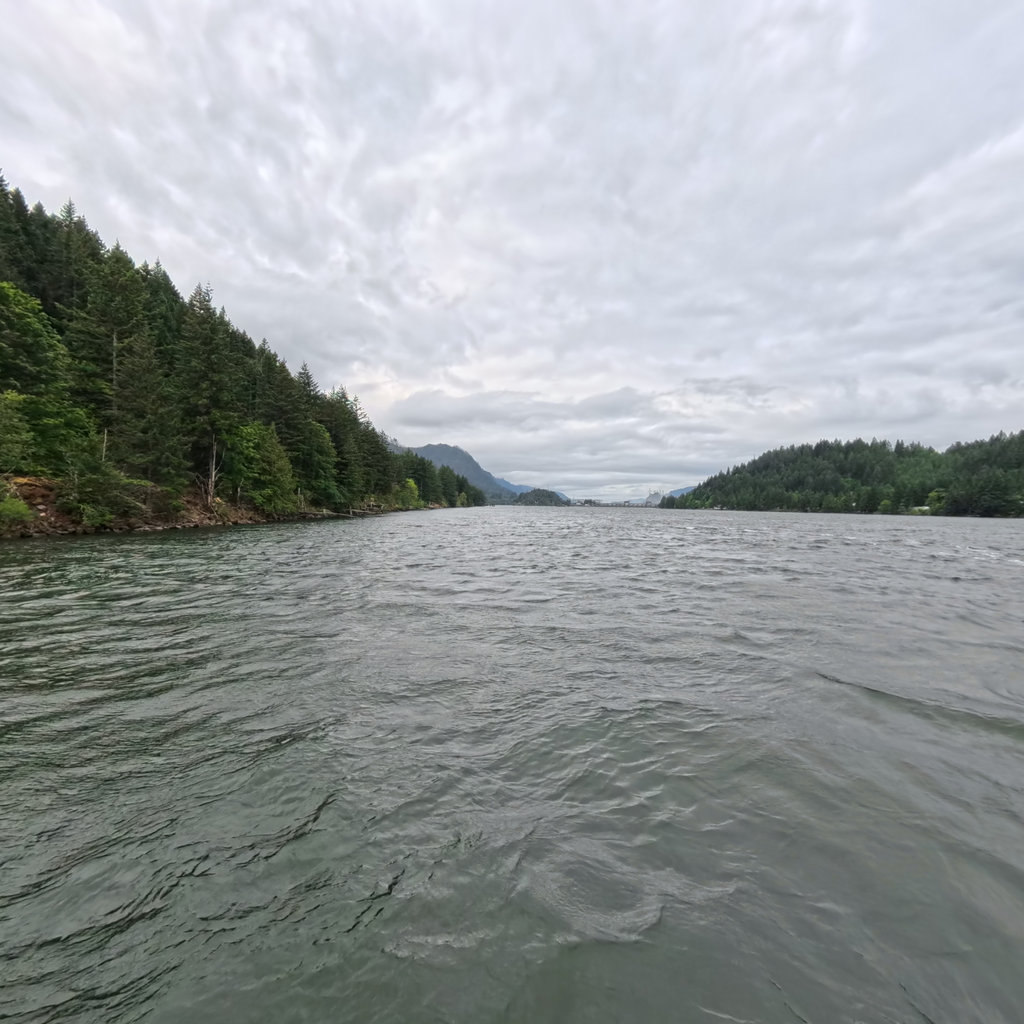
Cascades of the Columbia, portage
AI Summary

On a cold, windy day at the Great Shute (Cascades of the Columbia), the Corps portaged their small canoe and baggage 940 yards over slippery, rocky ground, then worked the four large canoes over the rocks using poles, damaging three and forcing repairs. Local Indians carried their canoes around and ran the second chute. Clark shot at a sea otter but couldn't retrieve it. He visited a nearby village, observing the plank houses, carved figures, food, and trade goods, and recorded detailed notes on the people's appearance, customs, flattened heads, and trading practices.

November 1st Friday 1805 a verry cold morning wind from N. E and hard Set
all hands packing the loading over th portage which is below the Grand
Shutes and is 940 yards of bad way over rocks & on Slipery hill Sides
The Indians who came down in 2 Canoes last night packed their fish over a
portage of 21/2 miles to avoid a 2d Shute. four of them took their canoes
over the 1st portage and run the 2d Shute, Great numbers of Sea otters,
they are So Cautious that I with deficuelty got a Shute at one to day,
which I must have killed but Could not get him as he Sunk

We got all our Canoes and baggage below the Great Shute 3 of the canoes
being Leakey from injures recved in hauling them over the rocks, obliged
us to delay to have them repaired a bad rapid just below us three Indian
canoes loaded with pounded fish for the &c. trade down the river
arrived at the upper end of the portage this evening. I Can’t lern whether
those Indians trade with white people or Inds. below for the Beeds &
copper, which they are So fond ofThey are nearly necked, prefuring
beeds to anythingThose Beeds they trafick with Indians Still higher
up this river for Skins robes &c. &c. The Indians on those waters
do not appear to be Sickly, Sore eyes are Common and maney have lost their
eyes, Some one and, maney both, they have bad teeth, and the greater
perpotion of them have worn their teeth down, maney into the gums, They
are rather Small high Cheeks, women Small and homely, maney of them had
Sweled legs, large about the knees,-owing to the position in which they
Set on their hams, They are nearly necked only a piece of leather tied
about their breech and a Small robe which generally comes to a little
below their wastes and Scercely Sufficely large to cover arround them when
confinedthey are all fond of Clothes but more So of Beeds
perticularly blue & white beeds. They are durty in the extreme both in
their Coockery and in their houses.

Those at the last Village raise the beads about five feet from the
earth-under which they Store their ProvisionsTheir houses is about
33 feet to 50 feet Square, the Bore of which is about 30 Inc. high and 16
Inches wide in this form cut in a wide pine board they have maney imeges
Cut in wood, generally, in the figure of a manThose people are high
with what they have to Sell, and Say the white people below Give them
great Prices for what they Sell to them. Their nose are all Pierced, and
the wear a white Shell maney of which are 2 Inch long pushed thro the noseall
the women have flat heads pressed to almost a point at top The press the
female childrens heads between 2 bords when young-untill they form the
Skul as they wish it which is generally verry flat. This amongst those
people is considered as a great mark of butyand is practised in all the
tribes we have passed on this river more or less. men take more of the
drugery off the women than is common with Indians

November 1st Friday 1805 A verry Cool morning wind hard from the N. E. The
Indians who arrived last evining took their Canoes on ther Sholders and
Carried them below the Great Shute, we Set about takeing our Small Canoe
and all the baggage by land 940 yards of bad Slippery and rockey way The
Indians we discoverd took ther loading the whole length of the portage
21/2 miles, to avoid a Second Shute which appears verry bad to pass, and
thro which they passed with their empty canoes. Great numbers of Sea
Otters, they are So cautious that I with dificuelty got a Shot at one to
day, which I must have killed, but could not get him as he Sunk

we got all our baggage over the Portage of 940 yards, after which we got
the 4 large Canoes over by Slipping them over the rocks on poles placed
across from one rock to another, and at Some places along partial Streams
of the river. in passing those canoes over the rocks &c. three of them
recived injuries which obliged us to delay to have them repared.

Several Indian Canoes arrived at the head of the portage, Some of the men
accompanied by those from the village came down to Smoke with us, they
appear to Speak the Same language with a little different axcent

I visited the Indian Village found that the Construction of the houses
Similar to those abov described, with this difference only that they are
larger Say from 35 to 50 feet by 30 feet, raised about 5 feet above the
earth, and nearly as much below The Dores in the Same form and Size cut in
the wide post which Supports one end of the ridge pole and which is carved
and painted with different figures & Hieroglyphics Those people gave
me to eate nuts berries & a little dried fish, and Sold me a hat of
ther own taste without a brim, and baskets in which they hold their waterTheir
beads are raised about 41/2 feet, under which they Store away their dried
fish, between the part on which they lie and the back wall they Store away
their roots burries nuts and valuable articles on mats, which are Spread
also around the fire place which is Sunk about one foot lower than the
bottom fore of the house, this fire place is about 8 feet long and Six
feet wide Secured with a fraim those houses are calculated for 4, 5 &
6 families, each familey haveing a nice painted ladder to assend up to
their beads. I Saw in those houses Several wooden Images all cut in
imitation of men, but differently fasioned and placed in the most
conspicious parts of the houses, probably as an orniment I cannot lern
certainly as to the traffick those Inds. carry on below, if white people
or the indians who trade with the Whites who are either Settled or visit
the mouth of this river. I believe mostly with the latter as their
knowledge of the white people appears to be verry imperfect, and the
articles which they appear to trade mostly i e Pounded fish, Beargrass,
and roots; cannot be an object of comerce with furin merchantshowever
they git in return for those articles Blue and white beeds copper Tea
Kitties, brass arm bands, some Scarlet and blue robes and a fiew articles
of old clothes, they prefer beeds to any thing and will part with the last
mouthfull or articles of clothing they have for a fiew of those beeds,
those beeds the trafick with Indians Still higher up this river for roabs,
Skins, cha-pel-el bread, beargrass &c. who in their turn trafick with
those under the rockey mountains for Beargrass, Pashico roots & robes
&c.

The nativs of the waters of the Columbia appear helthy, Some have turners
on different parts of their bodies, and Sore and weak Eyes are common,
maney have lost their Sight entirely great numbers with one eye out and
frequently the other verry weak; This misfortune I must again asscribe to
the water &c. They have bad teeth, which is not common with indians,
maney have worn their teeth down and Some quite into their gums, this I
cannot Satisfactorily account for it, do ascribe it in some measure to
their method of eateing, their food, roots pertiularly, which they make
use of as they are taken out of the earth frequently nearly covered with
Sand, I have not Seen any of their long roots offered for Sale clear of
Sand. They are rether below the Common Size high cheeks womin Small and
homely, and have Swelled legs and thighs, and their knees remarkably large
which I ascribe to the method in which they Sit on their hams-go nearly
necked wareing only a piece of leather tied about their breast which falls
down nearly as low as the waste, a Small roabe about 3 feet Square, and a
piece of leather tied about their breach, They have all flat heads in this
quarter They are tirty in the extream, both in their person and cooking,
ware their hare loose hanging in every direction. They asc high prices for
what they Sell and Say that the white people below give great prices for
every thing &c.

The noses are all pierced and when they are dressed they have a long
tapered piece of white shell or wampum put through the nose, Those Shells
are about 2 inches in length. I observed in maney of the villeages which I
have passed, the heads of the female children in the press for the purpose
of compressing their heads in their infancy into a certain form, between
two boards

Read this entry in modern English AI-translated

November 1st, Friday, 1805. A very cold morning, with a hard wind from the northeast. We set all hands to packing the cargo over the portage, which is below the Grand Shoals (Grand Shoals) and is 940 yards of bad going over rocks and on slippery hillsides. The Indians who came down in two canoes last night packed their fish over a portage of 2½ miles to avoid a second Shoal. Four of them took their canoes over the first portage and ran the second Shoal. There were great numbers of sea otters; they are so cautious that I had difficulty getting a shot at one today, which I must have killed, but could not retrieve him as he sank.

We got all our canoes and baggage below the Great Shoal. Three of the canoes were leaky from injuries received in hauling them over the rocks, which obliged us to stop and have them repaired. There is a bad rapid just below us. Three Indian canoes loaded with pounded fish for trade down the river arrived at the upper end of the portage this evening. I cannot learn whether those Indians trade with white people or with Indians below for the beads and copper of which they are so fond. They are nearly naked, preferring beads to anything. These beads they trade with Indians still higher up this river for skins, robes, etc. The Indians on these waters do not appear to be sickly. Sore eyes are common, and many have lost their eyes — some one eye, and many both. They have bad teeth, and the greater portion of them have worn their teeth down, many into the gums. They are rather small, with high cheeks. The women are small and plain, and many of them have swollen legs, large about the knees, owing to the position in which they sit on their haunches. They are nearly naked, wearing only a piece of leather tied about their loins and a small robe that generally comes to a little below their waists and is scarcely large enough to wrap around them when they are sitting still. They are all fond of clothes, but more so of beads — particularly blue and white beads. They are dirty in the extreme, both in their cooking and in their houses.

Those at the last village raise their beds about five feet from the earth, under which they store their provisions. Their houses are about 33 to 50 feet square. The door, which is cut into a wide pine board, is about 30 inches high and 16 inches wide. They have many images cut in wood, generally in the figure of a man. These people ask high prices for what they sell, and say that the white people below give them great prices for what they sell to them. Their noses are all pierced, and they wear a white shell — many of which are 2 inches long — pushed through the nose. All the women have flat heads, pressed to almost a point at the top. They press the female children's heads between two boards when young, until they form the skull as they wish it, which is generally very flat. Among these people this is considered a great mark of beauty, and it is practiced in all the tribes we have passed on this river, to a greater or lesser degree. The men take more of the drudgery off the women than is common among Indians.

November 1st, Friday, 1805. A very cool morning, with a hard wind from the northeast. The Indians who arrived last evening took their canoes on their shoulders and carried them below the Great Shoal. We set about taking our small canoe and all the baggage by land — 940 yards of bad, slippery, and rocky going. We discovered that the Indians took their cargo the whole length of the portage, 2½ miles, to avoid a second Shoal that appears very difficult to pass, and through which they passed with their empty canoes. There were great numbers of sea otters; they are so cautious that I had difficulty getting a shot at one today, which I must have killed, but could not retrieve him as he sank.

We got all our baggage over the 940-yard portage, after which we got the four large canoes over by sliding them over the rocks on poles placed across from one rock to another, and in some places along partial streams of the river. In passing those canoes over the rocks, three of them received injuries that obliged us to stop and have them repaired.

Several Indian canoes arrived at the head of the portage. Some of the men, accompanied by those from the village, came down to smoke with us. They appear to speak the same language with a slightly different accent.

I visited the Indian village and found that the construction of the houses was similar to those described above, with this difference only: they are larger, say from 35 to 50 feet by 30 feet, raised about 5 feet above the earth, and nearly as much below ground. The doors are the same form and size, cut into the wide post that supports one end of the ridge pole, which is carved and painted with different figures and hieroglyphics. These people gave me nuts, berries, and a little dried fish to eat, and sold me a hat of their own style without a brim, and baskets in which they hold their water. Their beds are raised about 4½ feet, under which they store away their dried fish. Between the sleeping area and the back wall they store their roots, berries, nuts, and other valuable articles on mats, which are also spread around the fire pit. The fire pit is sunk about one foot lower than the floor of the house, is about 8 feet long and 6 feet wide, and is framed in. These houses are built for 4, 5, or 6 families, each family having a neatly painted ladder to climb up to their beds. I saw in these houses several wooden images, all cut in imitation of men but differently fashioned and placed in the most visible parts of the houses, probably as ornaments. I cannot learn with certainty about the trade those Indians carry on below — whether it is with white people or with Indians who trade with whites, who are either settled at or visit the mouth of this river. I believe it is mostly with the latter, as their knowledge of white people appears to be very limited, and the articles they appear to trade most — namely pounded fish, beargrass, and roots — cannot be objects of commerce with foreign merchants. However, in return for those articles they receive blue and white beads, copper tea kettles, brass arm bands, some scarlet and blue robes, and a few articles of old clothing. They prefer beads to anything, and will part with their last mouthful of food or articles of clothing for a few of these beads. These beads they trade with Indians still higher up this river for robes, skins, chal-pel-el bread, beargrass, etc., who in their turn trade with those near the Rocky Mountains for beargrass, Pashico roots, and robes, etc.

The natives of the waters of the Columbia appear healthy. Some have tumors on different parts of their bodies, and sore and weak eyes are common. Many have lost their sight entirely, great numbers have lost one eye, and frequently the other is very weak. This misfortune I must again attribute to the water, etc. They have bad teeth, which is not common among Indians. Many have worn their teeth down, and some quite into their gums. I cannot satisfactorily account for this, but I do ascribe it in some measure to their method of eating their food — roots in particular — which they eat as they are taken out of the earth, frequently nearly covered with sand. I have not seen any of their long roots offered for sale free of sand. They are rather below the common size, with high cheeks. The women are small and plain, and have swollen legs and thighs, with remarkably large knees, which I attribute to the way they sit on their haunches. They go nearly naked, wearing only a piece of leather tied about their chest that falls down nearly to the waist, a small robe about 3 feet square, and a piece of leather tied about their loins. They all have flat heads in this area. They are dirty in the extreme, both in their persons and their cooking, and wear their hair loose, hanging in every direction. They ask high prices for what they sell, and say that the white people below give great prices for everything.

Their noses are all pierced, and when dressed they have a long, tapered piece of white shell or wampum put through the nose; these shells are about 2 inches in length. I observed in many of the villages I have passed the heads of female children in the press used to compress their heads in infancy into a certain form between two boards.

This modernization is AI-generated for accessibility. The original above is the authoritative version.

Our Partners