Journal Entry

Clark: October 28, 1805

October 28, 1805
Celilo Falls and The Dalles portage
AI Summary

On a cold, windy Monday, the expedition loaded canoes and set off at 9 a.m., traveling through a river canyon walled with dark cliffs. After four miles they stopped at a Chilluckittequaw village of eight houses, where Lewis recorded vocabulary and Clark observed a British musket, cutlass, brass tea kettles, and carved animal figures. They bought five small dogs, dried berries, and root bread. Rising winds forced them to camp early on the larboard side in a poor, sandy spot. Rain fell all evening; one deer was killed and another wounded near camp.

October 28th Monday 1805 a windey morning loaded our Canoes and Set out at
9 oClock a m 3 Canoes Came down from the Village above & 2 from that
below in one of those Canoes a Indian wore his hair cued, and had on a
round hat. Wind from West

Those Indians have a musket a Sword, and Several Brass Tea kitties which
they appear to be verry fond of we purchased of those people five Small
dogs, and Some Dried beries & white bread of roots, the wind rose and
we were obliged to lie by about 1 mile below on the Lard. Side North 1
mile to a rock Island on the Stard. Side. we had not landed long eer an
Indian Canoe Came from below with 3 Indians in it, those Indians make
verry nice Canoes of Pine. Thin with aporns & Carve on the head
imitation of animals & other heads; The Indians above Sacrafise the
property of the Deceased to wit horses Canoes, bowls Basquets of which
they make great use to hold water boil their meet &c. &c. great
many Indians came down from the uppr Village & Sat with us, Smoked,
rained all the evenig & blew hard from the West encamped on the Lard
Side opsd. an Rock in a verry Bad place

October 28th Monday 1805 A cool windey morning we loaded our Canoes and
Set out at 9 oClock, a.m. as we were about to Set out 3 canoes from above
and 2 from below came to view us in one of those Canoes I observed an
Indian with round hat jacket & wore his hair cued we proceeded on
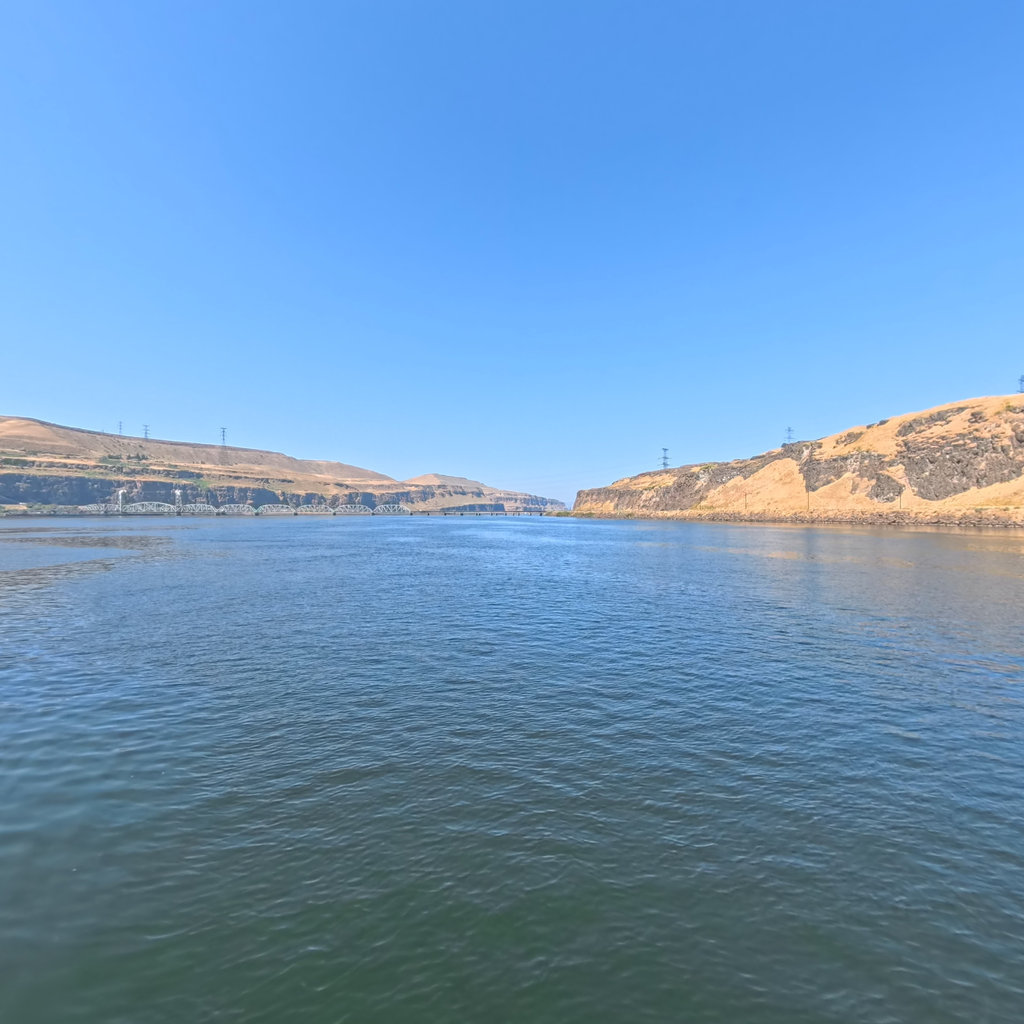
river inclosed on each Side in high Clifts of about 90 feet of loose dark
coloured rocks at four miles we landed at a village of 8 houses on the
Stard. Side under Some rugid rocks, Those people call themselves
Chil-luckit-tequaw, live in houses Similar to those described, Speake
Somewhat different language with maney words the Same & understand
those in their neighbourhood Cap Lewis took a vocabilary of this Language
I entered one of the houses in which I Saw a British musket, a cutlass and
Several brass Tea kittles of which they appeared verry fond Saw them
boiling fish in baskets with Stones, I also Saw figures of animals &
men Cut & painted on boards in one Side of the house which they
appeared to prize, but for what purpose I will not venter to Say,-. here
we purchased five Small Dogs, Some dried buries, & white bread made of
roots, the wind rose and we were obliged to lie by all day at 1 mile below
on the Lard. Side. we had not been long on Shore before a Canoe came up
with a man woman & 2 children, who had a fiew roots to Sell, Soon
after maney others joined them from above, The wind which is the cause of
our delay, does not retard the motions of those people at all, as their
canoes are calculated to ride the highest waves, they are built of white
cedar or Pine verry light wide in the middle and tapers at each end, with
aperns, and heads of animals carved on the bow, which is generally raised.
Those people make great use of Canoes, both for transpotation and fishing,
they also use of bowls & baskets made of Grass & Splits to hold
water and boil their fish & meat. Maney of the nativs of the last
Village Came down Set and Smoke with us, wind blew hard accompanied with
rain all the evening, our Situation not a verry good one for an
encampment, but Such as it is we are obliged to put up with, the harbor is
a Safe one, we encamped on the Sand wet and disagreeable one Deer killed
this evening, and another wounded near our Camp.

Read this entry in modern English AI-translated

October 28th Monday 1805. A windy morning. We loaded our canoes and set out at 9 o'clock a.m. Three canoes came down from the village above and two from the village below. In one of those canoes, an Indian wore his hair queued and had on a round hat. Wind from the west.

Those Indians have a musket, a sword, and several brass tea kettles, of which they appear to be very fond. We purchased from these people five small dogs, some dried berries, and white bread made of roots. The wind rose and we were obliged to lie by about 1 mile below on the Larboard side. North 1 mile to a rock island on the Starboard side. We had not landed long before an Indian canoe came from below with 3 Indians in it. Those Indians make very nice canoes of pine, thin, with aprons, and they carve imitations of animals and other heads on the bow. The Indians above sacrifice the property of the deceased—that is, horses, canoes, bowls, and baskets, of which they make great use to hold water and boil their meat, etc., etc. A great many Indians came down from the upper village and sat with us, smoked. It rained all the evening and blew hard from the west. Camped on the Larboard side opposite a rock in a very bad place.

October 28th Monday 1805. A cool windy morning. We loaded our canoes and set out at 9 o'clock a.m. As we were about to set out, 3 canoes from above and 2 from below came to view us. In one of those canoes I observed an Indian with a round hat and jacket, who wore his hair queued. We proceeded on, the river enclosed on each side by high cliffs of about 90 feet of loose dark-colored rocks. At four miles we landed at a village of 8 houses on the Starboard side under some rugged rocks. These people call themselves Chil-luck-it-tequaw. They live in houses similar to those already described, and speak a somewhat different language with many words the same, and they understand those in their neighborhood. Capt Lewis (Capt. Lewis) took a vocabulary of this language. I entered one of the houses, in which I saw a British musket, a cutlass, and several brass tea kettles of which they appeared very fond. I saw them boiling fish in baskets with stones. I also saw figures of animals and men cut and painted on boards on one side of the house, which they appeared to prize, but for what purpose I will not venture to say.

Here we purchased five small dogs, some dried berries, and white bread made of roots. The wind rose and we were obliged to lie by all day at 1 mile below on the Larboard side. We had not been long on shore before a canoe came up with a man, woman, and 2 children, who had a few roots to sell. Soon after, many others joined them from above. The wind, which is the cause of our delay, does not retard the motions of those people at all, as their canoes are built to ride the highest waves. They are made of white cedar or pine, very light, wide in the middle, and taper at each end, with aprons and heads of animals carved on the bow, which is generally raised. These people make great use of canoes, both for transportation and fishing. They also use bowls and baskets made of grass and splits to hold water and boil their fish and meat. Many of the natives of the last village came down, sat, and smoked with us. The wind blew hard, accompanied with rain all the evening. Our situation is not a very good one for an encampment, but such as it is, we are obliged to put up with it. The harbor is a safe one. We camped on the sand—a wet and disagreeable spot. One deer was killed this evening, and another wounded near our camp.

This modernization is AI-generated for accessibility. The original above is the authoritative version.

Our Partners