Journal Entry

Clark: October 30, 1805

October 30, 1805
Cascades of the Columbia, portage
AI Summary

On a cold, rainy day, the expedition ate a small venison breakfast and set out down the river, observing rocks that had fallen from the mountains, four cascades, submerged tree stumps, and a slow current. They dined near a small stream Clark named New Timbered River for an unfamiliar ash growing there. After camping at the head of a large shute, Clark scouted two to three miles downstream and determined a portage would be necessary. Lewis visited a nearby village, where residents shared berries, nuts, and fish but offered little information. They covered fifteen miles.

October 30th Wednesday 1805 A Cloudy morning. Some little rain all night,
after eating a Slight brackfast of venison we Set out.

The rocks project into the river in maney places and have the appearance
of haveing fallen from the highe hills those projected rocks is common
& Small Bays below & nitches in the rocks passed 4 Cascades or
Small Streams falling from the mountains on Lard. This part of the river
resembles a pond partly dreaned leaving many Stumps bare both in & out
of the water, current about 1 mil pr. Hour

The bottom above the river is about 3/4 of a mile wide and rich, Some deer
& bear Signrained moderately all day we are wet and cold. Saw
Several Specis of wood which I never Saw before, Some resembling Beech
& others Poplar.Day dark and disagreeable

I with 2 men proceeded down the river 2 miles on an old Indian parth to
view the rapids, which I found impassable for our canoes without a
portage, the roade bad at 1 mile I saw a Town of Houses laterly abandoned
on an elevated Situation opsd. a 2d Shute, returned at dark. Capt. Lewis
and 5 men went to the Town found them kind they gave Beries & nuts,
but he cd. get nothin from them in the way of Information, the greater
part of those people out collecting roots below, rained all the evining
Those people have one gun & maney articles which they have purchased
of the white people their food is principally fish

October 30th Wednesday 1805 A cool morning, a moderate rain all the last
night, after eating a partial brackfast of venison we Set out passed
Several places where the rocks projected into the river & have the
appearance of haveing Seperated from the mountains and fallen promiscuisly
into the river, Small nitches are formed in the banks below those
projecting rocks which is comon in this part of the river, Saw 4 Cascades
caused by Small Streams falling from the mountains on the Lard. Side, a
remarkable circumstance in this part of the river is, the Stumps of pine
trees are in maney places are at Some distance in the river, and gives
every appearance of the rivers being darned up below from Some cause which
I am not at this time acquainted with, the Current of the river is also
verry jentle not exceeding 11/2 mile pr. hour and about 3/4 of a mile in
width. Some rain, we landed above the mouth of a Small river on the Stard.
Side and Dined J. Shields Killed a Buck & Labiech 3 Ducks, here the
river widens to about one mile large Sand bar in the middle, a Great rock
both in and out of the water, large Stones, or rocks are also permiscuisly
Scattered about in the river, this day we Saw Some fiew of the large
Buzzard Capt. Lewis Shot at one, those Buzzards are much larger than any
other of ther Spece or the largest Eagle white under part of their wings
&c. The bottoms above the mouth of this little river is rich covered
with grass & firn & is about 3/4 of a mile wide rich and rises
gradually, below the river (which is 60 yards wide above its mouth) the
Countery rises with Steep assent. we call this little river New Timbered
river from a Speces of Ash which grows on its banks of a verry large and
different from any we had before Seen, and a timber resembling the beech
in bark but different in its leaf which is Smaller and the tree smaller.
passed maney large rocks in the river and a large creek on the Stard. Side
in the mouth of which is an Island, passed on the right of 3 Islands near
the Stard. Side, and landed on an Island close under the Stard. Side at
the head of the great Shute, and a little below a village of 8 large
houses on a Deep bend on the Stard. Side, and opposit 2 Small Islands
imediately in the head of the Shute, which Islands are covered with Pine,
maney large rocks also, in the head of the Shute. Ponds back of the
houses, and Countrey low for a Short distance. The day proved Cloudy dark
and disagreeable with Some rain all day which kept us wet. The Countary a
high mountain on each Side thickly Covered with timber, Such as Spruc,
Pine, Cedar, Oake Cotton &c. &c. I took two men and walked down
three miles to examine the Shute and river below proceeded along an old
Indian path, passd. an old village at 1 mile on an ellevated Situation of
this village contained verry large houses built in a different form from
any I had Seen, and laterly abandoned, and the most of the boads put into
a pond of water near the village, as I conceived to drown the flees, which
was emencely noumerous about the houses-. I found by examonation that we
must make a portage of the greater perpotion of our Stores 21/2 miles, and
the Canoes we Could haul over the rocks, I returned at Dark Capt Lewis and
5 men had just returned from the village, Cap L. informed me that he found
the nativs kind, they gave him berries, nuts & fish to eate; but he
could get nothing from them in the way of information. The greater part of
the inhabitants of this village being absent down the river Some distance
Colecting roots Capt. L. Saw one gun and Several articles which must have
been precured from the white people. a wet disagreeable evening, the only
wood we could get to burn on this little Island on which we have encamped
is the newly discovered Ash, which makes a tolerable fire. we made fifteen
miles to daye.

Read this entry in modern English AI-translated

October 30th, Wednesday 1805. A cloudy morning. A little rain fell all night. After eating a slight breakfast of venison, we set out.

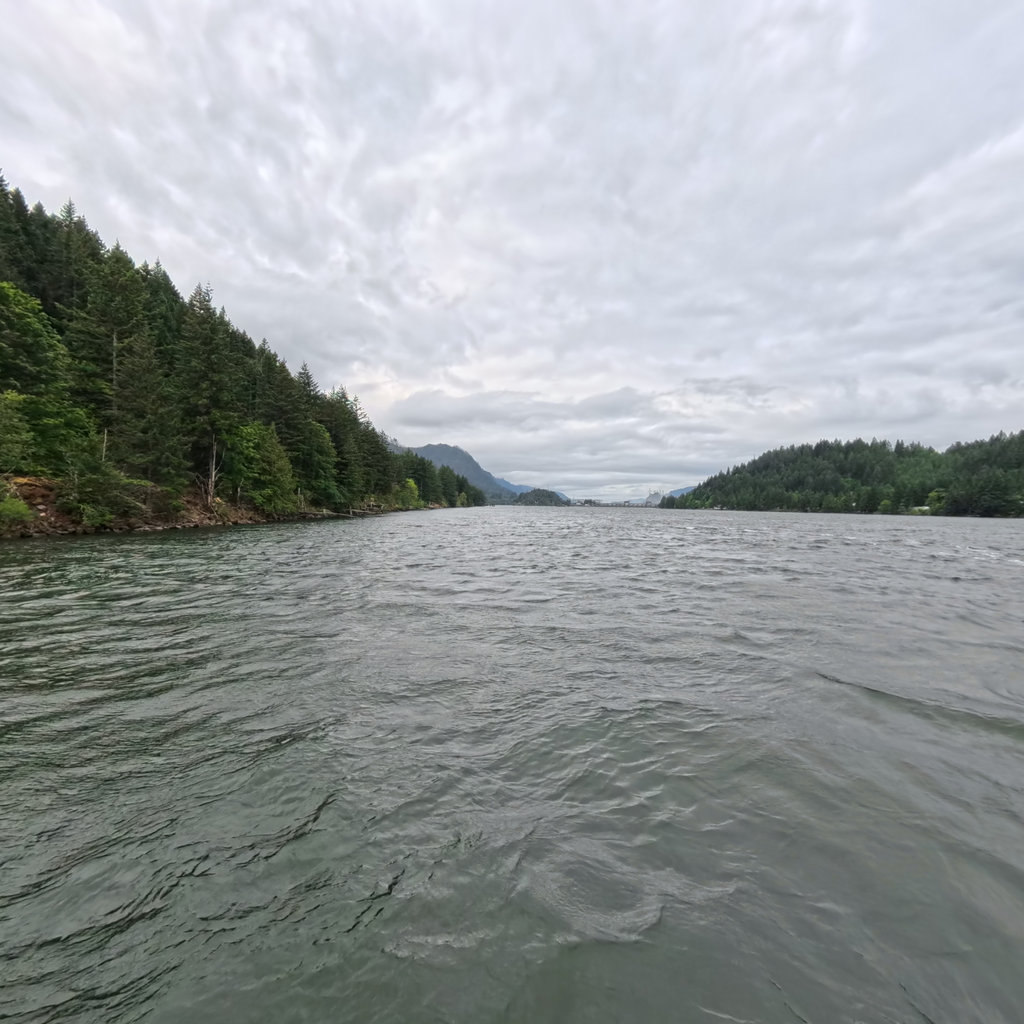
The rocks project into the river in many places and have the appearance of having fallen from the high hills. These projecting rocks are common, with small bays below and niches in the rocks. We passed 4 cascades, or small streams falling from the mountains on the larboard side. This part of the river resembles a pond partly drained, leaving many stumps bare both in and out of the water. The current is about 1 mile per hour.

The bottom above the river is about 3/4 of a mile wide and rich. Some deer and bear sign. It rained moderately all day; we are wet and cold. I saw several species of wood which I never saw before, some resembling beech and others poplar. The day was dark and disagreeable.

I, with 2 men, proceeded down the river 2 miles on an old Indian path to view the rapids, which I found impassable for our canoes without a portage. The road was bad. At 1 mile, I saw a town of houses recently abandoned, in an elevated situation opposite a second chute. I returned at dark. Capt. Lewis (Capt. Lewis) and 5 men went to the town and found them kind. They gave berries and nuts, but he could get nothing from them in the way of information, as the greater part of these people were out collecting roots below. It rained all the evening. These people have one gun and many articles which they have purchased from the white people. Their food is principally fish.


October 30th, Wednesday 1805. A cool morning, with moderate rain all last night. After eating a partial breakfast of venison, we set out. We passed several places where the rocks projected into the river and have the appearance of having separated from the mountains and fallen at random into the river. Small niches are formed in the banks below those projecting rocks, which is common in this part of the river. We saw 4 cascades caused by small streams falling from the mountains on the larboard side. A remarkable circumstance in this part of the river is that the stumps of pine trees are in many places at some distance into the river, giving every appearance of the river being dammed up below from some cause with which I am not at this time acquainted. The current of the river is also very gentle, not exceeding 1 1/2 miles per hour, and about 3/4 of a mile in width.

Some rain. We landed above the mouth of a small river on the starboard side and dined. J. Shields killed a buck, and Labiche 3 ducks. Here the river widens to about one mile, with a large sandbar in the middle and a great rock both in and out of the water. Large stones, or rocks, are also scattered about in the river. This day we saw a few of the large buzzards. Capt. Lewis (Capt. Lewis) shot at one. These buzzards are much larger than any other of their species, or than the largest eagle, with white under parts of their wings, etc.

The bottoms above the mouth of this little river are rich, covered with grass and fern, and are about 3/4 of a mile wide, rich, and rising gradually. Below the river (which is 60 yards wide above its mouth) the country rises with a steep ascent. We call this little river New Timbered River, from a species of ash which grows on its banks, very large and different from any we had before seen, and a timber resembling the beech in bark but different in its leaf, which is smaller, and the tree smaller.

We passed many large rocks in the river and a large creek on the starboard side, in the mouth of which is an island. We passed on the right of 3 islands near the starboard side, and landed on an island close under the starboard side at the head of the great chute, and a little below a village of 8 large houses on a deep bend on the starboard side, opposite 2 small islands immediately in the head of the chute. These islands are covered with pine, and there are also many large rocks in the head of the chute. There are ponds back of the houses, and the country is low for a short distance.

The day proved cloudy, dark, and disagreeable, with some rain all day, which kept us wet. The country is a high mountain on each side, thickly covered with timber such as spruce, pine, cedar, oak, cottonwood, etc. I took two men and walked down three miles to examine the chute and river below. We proceeded along an old Indian path, and passed an old village at 1 mile in an elevated situation. This village contained very large houses built in a different form from any I had seen, and recently abandoned, with most of the boards put into a pond of water near the village, as I conceived, to drown the fleas, which were immensely numerous about the houses.

I found by examination that we must make a portage of the greater proportion of our stores 2 1/2 miles, and the canoes we could haul over the rocks. I returned at dark. Capt. Lewis (Capt. Lewis) and 5 men had just returned from the village. Capt. L. informed me that he found the natives kind; they gave him berries, nuts, and fish to eat, but he could get nothing from them in the way of information. The greater part of the inhabitants of this village were absent, some distance down the river, collecting roots. Capt. L. saw one gun and several articles which must have been procured from the white people. A wet, disagreeable evening. The only wood we could get to burn on this little island on which we have camped is the newly discovered ash, which makes a tolerable fire. We made fifteen miles today.

This modernization is AI-generated for accessibility. The original above is the authoritative version.

Our Partners