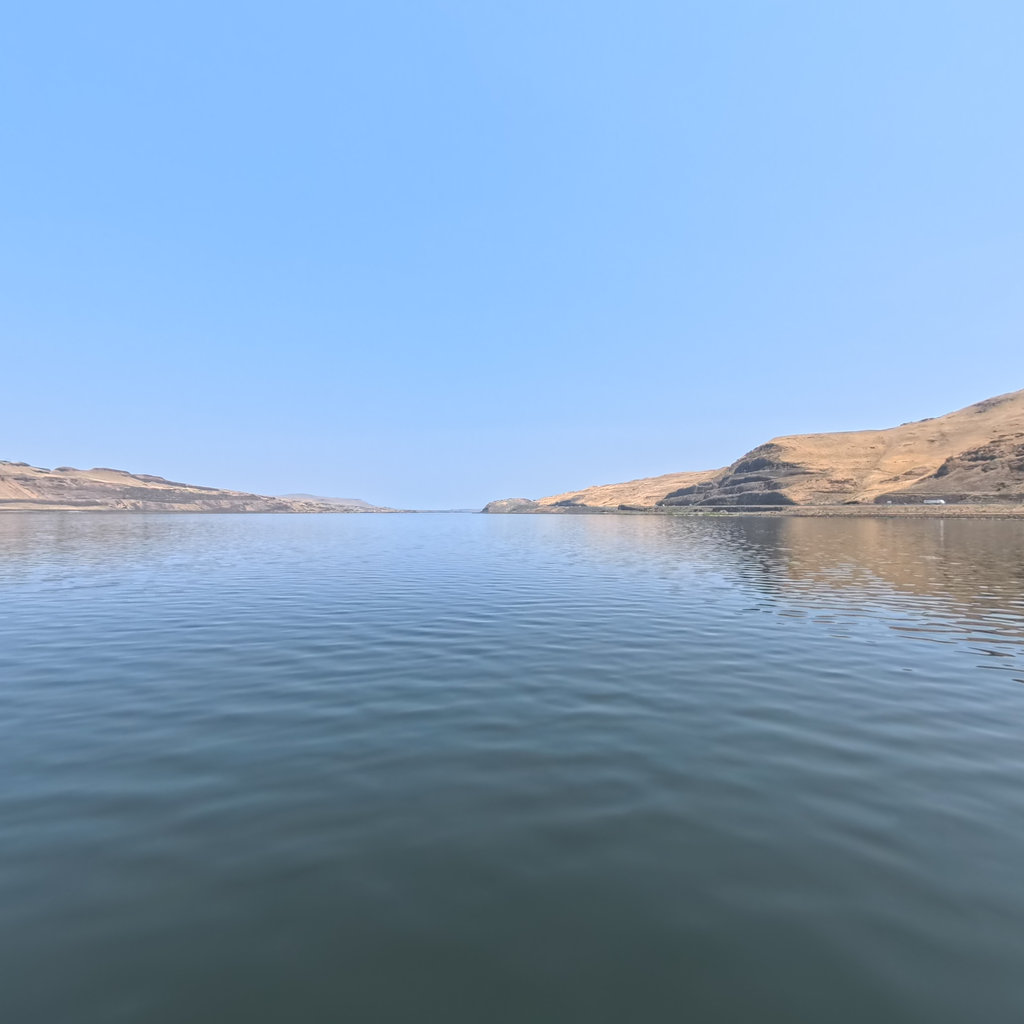
Lewis: April 23, 1806
The party began the day searching for two horses belonging to interpreter Charbonneau, who had failed to picket them; one was recovered but the other was abandoned as lost. After the delay, during which two packsaddles were made, they loaded up and traveled 12 fatiguing miles along sandy ground on the river's north side to the Wah-how-pum village near Rock Rapid. They traded small metal goods for four dogs, wood, and shappelell. The friendly inhabitants performed an unusual circle dance after the men played violin. The natives agreed to barter horses the next morning.
Wednesday April 23rd 1806. At day light this morning we were informed that
the two horses of our Interpreter Charbono were absent; on enquiry it
appeared that he had neglected to confine them to picquts as had been
directed last evening. we immediately dispatched Reubin Feilds and Labuish
to assist Charbono in recovering his horses. one of them was found at no
great distance and the other was given over as lost. at 8 A.M. Reuben
Feilds and Sergt. Gass proceeded in the canoe. at 10 Labuish and Charbono
returned unsuccessfull, they had gone back on the road nearly to the last
village and suched the plains on either hand to a considerable distance.
our remaining longer would have prevented our making a timely stage which
in our situation is all important; we therefore determined to proceed
immediately to the next village which from the information of our guide
will occupy the greater part of the day to reach at eleven OCk. we loaded
our horses and set out. during the time we were detained this morning we
had two packsaddles made. we continued our march along a narrow rocky
bottom on the N. side of the river about 12 miles to the Wah-how-pum
Village of 12 temperary mat lodges near the Rock rapid. these people
appeared much pleased to see us, sold us 4 dogs and some wood for our
small articles which we had previously prepared as our only resource to
obtain fuel and food through those plains. these articles conisted of
pewter buttons, strips of tin iron and brass, twisted wire &c. we also
obtained some shap-pe-lell newly made from these people. here we met with
a Chopunnish man on his return up the river with his family and about 13
head of horses most of them young and unbroken. he offered to hire us some
of them to pack as far a his nation, but we prefer bying as by hireing his
horses we shal have the whole of his family most probably to mentain. at a
little distance below this village we passed five lodges of the same
people who like those were waiting the arrival of the salmon. after we had
arranged our camp we caused all the old and brave men to set arround and
smoke with us. we had the violin played and some of the men danced; after
which the natives entertained us with a dance after their method. this
dance differed from any I have yet seen. they formed a circle and all sung
as well the spectators as the dancers who performed within the circle.
these placed their sholders together with their robes tightly drawn about
them and danced in a line from side to side, several parties of from 4 to
seven will be performing within the circle at the same time. the whole
concluded with a premiscuous dance in which most of them sung and danced.
these people speak a language very similar to the Chopunnish whome they
also resemble in their dress their women wear long legings mockersons
shirts and robes. their men also dress with legings shirts robes and
mockersons. after the dance was ended the Indians retired at our request
and we retired to rest. we had all our horses side bubbled and turned out
to graize; at this village, a large creek falls in on the N. side which we
did not observe as we decended the river. the river is by no means as
rapid as when we decended or at least not obstructed with those dangerous
rapids the water at present covers most of the rocks in the bed of the
river. the natives promised to barter their horses with us in the morning
we therefore entertained a hope that we shall be enabled to proceede by
land from hence with the whole of our party and baggage. came 12 miles by
land. the sands made the march fatieguing.-
Read this entry in modern English AI-translated
Wednesday, April 23rd, 1806. At daylight this morning we were informed that the two horses of our interpreter Charbono (Charbonneau) were missing. On inquiry it appeared that he had neglected to confine them to pickets as had been directed last evening. We immediately dispatched Reubin Feilds (Reuben Fields) and Labuish (Labiche) to assist Charbono in recovering his horses. One of them was found at no great distance, and the other was given up as lost. At 8 A.M. Reuben Feilds and Sergt. Gass proceeded in the canoe. At 10 Labuish and Charbono returned unsuccessful; they had gone back on the road nearly to the last village and searched the plains on either hand to a considerable distance.
Our remaining longer would have prevented our making a timely stage, which in our situation is all important; we therefore determined to proceed immediately to the next village, which from the information of our guide will occupy the greater part of the day to reach. At eleven o'clock we loaded our horses and set out. During the time we were detained this morning we had two packsaddles made. We continued our march along a narrow rocky bottom on the north side of the river about 12 miles to the Wah-how-pum village of 12 temporary mat lodges near the Rock Rapid.
These people appeared much pleased to see us, and sold us 4 dogs and some wood for our small articles, which we had previously prepared as our only resource to obtain fuel and food through those plains. These articles consisted of pewter buttons, strips of tin, iron, and brass, twisted wire, etc. We also obtained some shap-pe-lell newly made from these people. Here we met with a Chopunnish man on his return up the river with his family and about 13 head of horses, most of them young and unbroken. He offered to hire us some of them to pack as far as his nation, but we prefer buying, as by hiring his horses we shall have the whole of his family most probably to maintain. At a little distance below this village we passed five lodges of the same people who, like those, were waiting the arrival of the salmon.
After we had arranged our camp we caused all the old and brave men to sit around and smoke with us. We had the violin played and some of the men danced; after which the natives entertained us with a dance after their method. This dance differed from any I have yet seen. They formed a circle and all sang, as well the spectators as the dancers who performed within the circle. These placed their shoulders together with their robes tightly drawn about them and danced in a line from side to side; several parties of from 4 to seven would be performing within the circle at the same time. The whole concluded with a promiscuous dance in which most of them sang and danced.
These people speak a language very similar to the Chopunnish, whom they also resemble in their dress. Their women wear long leggings, moccasins, shirts, and robes. Their men also dress with leggings, shirts, robes, and moccasins. After the dance was ended the Indians retired at our request, and we retired to rest. We had all our horses side-hobbled and turned out to graze.
At this village, a large creek falls in on the north side which we did not observe as we descended the river. The river is by no means as rapid as when we descended, or at least not obstructed with those dangerous rapids; the water at present covers most of the rocks in the bed of the river. The natives promised to barter their horses with us in the morning; we therefore entertained a hope that we shall be enabled to proceed by land from here with the whole of our party and baggage. Came 12 miles by land. The sands made the march fatiguing.
This modernization is AI-generated for accessibility. The original above is the authoritative version.
Entities mentioned in this entry
Auto-extracted from the entry text. Hover any entity for context.