Journal Entry

Lewis: April 7, 1806

April 7, 1806
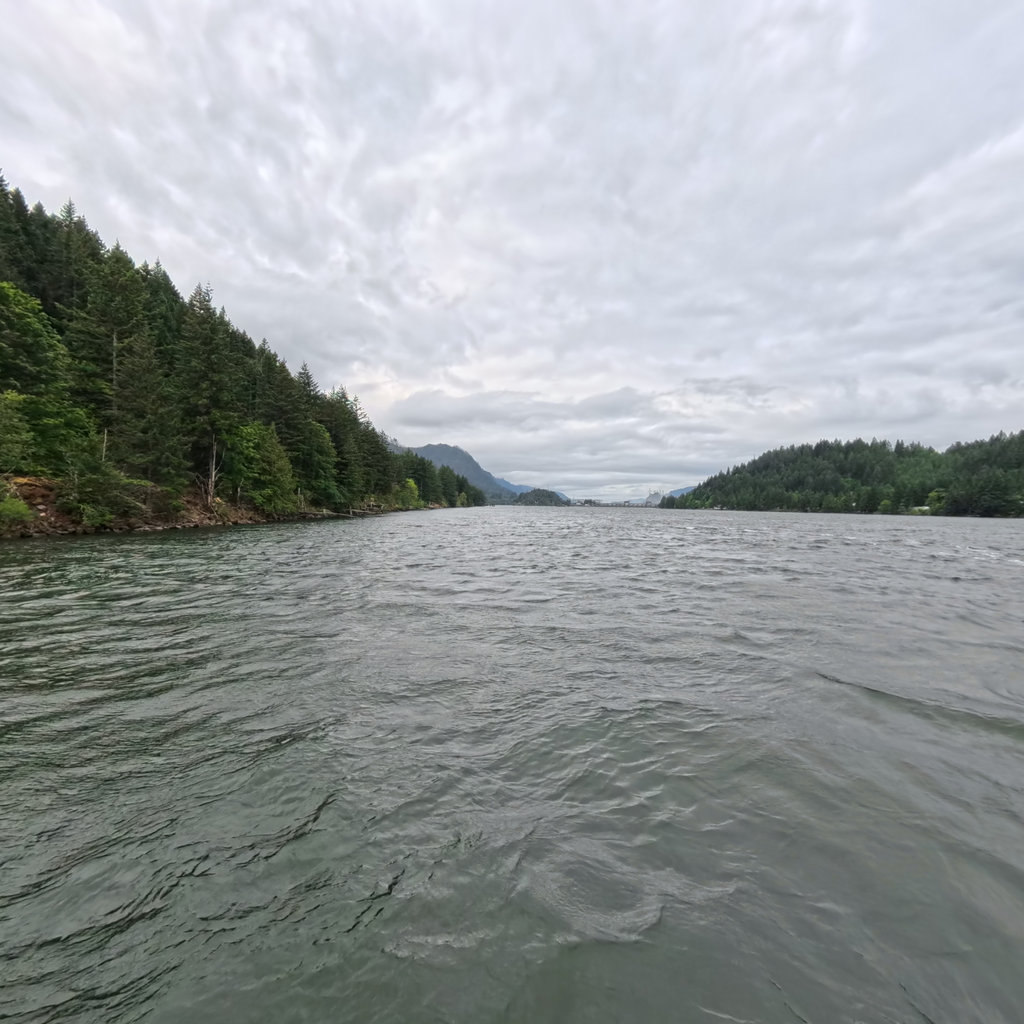
Portaging Cascades of the Columbia upstream
AI Summary

On a fair, pleasant day at camp, the party finished drying elk meat and packed it in elk skins for an early departure, hoping the supply would last until reaching the Chopunnish. Drewyer and the Field brothers were sent out per orders from the previous evening. Several Sahhalah Indians visited from a village eight miles upstream; Lewis caught one stealing lead and expelled him. Reubin Field and Captain Clark each killed an unfamiliar quail-like bird, which Lewis described in detail and preserved the skin. The men also practiced shooting and adjusted their gun sights.

Monday April 7th 1806. This morning early the flesh of the remaining Elk
was brought in and Drewyer with the Feildses departed agreeably to the
order of the last evening. we employed the party in drying the meat today
which we completed by the evening, and we had it secured in dryed Elkskins
and put on board in readiness for an early departure. we were visited
today by several parties of indians from a village about 8 miles above us
of the Sahhalah nation. I detected one of them in steeling a peice of lead
and sent him from camp. I hope we have now a sufficient stock of dryed
meat to serve us as far the Chopunnish provided we can obtain a few dogs
horses and roots by the way. in the neighbourhood of the Chopunnish we can
procure a few deer and perhaps a bear or two for the mountains. last
evening Reubin Fields killed a bird of the quail kind it is reather larger
than the quail, or partridge as they are called in Virginia. it’s form is
precisely that of our patridge tho it’s plumage differs in every part. the
upper part of the head, sides and back of the neck, including the croop
and about 1/3 of the under part of the body is of a bright dove coloured
blue, underneath the under beak, as high as the lower edge of the eyes,
and back as far as the hinder part of the eyes and thence coming down to a
point in front of the neck about two thirds of it’s length downwards, is
of a fine dark brick red. between this brick red and the dove colour there
runs a narrow stripe of pure white. the ears are covered with some coarse
stiff dark brown feathers. just at the base of the under chap there is
narrow transverse stripe of white. from the crown of the head two long
round feathers extend backwards nearly in the direction of the beak and
are of a black colour. the longest of these feathers is two inches and an
half, it overlays and conceals the other which is somewhat shorter and
seems to be raped in the plumage of that in front which folding backwards
colapses behind and has a round appearance. the tail is composed of twelve
dark brown feathers of nearly equal length. the large feathers of the
wings are of a dark brown and are reather short in proportion to the body
of the bird in that rispect very similar to our common partridge. the
covert of the wings and back are of a dove colour with a slight admixture
of redish brown. a wide stripe which extends from side to side of the body
and occupyes the lower region of the breast is beautifully variagated with
the brick red white and black which pedominate in the order they are
mentioned and the colours mark the feathers transversely. the legs are
covered with feathers as low as the knee; these feathers are of a dark
brown tiped with the dark brick red as are also those between and about
the joining of the legs with the body. they have four toes on each foot of
which three are in front and that in the center the longest, those one
each side nearly of a length; that behing is also of good length and are
all armed with long and strong nails. the legs and feet are white and
imbrecated with proportionably large broad scales. the upper beak is
short, wide at it’s base, black, convex, curved downwards and reather
obtusely pointed. it exceeds the under chap considerably which is of a
white colour, also convex underneath and obtusely pointed. the nostrils
are remarkably small placed far back and low down on the sides of the
beak. they are covered by a thin protuberant elastic, black leatherlike
substance. the eyes are of a uniform piercing black colour. this is a most
beautifull bird. I preserved the skin of this bird retaining the wings
feet and head which I hope will give a just idea of the bird. it’s loud
note is single and consists of a loud squall, intirely different from the
whistling of our quales or partridge. it has a cherping note when allarmed
something like ours.today there was a second of these birds killed
by Capt C. which precisely resembled that just discribed. I believe these
to be the male bird the female, if so, I have not yet seen.the day
has been fair and weather extreemly pleasant. we made our men exercise
themselves in shooting today and regulate their guns found several of them
that had their sights moved by accedent, and others that wanted some
little alterations all which were compleatly rectifyed in the course of
the day. in the evening all the Indians departed for their village.

Read this entry in modern English AI-translated

Monday April 7th 1806. Early this morning the flesh of the remaining elk was brought in, and Drewyer with the Fields brothers departed according to the orders given last evening. We employed the party in drying the meat today, which we completed by evening, and we had it secured in dried elk skins and put on board in readiness for an early departure. We were visited today by several parties of Indians from a village about 8 miles above us, of the Sahhalah nation. I detected one of them stealing a piece of lead and sent him from camp. I hope we now have a sufficient stock of dried meat to serve us as far as the Chopunnish, provided we can obtain a few dogs, horses, and roots along the way. In the neighborhood of the Chopunnish we can procure a few deer, and perhaps a bear or two for the mountains.

Last evening Reubin Fields killed a bird of the quail kind. It is rather larger than the quail, or partridge as they are called in Virginia. Its form is precisely that of our partridge, though its plumage differs in every part. The upper part of the head, sides, and back of the neck, including the crop and about 1/3 of the underpart of the body, is of a bright dove-colored blue. Underneath the lower beak, as high as the lower edge of the eyes, and back as far as the hinder part of the eyes, and thence coming down to a point in front of the neck about two-thirds of its length downwards, is of a fine dark brick red. Between this brick red and the dove color there runs a narrow stripe of pure white. The ears are covered with some coarse stiff dark brown feathers. Just at the base of the lower chap there is a narrow transverse stripe of white. From the crown of the head, two long round feathers extend backwards nearly in the direction of the beak and are of a black color. The longest of these feathers is two and a half inches; it overlays and conceals the other, which is somewhat shorter and seems to be wrapped in the plumage of the one in front, which, folding backwards, collapses behind and has a round appearance. The tail is composed of twelve dark brown feathers of nearly equal length. The large feathers of the wings are dark brown and are rather short in proportion to the body of the bird, in that respect very similar to our common partridge. The coverts of the wings and back are of a dove color with a slight admixture of reddish brown. A wide stripe which extends from side to side of the body and occupies the lower region of the breast is beautifully variegated with the brick red, white, and black, which predominate in the order they are mentioned, and the colors mark the feathers transversely. The legs are covered with feathers as low as the knee; these feathers are of a dark brown tipped with the dark brick red, as are also those between and about the joining of the legs with the body. They have four toes on each foot, of which three are in front, and the one in the center is the longest, those on each side nearly of a length; the one behind is also of good length, and they are all armed with long and strong nails. The legs and feet are white and imbricated with proportionably large broad scales. The upper beak is short, wide at its base, black, convex, curved downwards, and rather obtusely pointed. It exceeds the lower chap considerably, which is of a white color, also convex underneath and obtusely pointed. The nostrils are remarkably small, placed far back and low down on the sides of the beak. They are covered by a thin, protuberant, elastic, black leather-like substance. The eyes are of a uniform piercing black color. This is a most beautiful bird. I preserved the skin of this bird, retaining the wings, feet, and head, which I hope will give a just idea of the bird. Its loud note is single and consists of a loud squall, entirely different from the whistling of our quails or partridge. It has a chirping note when alarmed, something like ours.

Today there was a second of these birds killed by Capt C. (Capt. Clark) which precisely resembled the one just described. I believe these to be the male bird; if so, I have not yet seen the female.

The day has been fair and the weather extremely pleasant. We had our men exercise themselves in shooting today and regulate their guns. We found several of them that had their sights moved by accident, and others that needed some little alterations, all of which were completely rectified in the course of the day. In the evening all the Indians departed for their village.

This modernization is AI-generated for accessibility. The original above is the authoritative version.

Entities mentioned in this entry

Tribes & Nations:
Places:
Weather:
Trade Goods:

Auto-extracted from the entry text. Hover any entity for context.

Our Partners