Journal Entry

Clark: April 7, 1806

April 7, 1806
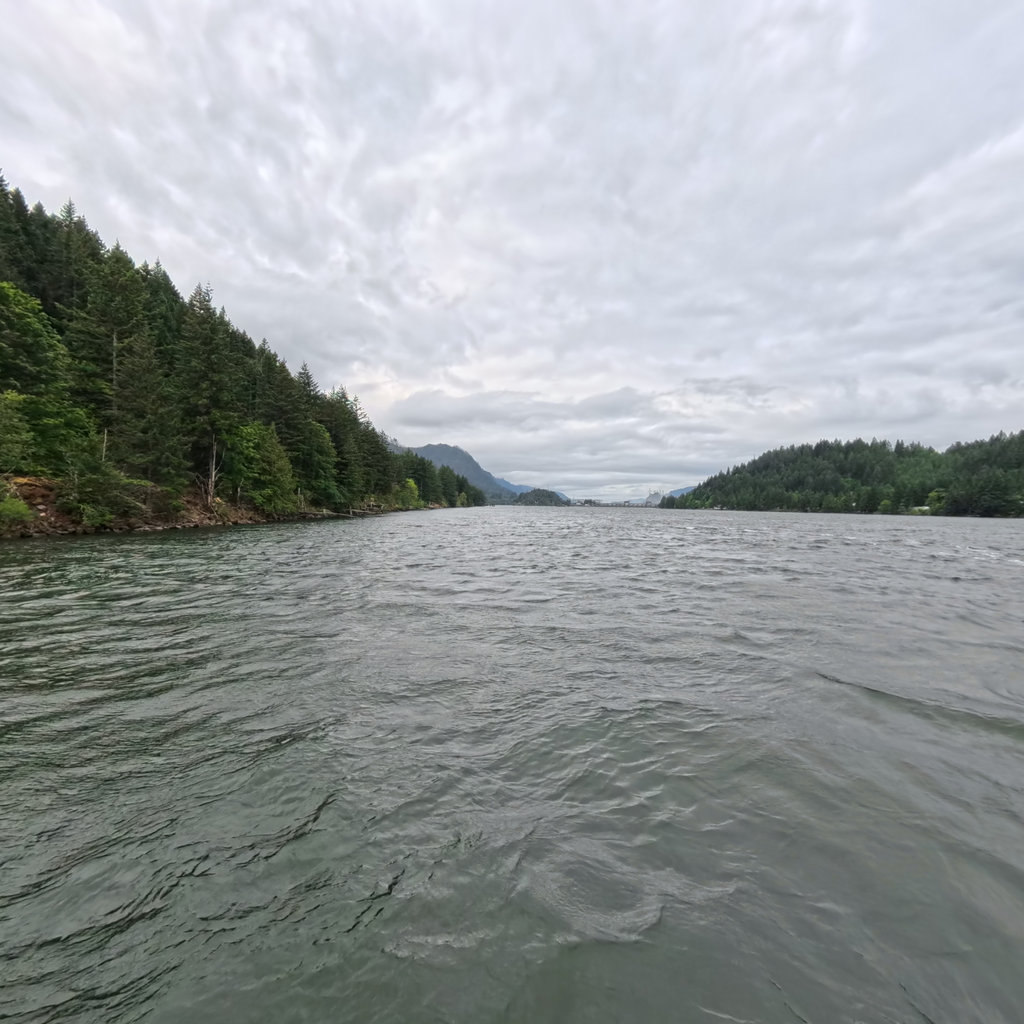
Portaging Cascades of the Columbia upstream
AI Summary

On a fair, pleasant day camped along the Columbia, Drouillard and the Field brothers set out hunting upriver while the rest of the party finished drying elk meat and packed it in elk skins for departure. Sahhalah Indians visited from a village 12 miles upriver, bringing wappato, pasheco roots, chapellel cakes, and raspberries, but asked prices too high to trade; one was caught stealing lead and sent off. The men practiced shooting and adjusted their gun sights. Clark gathered geographic information from an elderly Indian about the Multnomah and Clackamas rivers, Mount Jefferson, and the Callapoewah nation.

Monday April 7th 1806 This morning Drewyer & the two Fields Set out
agreeably to their orders of last evening, the remainder of the party
employed in drying the flesh of the five Elk killed by Shannon yesterday.
which was completed and we had it Secured in dried Shaved Elk Skins and
put on board in readiness for our early departure. we were visited by
Several parties of Indians from a Village about 12 miles above us of the
Sahhalah nation. one of them was detected in Stealing a piece of Lead. I
Sent him off imedeately. I hope now we have a Sufficient Stock of dryed
meat to Serve us as far as the Chopunnish provided we can obtain a fiew
dogs, horses and roots by the way. in the neighbourhood of the Chopunnish
under the Rocky Mountains we can precure a fiew deer, and perhaps a Bear
or two for the Mountains.

The day has been fair and weather exceedingly pleasent. we made our men
exersise themselves in Shooting and regulateing their guns, found Several
of them that had their Sights moved by accident, and others that wanted
Some little alterations all which were compleated rectified in the Course
of the day except my Small rifle, which I found wanted Cutting out. about
4 oClock P M all the Indians left us, and returned to their Village. they
had brought with them Wappato, & pashequa roots Chapellel cakes, and a
Species of Raspberry for Sale, none of which they disposed of as they
asked Such enormous prices for those articles that we were not able to
purchase any. Drewyer returned down the river in the evening &
informed us that the nativs had Sceared all the Elk from the river above.
Joseph & reuben Fields had proceeded on further up the river in the
canoe, he expected to the village.

I provaled on an old indian to mark the Multnomah R down on the Sand which
hid and perfectly Corisponded with the Sketch given me by sundary others,
with the addition of a circular mountain which passes this river at the
falls and connects with the mountains of the Seacoast. he also lais down
the Clark a mos passing a high Conical Mountain near it’s mouth on the
lower Side and heads in Mount Jefferson which he lais down by raiseing the
Sand as a very high mountain and Covered with eternal Snow. the high
mountain which this Indian lais down near the enterance of Clark a mos
river, we have not Seen as the hills in it’s diretion from this vally is
high and obscures the Sight of it from us. Mt Jefferson we Can plainly See
from the enterance of Multnomah from which place it bears S. E. this is a
noble Mountain and I think equally as high or Something higher than Mt.
St. Heleansa but its distance being much greater than that of the latter,
So great a portion of it does not appear above the range of mountains
which lie between both those Stupendious Mountains and the Mouth of
Multnomah. like Mt. St. Heleans its figure is a regular Cone and is
covered with eturnial Snow. that the Clarkamos nation as also those at the
falls of the Multnomah live principally on fish of which those Streams
abound and also on roots which they precure on it’s borders, they also
Sometimes Come down to the Columbia in Serch of Wappato. they build their
houses in the Same form with those of the Columbian Vally of wide Split
boads and Covered with bark of the White Cedar which is the entire length
of the one Side of the roof and jut over at the eve about 18 inches. at
the distance of about 18 inches transvers Spinters of dried pine is
inserted through the Ceder bark inorder to keep it Smooth and prevent it’s
edge from Colapsing by the heat of the Sun; in this manner the nativs make
a very Secure light and lasting roof of this bark. which we have observed
in every Vilege in this Vally as well as those above. this Indian also
informed me the multnomah above the falls was Crouded with rapids and
thickly inhabited by indians of the Callah-po-e-wah Nation. he informed he
had himself been a long way up that river &c.

Read this entry in modern English AI-translated

Monday April 7th 1806. This morning Drouillard (Drewyer) and the two Fields brothers set out according to their orders from last evening. The rest of the party were employed in drying the flesh of the five elk Shannon killed yesterday. This was completed, and we had it secured in dried, shaved elk skins and put on board in readiness for our early departure. We were visited by several parties of Indians from a village about 12 miles above us, of the Shahala (Sahhalah) nation. One of them was caught stealing a piece of lead. I sent him off immediately. I hope now we have a sufficient stock of dried meat to last us as far as the Chopunnish, provided we can obtain a few dogs, horses, and roots along the way. In the neighborhood of the Chopunnish, under the Rocky Mountains, we can procure a few deer, and perhaps a bear or two for the mountains.

The day has been fair and the weather exceedingly pleasant. We made our men exercise themselves in shooting and adjusting their guns. We found that several of them had their sights moved by accident, and others needed some small alterations, all of which were completed and rectified during the day, except my small rifle, which I found needed cutting out. About 4 o'clock P.M. all the Indians left us and returned to their village. They had brought with them wappato and pashequa roots, chapellel cakes, and a species of raspberry for sale, none of which they sold, as they asked such enormous prices for these articles that we were not able to purchase any. Drouillard (Drewyer) returned down the river in the evening and informed us that the natives had scared all the elk away from the river above. Joseph and Reuben Fields had proceeded further up the river in the canoe; he expected they had gone to the village.

I prevailed on an old Indian to mark the Multnomah River down in the sand, which he did and which perfectly corresponded with the sketch given to me by several others, with the addition of a circular mountain which crosses this river at the falls and connects with the mountains of the seacoast. He also laid down the Clackamas (Clark a mos), passing a high conical mountain near its mouth on the lower side, and heading in Mount Jefferson, which he laid down by raising the sand as a very high mountain covered with eternal snow. The high mountain which this Indian laid down near the entrance of the Clackamas (Clark a mos) River we have not seen, as the hills in its direction from this valley are high and obscure it from our sight. Mt. Jefferson we can plainly see from the entrance of the Multnomah, from which place it bears S.E. This is a noble mountain, and I think equally as high or somewhat higher than Mt. St. Helens (St. Heleansa), but as its distance is much greater than that of the latter, so great a portion of it does not appear above the range of mountains which lie between both those stupendous mountains and the mouth of the Multnomah. Like Mt. St. Helens, its figure is a regular cone and is covered with eternal snow. The Clackamas nation, as well as those at the falls of the Multnomah, live principally on fish, with which those streams abound, and also on roots which they procure along its banks. They also sometimes come down to the Columbia in search of wappato. They build their houses in the same form as those of the Columbia Valley, of wide split boards and covered with bark of the white cedar, which runs the entire length of one side of the roof and juts over at the eaves about 18 inches. At intervals of about 18 inches, transverse splinters of dried pine are inserted through the cedar bark in order to keep it smooth and prevent its edges from collapsing in the heat of the sun. In this manner the natives make a very secure, light, and lasting roof from this bark, which we have observed in every village in this valley as well as those above. This Indian also informed me that the Multnomah above the falls was crowded with rapids and thickly inhabited by Indians of the Calapooya (Callah-po-e-wah) nation. He told me that he had himself been a long way up that river, etc.

This modernization is AI-generated for accessibility. The original above is the authoritative version.

Our Partners