Journal Entry

Lewis: April 8, 1806

April 8, 1806
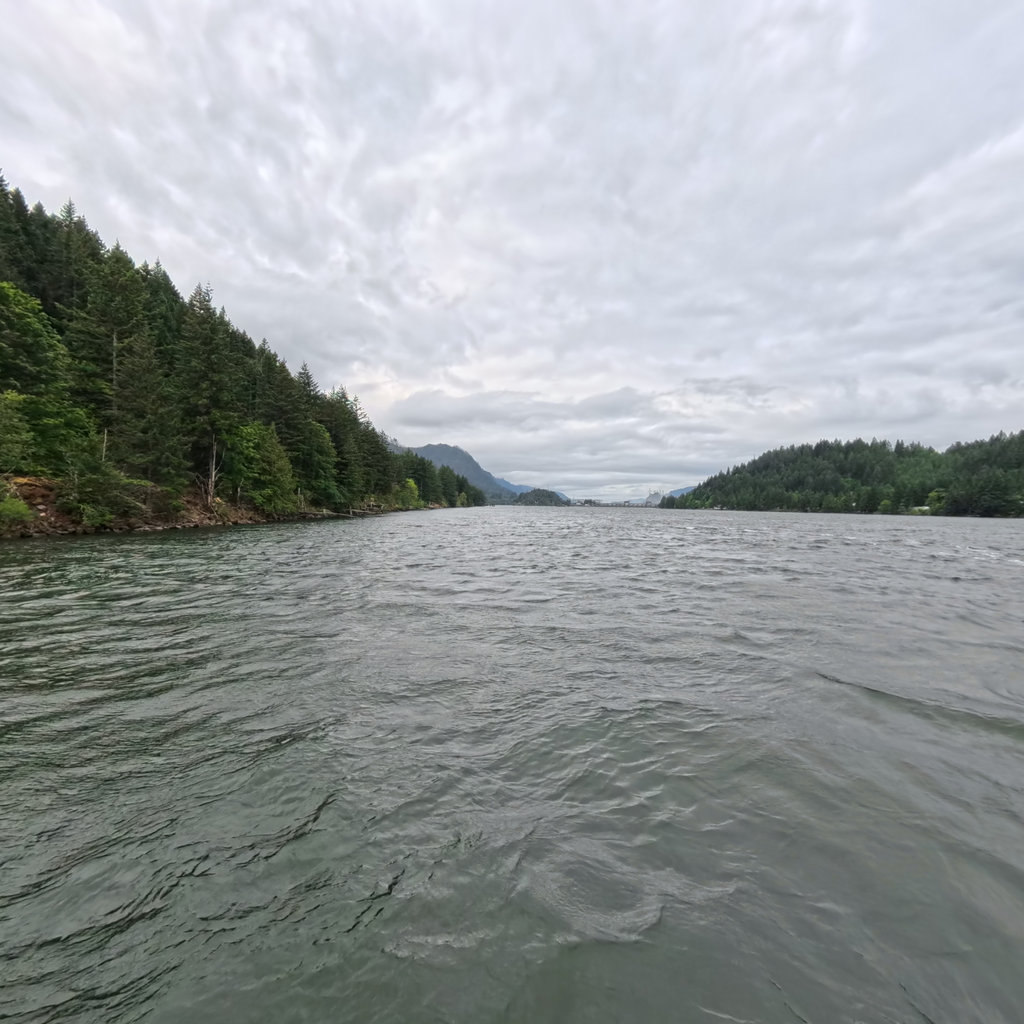
Portaging Cascades of the Columbia upstream
AI Summary

Violent winds forced the party to unload their swamped perogues and canoes and remain camped for the day. Hunters were sent out but returned with only a duck, having spotted two bears and some blacktailed deer. The dried meat was aired in the sun and smoke. Lewis took a three-mile walk along the river, correcting an earlier botanical misidentification and recording detailed observations of a thorny shrub's flowers and leaves. Late that night, a sentinel caught an elderly Indian trying to sneak into camp to steal; he was switched and sent away with his nearby party of six.

Tuesday April 8th 1806. The wind blew so violently this morning that we
were obliged to unlode our perogues and canoes, soon after which they
filled with water. being compelled to remain during the day at our present
station we sent out some hunters in order to add something to our stock of
provision; and exposed our dryed meat to the sun and the smoke of small
fires. in the evening the hunters returned having killed a duck only; they
saw two bear and some of the blacktailed jumping or fallow deer, such as
are found about Fort Clatsop; this kind of deer are scarce in this
neighbourhood, the common longtailed fallow deer being most abundant. we
have seen the black bear only in this quarter. the wind continued without
intermission to blow violently all day. I took a walk today of three miles
down the river; in the course of which I had an opportunity to correct an
errow which I have heretofore made with rispect to the shrub I have
hithertoo called the large leafed thorn. the leaf of this thorn is small
being only abut 21/2 inches long, is petiolate, conjugate; the leafets are
petiolate accutely pointed, having their margins cut with unequal angular
insissures. the shrub which I have heretofore confounded with this grows
in similar situations, has a stem precisely like it except the thorn and
bears a large three loabed leaf. this bryer is of the class Polyandria and
order Polygynia. the flowers are single, the peduncle long and celindric.
the calix is a perianth, of one leaf, five cleft, & accutely pointed.
the perianth is proper, erect, inferior with rispect to both petals and
germen, and equal. the corolla consists of five accute pale scarlet
petals, insirted in the recepticle with a short and narrow claw. the
Corolla is smooth, moderately long, situated at the base of the germen,
permanent, and cup shaped. of the stamens the filaments are subulate,
inserted into the recepticle, unequal and bent inwards concealing the
pistillum; anther two loabed and inflected situated on the top of the
fillaments of the pistillum the germ is conical, imbricated, superior,
sessile and short. the styles are short with rispect to the stamen,
capillary smooth, obtuse, distributed over the serface of the germ and
decid-uous. no perseptable stigma.late at night the centinel
detected an old indian man in attempting to creep into camp in order to
pilfer; he allarmed the indian very much by presenting his gun at him; he
gave the fellow a few stripes with a switch and sent him off. this fellow
is one of a party of six who layed incamped a few hundred yards below us,
they departed soon after this occurrence.

Read this entry in modern English AI-translated

Tuesday April 8th 1806. The wind blew so violently this morning that we were obliged to unload our pirogues and canoes, soon after which they filled with water. Being compelled to remain during the day at our present station, we sent out some hunters in order to add something to our stock of provisions; and we exposed our dried meat to the sun and the smoke of small fires. In the evening the hunters returned, having killed only a duck; they saw two bears and some of the black-tailed jumping or fallow deer, such as are found about Fort Clatsop. This kind of deer is scarce in this neighborhood, the common long-tailed fallow deer being most abundant. We have seen only the black bear in this quarter. The wind continued without intermission to blow violently all day.

I took a walk today of three miles down the river, in the course of which I had an opportunity to correct an error which I have heretofore made with respect to the shrub I have hitherto called the large-leafed thorn. The leaf of this thorn is small, being only about 2½ inches long, is petiolate and conjugate; the leaflets are petiolate, acutely pointed, having their margins cut with unequal angular incisures. The shrub which I have heretofore confounded with this grows in similar situations, has a stem precisely like it except for the thorn, and bears a large three-lobed leaf. This briar is of the class Polyandria and order Polygynia. The flowers are single, the peduncle long and cylindric. The calyx is a perianth, of one leaf, five cleft, and acutely pointed. The perianth is proper, erect, inferior with respect to both petals and germen, and equal. The corolla consists of five acute pale scarlet petals, inserted in the receptacle with a short and narrow claw. The corolla is smooth, moderately long, situated at the base of the germen, permanent, and cup-shaped. Of the stamens, the filaments are subulate, inserted into the receptacle, unequal, and bent inward, concealing the pistillum; the anther is two-lobed and inflected, situated on the top of the filaments. Of the pistillum, the germ is conical, imbricated, superior, sessile, and short. The styles are short with respect to the stamen, capillary, smooth, obtuse, distributed over the surface of the germ, and deciduous. No perceptible stigma.

Late at night the sentinel detected an old Indian man attempting to creep into camp in order to pilfer; he alarmed the Indian very much by presenting his gun at him. He gave the fellow a few stripes with a switch and sent him off. This fellow is one of a party of six who lay encamped a few hundred yards below us; they departed soon after this occurrence.

This modernization is AI-generated for accessibility. The original above is the authoritative version.

Entities mentioned in this entry

Weapons:
Tools:

Auto-extracted from the entry text. Hover any entity for context.

Our Partners