Lewis: August 14, 1805
Wednesday August 14th In order to give Capt. Clark time to reach the forks
of Jefferson’s river I concluded to spend this day at the Shoshone Camp
and obtain what information I could with rispect to the country. as we had
nothing but a little flour and parched meal to eat except the berries with
which the Indians furnished us I directed Drewyer and Shields to hunt a
few hours and try to kill something, the Indians furnished them with
horses and most of their young men also turned out to hunt. the game which
they principally hunt is the Antelope which they pursue on horseback and
shoot with their arrows. this animal is so extreemly fleet and dureable
that a single horse has no possible chance to overtake them or run them
down. the Indians are therefore obliged to have recorce to strategem when
they discover a herd of the Antelope they seperate and scatter themselves
to the distance of five or six miles in different directions arround them
generally scelecting some commanding eminence for a stand; some one or two
now pursue the herd at full speed over the hills values gullies and the
sides of precipices that are tremendious to view. thus after runing them
from five to six or seven miles the fresh horses that were in waiting head
them and drive them back persuing them as far or perhaps further quite to
the other extreem of the hunters who now in turn pursue on their fresh
horses thus worrying the poor animal down and finally killing them with
their arrows. forty or fifty hunters will be engaged for half a day in
this manner and perhaps not kill more than two or three Antelopes. they
have but few Elk or black tailed deer, and the common red deer they cannot
take as they secrete themselves in the brush when pursued, and they have
only the bow and arrow wich is a very slender dependence for killing any
game except such as they can run down with their horses. I was very much
entertained with a view of this indian chase; it was after a herd of about
10 Antelope and about 20 hunters. it lasted about 2 hours and considerable
part of the chase in view from my tent. about 1 A.M. the hunters returned
had not killed a single Antelope, and their horses foaming with sweat. my
hunters returned soon after and had been equally unsuccessfull. I now
directed McNeal to make me a little paist with the flour and added some
berries to it which I found very pallateable.
The means I had of communicating with these people was by way of Drewyer
who understood perfectly the common language of jesticulation or signs
which seems to be universally understood by all the Nations we have yet
seen. it is true that this language is imperfect and liable to error but
is much less so than would be expected. the strong parts of the ideas are
seldom mistaken.
I now prevailed on the Chief to instruct me with rispect to the geography
of his country. this he undertook very cheerfully, by delienating the
rivers on the ground. but I soon found that his information fell far short
of my expectation or wishes. he drew the river on which we now are to
which he placed two branches just above us, which he shewed me from the
openings of the mountains were in view; he next made it discharge itself
into a large river which flowed from the S. W. about ten miles below us,
then continued this joint stream in the same direction of this valley or
N. W. for one days march and then enclined it to the West for 2 more days
march, here he placed a number of beeps of sand on each side which he
informed me represented the vast mountains of rock eternally covered with
snow through which the river passed. that the perpendicular and even
juting rocks so closely hemned in the river that there was no possibilyte
of passing along the shore; that the bed of the river was obstructed by
sharp pointed rocks and the rapidity of the stream such that the whole
surface of the river was beat into perfect foam as far as the eye could
reach. that the mountains were also inaccessible to man or horse. he said
that this being the state of the country in that direction that himself
nor none of his nation had ever been further down the river than these
mountains. I then enquired the state of the country on either side of the
river but he could not inform me. he said there was an old man of his
nation a days march below who could probably give me some information of
the country to the N. W. and refered me to an old man then present for
that to the S. W.the Chief further informed me that he had
understood from the persed nosed Indians who inhabit this river below the
rocky mountains that it ran a great way toward the seting sun and finally
lost itself in a great lake of water which was illy taisted, and where the
white men lived. I next commenced my enquiries of the old man to whom I
had been refered for information relative the country S W. of us. this he
depicted with horrors and obstructions scarcely inferior to that just
mentioned. he informed me that the band of this nation to which he
belonged resided at the distance of 20 days march from hence not far from
the white people with whom they traded for horses mules cloth metal beads
and the shells which they woar as orniment being those of a species of
perl oister. that the course to his relations was a little to the West of
South. that in order to get to his relations the first seven days we
should be obliged to climb over steep and rocky mountains where we could
find no game to kill nor anything but roots such as a ferce and warlike
nation lived on whom he called the broken mockersons or mockersons with
holes, and said inhabited those mountains and lived like the bear of other
countries among the rocks and fed on roots or the flesh of such horses as
they could take or steel from those who passed through their country. that
in passing this country the feet of our horses would be so much wounded
with the stones many of them would give out. the next part of the rout was
about 10 days through a dry and parched sandy desert in which no food at
this season for either man or horse, and in which we must suffer if not
perish for the want of water. that the sun had now dryed up the little
pools of water which exist through this desert plain in the spring season
and had also scorched all the grass. that no animal inhabited this plain
on which we could hope to subsist. that about the center of this plain a
large river passed from S. E. to N. W. which was navigable but afforded
neither Salmon nor timber. that beyond this plain thee or four days march
his relations lived in a country tolerable fertile and partially covered
with timber on another large river which ran in the same direction of the
former. that this last discharged itself into a large river on which many
numerous nations lived with whom his relations were at war but whether
this last discharged itself into the great lake or not he did not know.
that from his relations it was yet a great distance to the great or
stinking lake as they call the Ocean. that the way which such of his
nation as had been to the Stinking lake traveled was up the river on which
they lived and over to that on which the white people lived which last
they knew discharged itself into the Ocean, and that this was the way
which he would advise me to travel if I was determined to proceed to the
Ocean but would advise me to put off the journey untill the next spring
when he would conduct me. I thanked him for his information and advise and
gave him a knife with which he appeared to be much gratifyed. from this
narative I was convinced that the streams of which he had spoken as runing
through the plains and that on which his relations lived were southern
branches of the Columbia, heading with the rivers Apostles and Collorado,
and that the rout he had pointed out was to the Vermillion Sea or gulph of
Callifornia. I therefore told him that this rout was more to the South
than I wished to travel, and requested to know if there was no rout on the
left of this river on which we now are, by means of which, I could
intercept it below the mountains through which it passes; but he could not
inform me of any except that of the barren plain which he said joined the
mountain on that side and through which it was impossible for us to pass
at this season even if we were fortunate enough to escape from the broken
mockerson Indians. I now asked Cameahwait by what rout the Pierced nosed
indians, who he informed me inhabited this river below the mountains, came
over to the Missouri; this he informed me was to the north, but added that
the road was a very bad one as he had been informed by them and that they
had suffered excessively with hunger on the rout being obliged to subsist
for many days on berries alone as there was no game in that part of the
mountains which were broken rockey and so thickly covered with timber that
they could scarcely pass. however knowing that Indians had passed, and did
pass, at this season on that side of this river to the same below the
mountains, my rout was instantly settled in my own mind, povided the
account of this river should prove true on an investigation of it, which I
was determined should be made before we would undertake the rout by land
in any direction. I felt perfectly satisfyed, that if the Indians could
pass these mountains with their women and Children, that we could also
pass them; and that if the nations on this river below the mountains were
as numerous as they were stated to be that they must have some means of
subsistence which it would be equally in our power to procure in the same
country. they informed me that there was no buffaloe on the West side of
these mountains; that the game consisted of a few Elk deer and Antelopes,
and that the natives subsisted on fish and roots principally. in this
manner I spent the day smoking with them and acquiring what information I
could with respect to their country. they informed me that they could pass
to the Spaniards by the way of the yellowstone river in 10 days. I can
discover that these people are by no means friendly to the Spaniard their
complaint is, that the Spaniards will not let them have fire arms and
amunition, that they put them off by telling them that if they suffer them
to have guns they will kill each other, thus leaving them defenceless and
an easy prey to their bloodthirsty neighbours to the East of them, who
being in possession of fire arms hunt them up and murder them without
rispect to sex or age and plunder them of their horses on all occasions.
they told me that to avoid their enemies who were eternally harrassing
them that they were obliged to remain in the interior of these mountains
at least two thirds of the year where the suffered as we then saw great
heardships for the want of food sometimes living for weeks without meat
and only a little fish roots and berries. but this added Cameahwait, with
his ferce eyes and lank jaws grown meager for the want of food, would not
be the case if we had guns, we could then live in the country of buffaloe
and eat as our enimies do and not be compelled to hide ourselves in these
mountains and live on roots and berries as the bear do. we do not fear our
enimies when placed on an equal footing with them. I told them that the
Minnetares Mandans & Recares of the Missouri had promised us to desist
from making war on them & that we would indevour to find the means of
making the Minnetares of fort d Prarie or as they call them Pahkees desist
from waging war against them also. that after our finally returning to our
homes towards the rising sun whitemen would come to them with an abundance
of guns and every other article necessary to their defence and comfort,
and that they would be enabled to supply themselves with these articles on
reasonable terms in exchange for the skins of the beaver Otter and Ermin
so abundant in their country. they expressed great pleasure at this
information and said they had been long anxious to see the whitemen that
traded guns; and that we might rest assured of their friendship and that
they would do whatever we wished them.
I now told Cameahwait that I wished him to speak to his people and engage
them to go with me tomorrow to the forks of Jeffersons river where our
baggage was by this time arrived with another Chief and a large party of
whitemen who would wait my return at that place. that I wish them to take
with them about 30 spare horses to transport our baggage to this place
where we would then remain sometime among them and trade with them for
horses, and finally concert our future plans for geting on to the ocean
and of the traid which would be extended to them after our return to our
homes. he complyed with my request and made a lengthey harrangue to his
village. he returned in about an hour and a half and informed me that they
would be ready to accompany me in the morning. I promised to reward them
for their trouble. Drewyer who had had a good view of their horses
estimated them at 400. most of them are fine horses. indeed many of them
would make a figure on the South side of James River or the land of fine
horses.I saw several with Spanish brands on them, and some mules
which they informed me that they had also obtained from the Spaniards. I
also saw a bridle bit of spanish manufactary, and sundry other articles
which I have no doubt were obtained from the same source. notwithstanding
the extreem poverty of those poor people they are very merry they danced
again this evening untill midnight. each warrior keep one ore more horses
tyed by a cord to a stake near his lodge both day and night and are always
prepared for action at a moments warning. they fight on horseback
altogether. lobserve that the large flies are extreemly troublesome to the
horses as well as ourselves.
The morning being cold and the men stif and soar from the exertions of
yesterday Capt. Clark did not set out this morning untill 7 A.M. the river
was so crooked and rapid that they made but little way at one mile he
passed a bold runing stream on Stard. which heads in a mountain to the
North, on which there is snow. this we called track Creek. it is 4 yard
wide and 3 feet deep at 7 Ms. passed a stout stream which heads in some
springs under the foot of the mountains on Lard. the river near the
mountain they found one continued rapid, with was extreemly laborious and
difficult to ascend. this evening Charbono struck his indian Woman for
which Capt. C. gave him a severe repremand. Joseph and Reubin Fields
killed 4 deer and an Antelope, Capt. C. killed a buck. several of the men
have lamed themselves by various accedents in working the canoes through
this difficult part of the river, and Capt. C. was obliged personally to
assist them in this labour. they encamped this evening on Lard. side near
the rattlesnake clift
Entities mentioned in this entry
Auto-extracted from the entry text. Hover any entity for context.
Terrain360 · the place today
Camp Fortunate / Shoshone contact in 360°
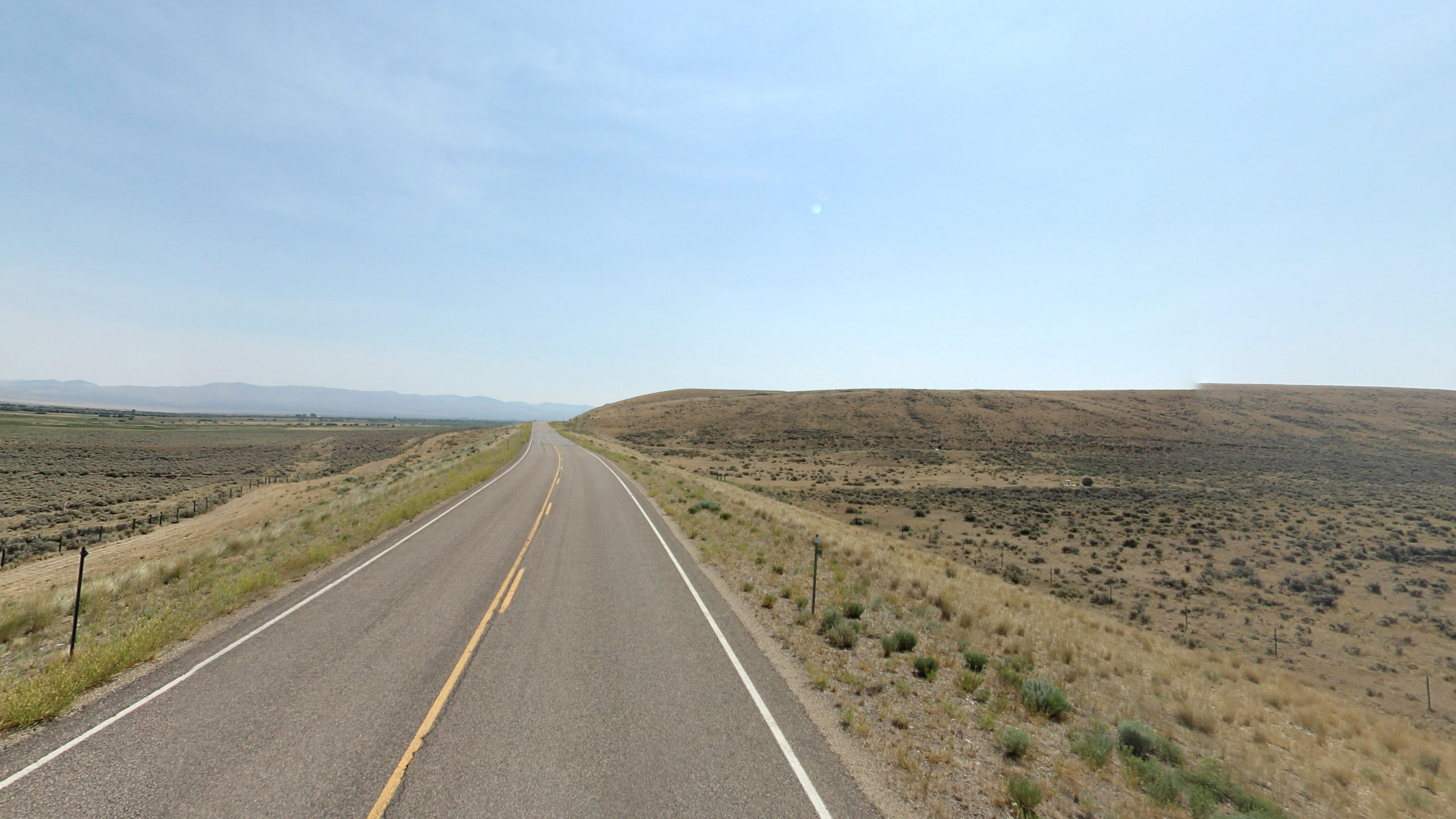
10 frames across 1.6 mi of the route around this location
Analyses
- Thomas Jefferson: The Distant Architect of the Voyage of Discovery
- Hugh McNeal: A Private’s Long March
- Toussaint Charbonneau: The Interpreter Who Brought Sacagawea
- The Nez Perce (Chopunnish): Allies of the Bitterroot and Kooskooske
- John Shields: The Expedition’s Blacksmith and Gunsmith
- Cameahwait: The Lemhi Shoshone Chief Who Traded Horses
Artwork
Help improve this record
See something that needs correcting, or know a source we are missing? The archive gets better through its readers.


