Cameahwait
Cameahwait was the chief of the Lemhi Shoshone and Sacagawea's brother, making their reunion at the headwaters of the Missouri River in August 1805 one of the most dramatic moments of the Lewis and Clark Expedition. Upon recognizing each other, Sacagawea reportedly ran to embrace him, weeping with joy. Cameahwait provided the expedition with essential horses needed to cross the Bitterroot Mountains and shared critical geographical knowledge about the route ahead. Without his cooperation, the expedition might not have successfully crossed the Continental Divide.
Biography
Cameahwait was the chief of the Lemhi Shoshone band and, as the expedition dramatically discovered, the brother of Sacagawea. His cooperation in providing horses to the expedition was one of the most critical moments of the entire journey.
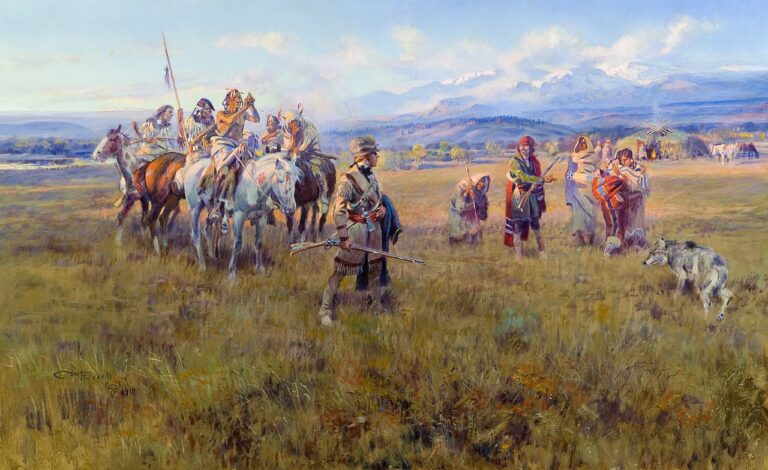
When Lewis crossed the Continental Divide at Lemhi Pass in August 1805, he encountered Cameahwait’s band — the first Shoshone the expedition met. Negotiations for horses were difficult at first, with Cameahwait suspicious of the strangers’ intentions.
Everything changed when Sacagawea was brought in to interpret and recognized Cameahwait as her brother. The emotional reunion transformed the diplomatic situation. Cameahwait agreed to provide the horses the expedition desperately needed and shared crucial geographic intelligence about the route ahead.
Cameahwait died around 1812. His decision to help the expedition — influenced by the extraordinary coincidence of his sister’s presence — was arguably the single most important act of Native cooperation during the entire journey.
Related Locations
Tent of Many Voices (1)
Journal Entries (13)


Cross-Narrator Analyses
Analyses that cite or discuss Cameahwait — showing 16 of the most recent matches.
Cameahwait: The Lemhi Shoshone Chief Who Traded Horses
First Contact in the MountainsCameahwait — chief of a band of Lemhi Shoshone encountered west of the Continental Divide in August 1805…
Charbonneau’s Silence and the Crisis on the Lemhi
August 25, 1805, a Sunday, with the expedition split. Four published journals in this corpus record the day: Meriwether Lewis and the…
Crossing the Divide, Crossing a Threshold
August 26, 1805 places the expedition astride the Continental Divide at Lemhi Pass, and the day's significance registers differently across the journals.…
Three Voices at the Forks: Converging Accounts of the Shoshone Rendezvous
The arrival of the canoe party at the forks of the Beaverhead, where Captain Lewis waited with roughly twenty Shoshone and their…
Two Camps, One Cold Morning: The Split Record at Camp Fortunate
The August 21, 1805 record is unusual because the captains were physically separated, producing two distinct narrative streams. Lewis, Ordway, and Whitehouse…
Two Camps, One Day: The Split Record of August 22, 1805
A Divided Expedition, A Divided RecordAugust 22, 1805 finds the Corps of Discovery functionally split, and the journals reflect that geography. Lewis,…
Two Camps, One River: Hunger Diplomacy and Rattlesnake Mountain
August 15, 1805 finds the Corps physically divided, and the journal record divides with it. Lewis is camped with Cameahwait's Shoshone band…
Two Camps, Two Hungers: The Shoshone Feast and the Boatmen’s Slog
August 16, 1805 finds the Corps split into two operational halves, and the journals divide accordingly. Lewis is overland with Cameahwait's Shoshone…
Two Camps, Two Verdicts: The Day the Salmon River Closed the Door
The expedition was physically divided on August 23, 1805. Clark, with a guide and three men, was pressing down the Salmon River…
Two Expeditions, One Date: Lewis’s Ethnography and Clark’s March
The August 19, 1805 entries illustrate a structural feature of the expedition's record that the captains' physical separation produced: parallel journals describing…
Hugh McNeal: A Private’s Long March
Enlistment and Mess AssignmentHugh McNeal first appears in the expedition record on May 26, 1804, when Captain Lewis issued detachment orders organizing…
Patrick Gass: The Carpenter’s Ledger
VoicePatrick Gass writes like a man balancing a ledger at the end of a long day. His entries are short, declarative, and…
Sacagawea: The Shoshone Interpreter of the Corps of Discovery
Recruitment at Fort MandanSacagawea entered the expedition record indirectly, through her husband. On November 4, 1804, Clark’s journal for that day records…
Sergeant Ordway’s Ledger: The Steady Voice of the Expedition’s Most Faithful Diarist
Voice: The Sergeant's Plain HandJohn Ordway writes like a sergeant: punctual, inclusive, and almost aggressively unliterary. Where Lewis reaches for sublimity and…
The Captain’s Eye: Meriwether Lewis as Naturalist, Quartermaster, and Reluctant Diarist
VoiceMeriwether Lewis writes in a register that is at once military, scientific, and quietly literary. Where William Clark tends toward terse navigational…
The Lemhi Shoshone: Horse Lords of the Continental Divide
A Nation Glimpsed Long Before They Were MetThe Lemhi Shoshone — the band of Northern Shoshone inhabiting the headwaters of the Missouri…
From the Heacock Memorial Archive
1 lewis-clark.org articles that mention Cameahwait, preserved here for Robert Heacock’s photography. The articles were written by that site’s contributing authors.
Researcher or educator?
Get help using the archive in your work, suggest sources we should include, or talk with us about collaboration and classroom use.


