Lewis: August 15, 1805
Thursday August 15th 1805. This morning I arrose very early and as hungary
as a wolf. I had eat nothing yesterday except one scant meal of the flour
and berries except the dryed cakes of berries which did not appear to
satisfy my appetite as they appeared to do those of my Indian friends. I
found on enquiry of McNeal that we had only about two pounds of flour
remaining. this I directed him to divide into two equal parts and to cook
the one half this morning in a kind of pudding with the hurries as he had
done yesterday and reserve the ballance for the evening. on this new
fashoned pudding four of us breakfasted, giving a pretty good allowance
also to the Chief who declared it the best thing he had taisted for a long
time. he took a little of the Hour in his hand, taisted and examined very
scrutinously and asked me if we made it of roots. I explained to him the
manner in which it grew. I hurried the departure of the Indians. the Chief
addressed them several times before they would move they seemed very
reluctant to accompany me. I at length asked the reason and he told me
that some foolish persons among them had suggested the idea that we were
in league with the Pahkees and had come on in order to decoy them into an
ambuscade where their enimies were waiting to receive them. but that for
his part he did not believe it. I readily perceived that our situation was
not entirely free from danger as the transision from suspicion to the
confermation of the fact would not be very difficult in the minds of these
ignorant people who have been accustomed from their infancy to view every
stranger as an enimy. I told Cameahwait that I was sorry to find that they
had put so little confidence in us, that I knew they were not acquainted
with whitemen and therefore could forgive them. that among whitemen it was
considered disgracefull to lye or entrap an enimy by falsehood. I told him
if they continued to think thus meanly of us that they might rely on it
that no whitemen would ever come to trade with them or bring them arms and
amunition and that if the bulk of his nation still entertained this
opinion I still hoped that there were some among them that were not
affraid to die, that were men and would go with me and convince themselves
of the truth of what I had asscerted. that there was a party of whitemen
waiting my return either at the forks of Jefferson’s river or a little
below coining on to that place in canoes loaded with provisions and
merchandize. he told me for his own part he was determined to go, that he
was not affraid to die. I soon found that I had touched him on the right
string; to doubt the bravery of a savage is at once to put him on his
metal. he now mounted his horse and haranged his village a third time; the
perport of which as he afterwards told me was to inform them that he would
go with us and convince himself of the truth or falsity of what we had
told him if he was sertain he should be killed, that he hoped there were
some of them who heard him were not affraid to die with him and if there
was to let him see them mount their horses and prepare to set out. shortly
after this harange he was joined by six or eight only and with these I
smoked a pipe and directed the men to put on their packs being determined
to set out with them while I had them in the humour at half after 12 we
set out, several of the old women were crying and imploring the great
sperit to protect their warriors as if they were going to inevitable
distruction. we had not proceeded far before our party was augmented by
ten or twelve more, and before we reached the Creek which we had passed in
the morning of the 13th it appeared to me that we had all the men of the
village and a number of women with us. this may serve in some measure to
ilustrate the capricious disposition of those people who never act but
from the impulse of the moment. they were now very cheerfull and gay, and
two hours ago they looked as sirly as so many imps of satturn. when we
arrived at the spring on the side of the mountain where we had encamped on
the 12th the Chief insited on halting to let the horses graize with which
I complyed and gave the Indians smoke. they are excessively fond of the
pipe; but have it not much in their power to indulge themselves with even
their native tobacco as they do not cultivate it themselves.after
remaining about an hour we again set out, and by engaging to make
compensation to four of them for their trouble obtained the previlege of
riding with an indian myself and a similar situation for each of my party.
I soon found it more tiresome riding without tirrups than walking and of
course chose the latter making the Indian carry my pack. about sunset we
reached the upper part of the level valley of the Cove which now called
Shoshone Cove. the grass being birned on the North side of the river we
passed over to the south and encamped near some willow brush about 4 miles
above the narrow pass between the hills noticed as I came up this cove the
river was here about six yards wide, and frequently darned up by the
beaver. I had sent Drewyer forward this evening before we halted to kill
some meat but he was unsuccessfull and did not rejoin us untill after dark
I now cooked and among six of us eat the remaining pound of flour stired
in a little boiling water.Capt. Clark delayed again this morning
untill after breakfast, when he set out and passed between low and rugged
mountains which had a few pine trees distributed over them the clifts are
formed of limestone and a hard black rock intermixed. no trees on the
river, the bottoms narrow river crooked shallow shoally and rapid. the
water is as coald as that of the best springs in our country. the men as
usual suffered excessively with fatiegue and the coldness of the water to
which they were exposed for hours together. at the distance of 6 miles by
water they passed the entrance of a bold creek on Stard. side 10 yds. wide
and 3 f. 3 i. deep which we called Willard’s Creek after Alexander Willard
one of our party. at 4 miles by water from their encampment of las evening
passed a bold branch which tumbled down a steep precipice of rocks from
the mountains on the Lard. Capt Clark was very near being bitten twice
today by rattlesnakes, the Indian woman also narrowly escaped. they caught
a number of fine trout. Capt. Clark killed a buck which was the only game
killed today. the venison has an uncommon bitter taist which is
unpleasent. I presume it proceeds from some article of their food, perhaps
the willow on the leaves of which they feed very much. they encamped this
evening on the Lard. side near a few cottonwood trees about which there
were the remains of several old Indian brush lodges.
Entities mentioned in this entry
Auto-extracted from the entry text. Hover any entity for context.
Terrain360 · the place today
Camp Fortunate / Shoshone contact in 360°
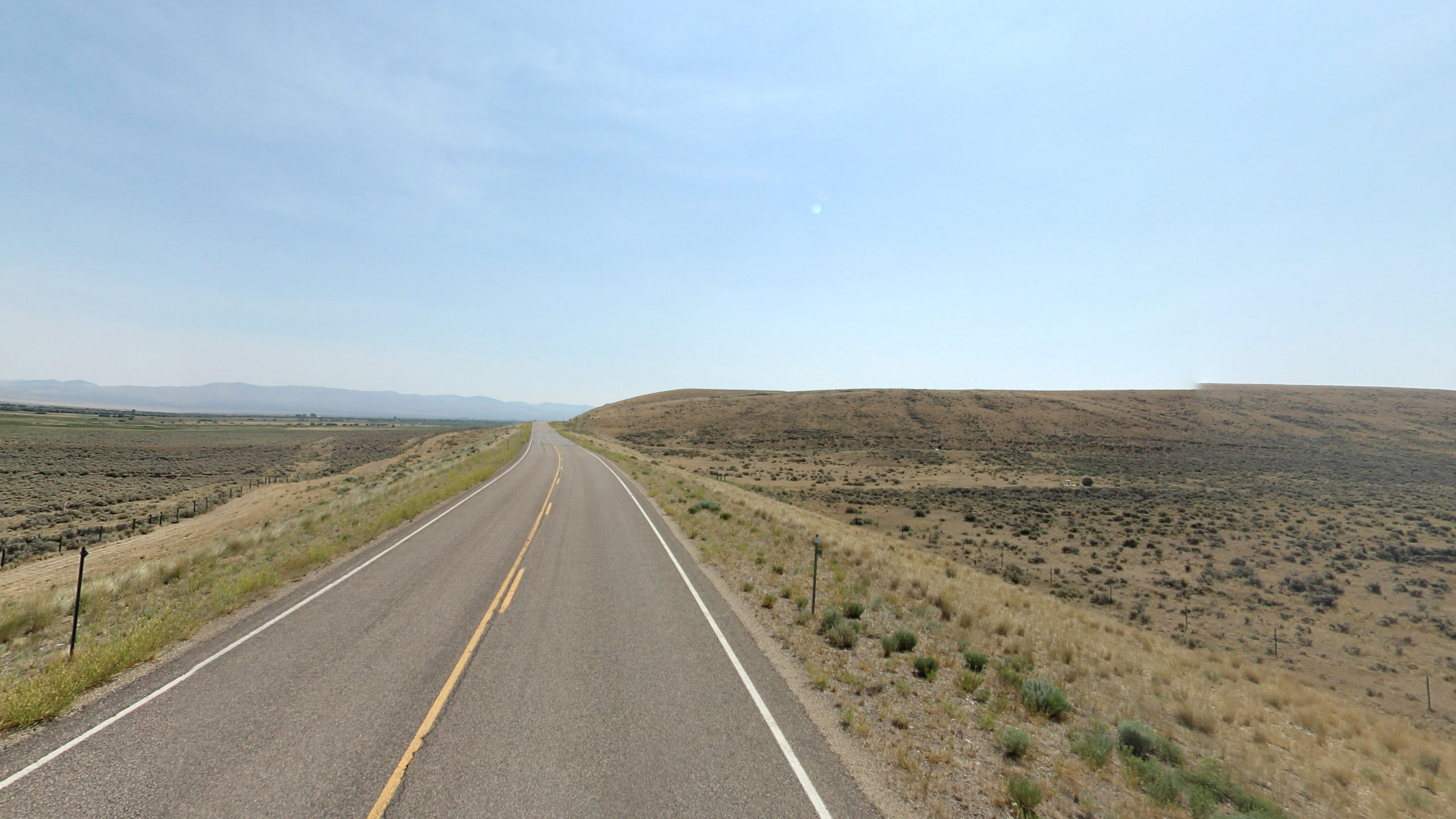
10 frames across 1.6 mi of the route around this location
Analyses
- Thomas Jefferson: The Distant Architect of the Voyage of Discovery
- Hugh McNeal: A Private’s Long March
- George Drouillard: Hunter, Interpreter, and Sign-Talker of the Corps
- Sacagawea: The Shoshone Interpreter of the Corps of Discovery
- Cameahwait: The Lemhi Shoshone Chief Who Traded Horses
- Two Camps, One River: Hunger Diplomacy and Rattlesnake Mountain
Artwork
Help improve this record
See something that needs correcting, or know a source we are missing? The archive gets better through its readers.


