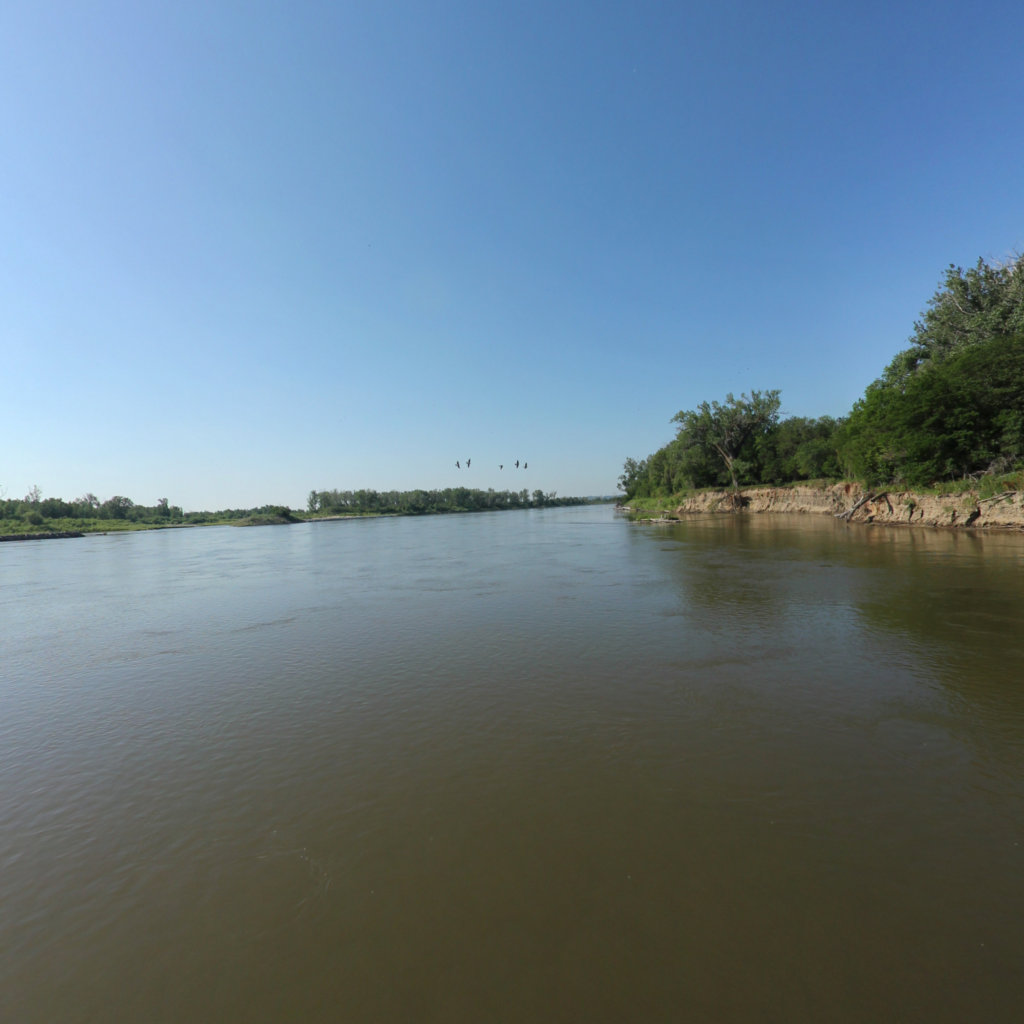
Lewis: August 5, 1804
On August 5, 1804, Lewis recorded detailed natural history observations rather than travel events. He examined a non-venomous snake killed along the riverbank near a large prairie, locally called the cow or bull snake for its reputed bellowing sound, carefully noting its measurements, scales, and coloration. He also shot two aquatic birds he had previously been unable to obtain, along with several downy young found nesting on sandbars. Lewis described the birds' appearance, weight, wing structure, calls, diet, and webbed feet in extensive anatomical detail.
August 5th 1804 Killed a serpent on the bank of the river adjoining a
large prarie.
F Inch Length from nose to tail 5 2 Circumpherence in largest part
41/2 Number of scuta on belly221 Do. on Tale53
No pison teeth therefore think him perfectly inocenteyes, center
black with a border of pale brown yellow Colour of skin on head yellowish
green with black specks on the extremity of the scuta which are pointed or
triangular colour of back, transverse stripes of black and dark brown of
an inch in width, succeeded by a yellowish brown of half that width the
end of the tale hard and pointed like a cock’s spur the sides are speckled
with yellowish brown and black.two roes of black spots on a lite
yellow ground pass throughout his whole length on the upper points of the
scuta of the belly and tale 1/2 Inch apart this snake is vulgarly called
the cow or bull snake from a bellowing nois which it is said sometimes to
make resembling that anamal, tho as to this fact I am unable to attest it
never having heard them make that or any other noise myself.
I have frequently observed an acquatic bird in the cours of asscending
this river but have never been able to procure one before today, this day
I was so fortunate as to kill two of them, they are here more plenty than
on the river below. they lay their eggs on the sand bars without shelter
or nest, and produce their young from the 15th to the last of June, the
young ones of which we caught several are covered with down of a yellowish
white colour and on the back some small specks of a dark brown. they bear
a great resemblance to the young quale of ten days oald, and apear like
them to be able to runabout and peck their food as soon as they are
hatchedthis bird, lives on small fish, worms and bugs which it
takes on the virge of the water it is seldom seen to light on trees an
quite as seldom do they lite in the water and swim tho the foot would
indicate that they did it’s being webbed I believe them to be a native of
this country and probly a constant resident.
the weight of the male bird is one ounce and a half, its length from beak
to toe 71/2 inches from tip to tip of wing across the back one foot seven
inches and a half the beak is one 1/8 inch lonong, large where it joins
the head Elated on the sides and tapering to a sharp point, a little
declining and curvated, a fine yellow, with a shade of black on the
extremity of upper beak; the eye is prominent, black and on a angular
scale of 1/2 Inc; occupyse 3 1/3 in width. the upper part of the head is
black from the beak as low as the middle of the eye and a little below the
joining of the neck except however some white which joins the upper part
of the beak which forks and passing over the sides of the forehead
terminate above each eyethe under part of the bird, that is the
throat and cheeks as high as the eye, the neck brest belly and under part
of the wings and tail are of a fine white, the upper part of the neck,
back, and wings are of a fine, quaker colour, or bright dove colour with
reather more of a bluish tint-except however the three first or larger
feathers in the wing which on upper side are of a deep black. the wing has
four joints
No. Joint Length of joint No. of feathers Length of do. 1 11/2 a Clump of
feathers not strong but loosly connect with the flesh of the wing 11/2 2 2
16 2 3 11/2 7 from 21/2 to 41/2 4 3/4 3 51/2
the tail has eleven feathers the outer of which are an inch longer than
those in the center gradually tapering inwards which gives the tale a
forked appearance like that of the swally the largest or outer feather is
23/4 that of the shortest 13/4the leg and thye are three inches
long the leg occupying one half this length the thye is covered with
feathers except about 1/4 of an inch above the knee the leg is of a bright
yellow and nails long sharp and black the foot is webbed and has three
toes forward; the heel or back toe is fixed to the leg above the palm of
the foot, and is unconnected by a web to the other toes, it has no nail.
the wings when foalded lap like those of the swallow and extend at least
an inch and a half beyond the tale. this bird is very noysey when flying
which is dose exttreemly swift the motion of the wing is much like that of
kildee it has two notes one like the squaking of a small pig only on
reather a high kee, and the other kit’-tee’- kit’-tee’as near as
letters can express the soundthe beak of the female is black and
the black and quaker colour of the male in her is yellowish brown mixed
with dove colour
Read this entry in modern English AI-translated
August 5th, 1804. Killed a serpent on the bank of the river adjoining a large prairie.
Feet, Inches. Length from nose to tail: 5 feet 2 inches. Circumference at the largest part: 4½ inches. Number of scuta on belly: 221. Same on tail: 53.
It had no poison teeth, so I think it perfectly innocent. The eyes are black at the center with a border of pale brownish yellow. The color of the skin on the head is yellowish green with black specks on the extremity of the scuta, which are pointed or triangular. The color of the back is transverse stripes of black and dark brown, each about an inch in width, followed by a yellowish brown of half that width. The end of the tail is hard and pointed like a cock's spur. The sides are speckled with yellowish brown and black. Two rows of black spots on a light yellow ground run the whole length of the snake along the upper points of the scuta of the belly and tail, ½ inch apart. This snake is commonly called the cow or bull snake, from a bellowing noise it is said to make sometimes, resembling that animal. However, I cannot personally attest to this, never having heard them make that or any other noise myself.
I have frequently observed an aquatic bird in the course of ascending this river, but had never been able to procure one before today. Today I was so fortunate as to kill two of them. They are more plentiful here than on the river below. They lay their eggs on the sand bars without shelter or nest, and produce their young from the 15th to the last of June. The young ones, of which we caught several, are covered with down of a yellowish white color, with some small specks of dark brown on the back. They bear a great resemblance to young quail of ten days old, and like them appear able to run about and peck their food as soon as they are hatched. This bird lives on small fish, worms, and bugs, which it takes at the edge of the water. It is seldom seen to light on trees, and just as seldom do they light on the water and swim, though the foot would indicate that they do, being webbed. I believe them to be a native of this country and probably a permanent resident.
The weight of the male bird is one and a half ounces. Its length from beak to toe is 7½ inches. From tip to tip of wing across the back: one foot seven and a half inches. The beak is 1⅛ inches long, large where it joins the head, flattened on the sides, and tapering to a sharp point, slightly declining and curved, a fine yellow, with a shade of black on the extremity of the upper beak. The eye is prominent and black; on an angular scale of ½ inch, it occupies 3⅓ in width. The upper part of the head is black from the beak as low as the middle of the eye and a little below the joining of the neck, except for some white which adjoins the upper part of the beak, forks, and passes over the sides of the forehead, terminating above each eye. The under part of the bird—that is, the throat and cheeks as high as the eye, the neck, breast, belly, and under part of the wings and tail—is a fine white. The upper part of the neck, back, and wings is a fine Quaker color, or bright dove color, with rather more of a bluish tint, except however the three first or larger feathers in the wing, which on the upper side are a deep black. The wing has four joints.
No. of Joint, Length of joint, Number of feathers, Length of feathers: 1 — 1½ — a clump of feathers not strong but loosely connected with the flesh of the wing — 1½; 2 — 2 — 16 — 2; 3 — 1½ — 7 — from 2½ to 4½; 4 — ¾ — 3 — 5½.
The tail has eleven feathers, the outer ones being an inch longer than those in the center, gradually tapering inward, which gives the tail a forked appearance like that of the swallow. The largest or outer feather is 2¾ inches; the shortest is 1¾ inches. The leg and thigh are three inches long, with the leg taking up half this length. The thigh is covered with feathers except for about ¼ inch above the knee. The leg is bright yellow, and the nails are long, sharp, and black. The foot is webbed and has three toes forward. The heel or back toe is attached to the leg above the palm of the foot and is not connected by a web to the other toes; it has no nail. The wings, when folded, lap like those of the swallow and extend at least an inch and a half beyond the tail. This bird is very noisy when flying, which it does extremely swiftly. The motion of the wing is much like that of the killdeer. It has two notes: one like the squeaking of a small pig, only at a rather higher pitch, and the other kit'-tee'-kit'-tee', as near as letters can express the sound. The beak of the female is black, and the black and Quaker color of the male is, in her, a yellowish brown mixed with dove color.
This modernization is AI-generated for accessibility. The original above is the authoritative version.
Entities mentioned in this entry
Auto-extracted from the entry text. Hover any entity for context.