Lewis: March 31, 1806
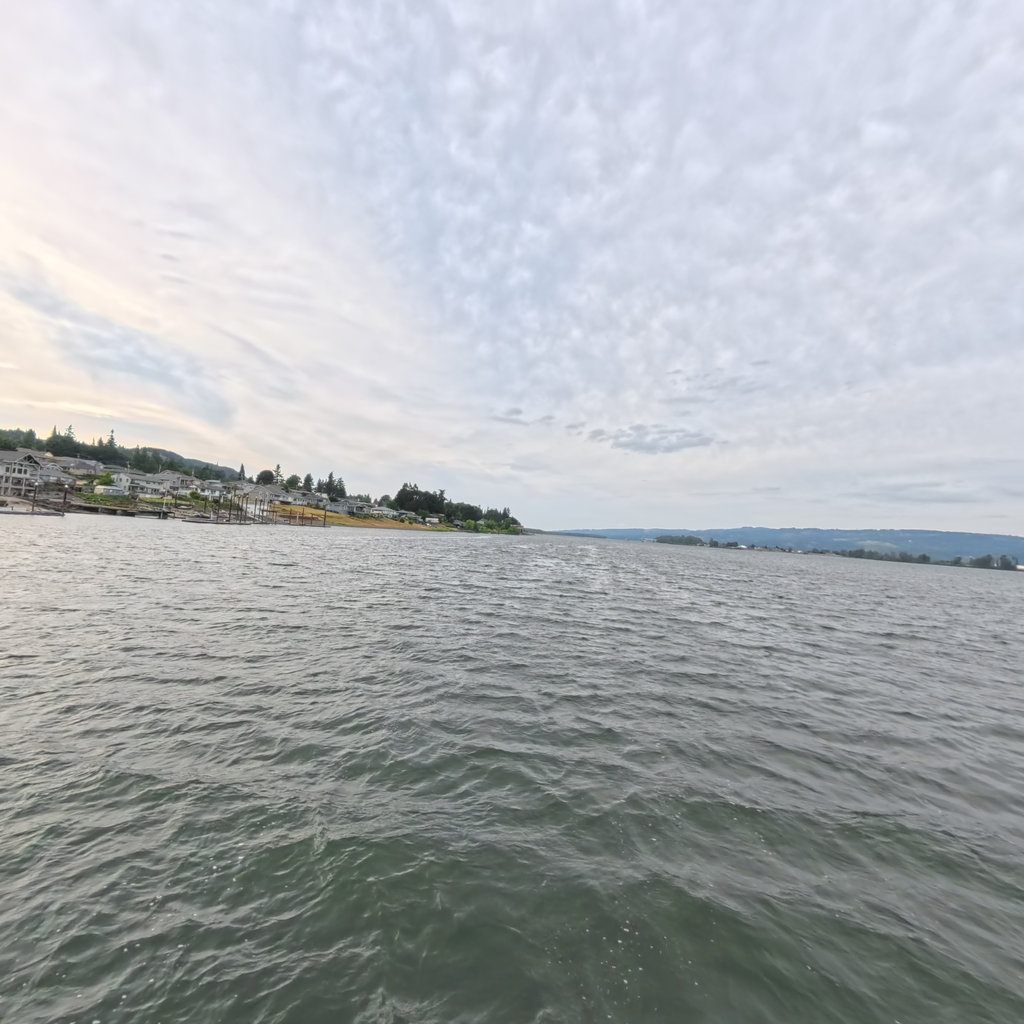
The expedition set out early and stopped for breakfast opposite a Shah-ha-la house, learning that nearby straw lodges had been abandoned as the inhabitants returned to the rapids to prepare for salmon season. Lewis observed local burial customs, dress, and language, noting differences from neighboring tribes. Traveling 25 miles along the river's north side past Diamond and Whitebrant Islands, the party named Seal River for its abundant seals and camped opposite Quicksand River. They decided to stay a day or two to examine Quicksand River, make celestial observations, and hunt, though Drewyer reported game was scarce.
Monday March 31st 1806 We set out early this morning and proceeded untill
8 A.M. when we Landed on the N. side opposite one large wooden house of
the Shah-ha-la nation and took breakfast. when we decended the river in
November last there were 24 other lodges formed of Straw and covered with
bark near this house; these lodges are now distroyed and the inhabitants
as the indians inform us have returned to the great rapids of this river
which is their permanent residence; the house which remains is inhabited;
soon after we landed two canoes came over from this house with 4 men and a
woman. they informed us that their relations who were with them last fall
usuly visit them at that season for the purpose of hunting deer and Elk
and collecting wappetoe and that they had lately returned to the rapids I
presume to prepare for the fishing season as the Salmon will begin to run
shortly.this morning we overtook the man who had visited our camp
last night he had a fine sturgeon in his canoe which he had just taken.
the Sagittaria Sagittifolia dose not grow on this river above the
Columbian valley.These indians of the rapids frequently visit this
valley at every season of the year for the purpose of collecting wappetoe
which is abundant and appears never to be out of season at any time of the
year. at 10 A.M. we resumed our march accompanyed by three men in a canoe;
one of these fellows appeared to be a man of some note among them; he was
dressed in a salor’s jacket which was decorated in his own fassion with
five rows of large and small buttons in front and some large buttons on
the pocket flaps. they are remarkably fond of large brass buttons. these
people speak a different language from those below tho in their dress
habits manners &c they differ but little from the quathlahpohtles.
their women wear the truss as those do of all the nations residing from
the quathlahpohtles to the entrance of Lewis’s river. they differ in the
manner of intering their dead. they lay them horizontally on boards and
cover them with mats, in a valt formed with boards like the roof of a hose
supported by forks and a single pole laid horizontally on those forks.
many bodies are deposited in the same valt above ground. these are
frequently laid one on the other, to the hight of three or for corps. they
deposit with them various articles of which they die possessed, and most
esteem while living. their canoes are frequently broken up to strengthen
the vault.these people have a few words the same with those below
but the air of the language is intirely different, insomuch, that it may
be justly deemed a different language. their women wear longer and larger
robes generally, than those below; these are most commonly made of deer
skins dressed with the hair on them. we continued our rout along the N.
side of the river passed diamond Island and whitebrant island to the lower
point of a handsom prarie opposite to the upper entrance of the Quicksand
river; here we encamped having traveled 25 miles today. a little below the
upper point of the White brant Island Seal river discharges itself on the
N. side. it is about 80 yards wide, and at present discharges a large body
of water. the water is very clear. the banks are low and near the Columbia
overflow and form several large ponds. the natives inform us that it is of
no great extent and heads in the mountains just above us. at the distance
of one mile from the entrance of this stream it forks, the two branches
being nearly of the same size. they are both obstructed with falls and
innumerable rappids, insomuch that it cannot be navigated. as we could not
learn any name of the natives for this stream we called it Seal river from
the great abundance of those animals which we saw about it’s entrance. we
determined to remain at our present encampment a day or two for the
several purposes of examining quicksand river making some Celestial
observations, and procuring some meat to serve us as far as the falls or
through the Western mountains where we found the game scarce as we
decended.the three indians who accompanied us last evening encamped
a little distance above us and visited our camp where they remained untill
9 P.M. in the entrance of Seal river I saw a summer duck or wood duck as
they are sometimes called. this is the same with those of our country and
is the first I have seen since I entered the rocky mountains last summer.our
hunters who had halted a little below Seal river in consequence of the
waves being too high for their small canoe did not join us untill after
dark. Drewyer who was out below Seal river informed us that game was very
scarce in that quarter, a circumstance which we did not expect.
Read this entry in modern English AI-translated
Monday March 31st 1806. We set out early this morning and continued until 8 A.M., when we landed on the north side opposite one large wooden house of the Shah-ha-la nation and took breakfast. When we descended the river last November, there were 24 other lodges formed of straw and covered with bark near this house. These lodges are now destroyed, and the inhabitants, as the Indians inform us, have returned to the great rapids of this river, which is their permanent residence. The house that remains is inhabited. Soon after we landed, two canoes came over from this house with four men and a woman. They informed us that their relations who were with them last fall usually visit them at that season for the purpose of hunting deer and elk and collecting wapato, and that they had lately returned to the rapids—I presume to prepare for the fishing season, as the salmon will begin to run shortly.
This morning we overtook the man who had visited our camp last night. He had a fine sturgeon in his canoe which he had just taken. The Sagittaria sagittifolia does not grow on this river above the Columbian Valley. These Indians of the rapids frequently visit this valley at every season of the year for the purpose of collecting wapato, which is abundant and appears never to be out of season at any time of the year.
At 10 A.M. we resumed our march, accompanied by three men in a canoe. One of these fellows appeared to be a man of some note among them; he was dressed in a sailor's jacket which was decorated in his own fashion with five rows of large and small buttons in front and some large buttons on the pocket flaps. They are remarkably fond of large brass buttons. These people speak a different language from those below, though in their dress, habits, manners, etc., they differ but little from the Quathlahpohtles. Their women wear the truss, as those do of all the nations residing from the Quathlahpohtles to the entrance of Lewis's River.
They differ in the manner of interring their dead. They lay them horizontally on boards and cover them with mats, in a vault formed with boards like the roof of a house, supported by forks and a single pole laid horizontally on those forks. Many bodies are deposited in the same vault above ground. These are frequently laid one on the other, to the height of three or four corpses. They deposit with them various articles which they died possessed of, and most esteemed while living. Their canoes are frequently broken up to strengthen the vault.
These people have a few words the same as those below, but the air of the language is entirely different, insomuch that it may be justly deemed a different language. Their women wear longer and larger robes generally than those below; these are most commonly made of deer skins dressed with the hair on them.
We continued our route along the north side of the river, passed Diamond Island and Whitebrant Island to the lower point of a handsome prairie opposite the upper entrance of the Quicksand River. Here we camped, having traveled 25 miles today. A little below the upper point of Whitebrant Island, Seal River discharges itself on the north side. It is about 80 yards wide, and at present discharges a large body of water. The water is very clear. The banks are low, and near the Columbia they overflow and form several large ponds. The natives inform us that it is of no great extent and heads in the mountains just above us. At the distance of one mile from the entrance of this stream, it forks, the two branches being nearly of the same size. They are both obstructed with falls and innumerable rapids, insomuch that it cannot be navigated. As we could not learn any name of the natives for this stream, we called it Seal River from the great abundance of those animals which we saw about its entrance.
We determined to remain at our present encampment a day or two for the several purposes of examining Quicksand River, making some celestial observations, and procuring some meat to serve us as far as the falls, or through the western mountains, where we found the game scarce as we descended.
The three Indians who accompanied us last evening camped a little distance above us and visited our camp, where they remained until 9 P.M. At the entrance of Seal River I saw a summer duck, or wood duck as they are sometimes called. This is the same as those of our country, and is the first I have seen since I entered the Rocky Mountains last summer.
Our hunters, who had halted a little below Seal River because the waves were too high for their small canoe, did not join us until after dark. Drewyer, who was out below Seal River, informed us that game was very scarce in that quarter—a circumstance which we did not expect.
This modernization is AI-generated for accessibility. The original above is the authoritative version.
Entities mentioned in this entry
Auto-extracted from the entry text. Hover any entity for context.