Lewis: May 14, 1806
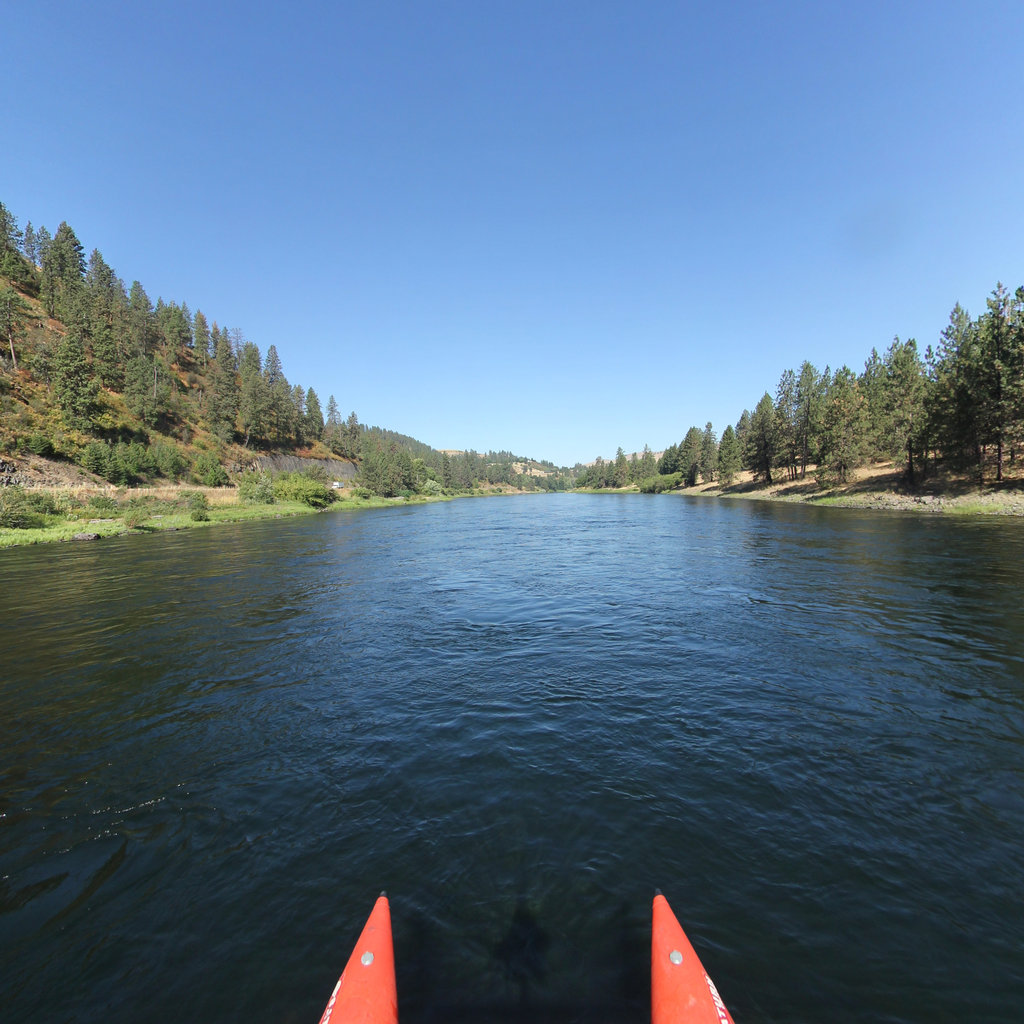
On a fair morning, the expedition ferried baggage and swam horses across the 150-yard-wide rapid river, then established a permanent camp half a mile downstream on the site of an old sunken Indian dwelling, well-positioned for defense, hunting, salmon, and pasture. Chiefs Tunnachemootoolt and Hohastillpilp arrived with a dozen young men; Hohastillpilp gifted Lewis a fine grey gelding, receiving a handkerchief, powder, and balls in return. Hunters Collins, Labiche, and Shannon brought in bears, pheasants, and squirrels, and bear meat was shared with the visitors, who cooked it in a pine-bough earth oven. The men also began castrating their troublesome stallions, testing an Indian method against Drouillard's usual technique.
Wednesday May 14th 1806. The morning was fair, we arrose early and
dispatched a few of our hunters to the opposite side of the river, and
employed a part of the men in transporting our baggage to the opposite
shore wile others were directed to collect the horses; at 10 A.M. we had
taken our baggage over and collected our horses, we then took breakfast,
after which we drove our horses into the river which they swam without
accedent and all arrived safe on the opposite shore. the river is 150 yds.
wide at this place and extreemly rapid. tho it may be safely navigated at
this season, as the water covers all the rocks which lie in it’s bed to a
considerable debth. we followed our horses and again collected them, after
which we removed our baggage to a position which we had previously
selected for our permanent camp about half a mile below. this was a very
eligible spot for defence it had been an ancient habitation of the
indians; was sunk about 4 feet in the ground and raised arround it’s outer
edge about three 1/2 feet with a good wall of eath. the whole was a circle
of about 30 feet in diameter. arround this we formed our tents of sticks
and grass facing outwards and deposited our baggage within the sunken
space under a shelter which we constructed for the purpose. our situation
was within 40 paces of the river in an extentsive level bottom thinly
timbered with the longleafed pine. here we are in the vicinity of the best
hunting grounds from indian information, are convenient to the salmon
which we expect daily and have an excellent pasture for our horses. the
hills to the E and North of us are high broken and but partially timbered;
the soil is rich and affords fine grass. in short as we are compelled to
reside a while in this neighbourhood I feel perfectly satisfyed with our
position.immediately after we had passed the river Tunnachemootoolt and
Hosastillpilp arrived on the south side with a party of a douzen of their
young men; they began to sing in token of friendship as is their custom,
and we sent the canoe over for them. they left their horses and came over
accompanyed by several of their party among whom were the 2 young men who
had presented us with two horses in behalf of the nation; one of these was
the son of Tunnachemootoolt and the other the son of the Cheif who was
killed by the Minnetares of Fort de Prarie last year and the same who had
given us the mare and Colt. we received them at our camp and smoked with
them; after some hours Hohastillpilp with much cerimony presented me with
a very eligant grey gelding which he had brought for that purpose. I gave
him in return a handkercheif 200 balls and 4 lbs. of powder. with which he
appeared perfectly satisfyed. Collins killed two bear this morning and was
sent with two others in quest of the meat; with which they returned in the
evening; the mail bear was large and fat the female was of moderate size
and reather meagre. we had the fat bear fleaced in order to reserve the
oil for the mountains. both these bear were of the speceis common to the
upper part of the missouri. they may be called white black grzly brown or
red bear for they are found of all those colours. perhaps it would not be
unappropriate to designate them the variagated bear. we gave the indians
who were about 15 in number half the female bear, with the sholder head
and neck of the other. this was a great treat to those poor wretches who
scarcely taist meat once a month. they immediately prepared a brisk fire
of dry wood on which they threw a parsel of smooth stones from the river,
when the fire had birnt down and heated the stones they placed them level
and laid on a parsel of pine boughs, on these they laid the flesh of the
bear in flitches, placing boughs between each course of meat and then
covering it thickly with pine boughs; after this they poared on a small
quantity of water and covered the whoe over with earth to the debth of
four inches. in this situation they suffered it to remain about 3 hours
when they took it out. I taisted of this meat and found it much more
tender than that which we had roasted or boiled, but the strong flavor of
the pine distroyed it for my pallate. Labuish returned late in the evening
and informed us that he had killed a female bear and two large cubbs, he
brought with him several large dark brown pheasants which he had also
killed. Shannon also returned with a few pheasants and two squirrells. we
have found our stone horses so troublesome that we indeavoured to exchange
them with the Chopunnish for mears or gelings but they will not exchange
altho we offer 2 for one; we came to a resolution to castrate them and
began the operation this evening one of the indians present offered his
services on this occasion. he cut them without tying the string of the
stone as is usual, and assures us that they will do much better in that
way; he takes care to scrape the string very clean and to seperate it from
all the adhereing veigns before he cuts it. we shall have an opportunity
of judging whether this is a method preferable to that commonly practiced
as Drewyer has gelded two in the usual way. The indians after their feast
took a pipe or two with us and retired to rest much pleased with their
repast. these bear are tremendious animals to them; they esteem the act of
killing a bear equally great with that of an enimy in the field of action.I
gave the claws of those which Collins killed to Hohastillpilp.
Read this entry in modern English AI-translated
Wednesday May 14th 1806. The morning was fair. We arose early and dispatched a few of our hunters to the opposite side of the river, and employed a part of the men in transporting our baggage to the opposite shore while others were directed to collect the horses. At 10 A.M. we had taken our baggage over and collected our horses. We then took breakfast, after which we drove our horses into the river, which they swam without accident, and all arrived safe on the opposite shore. The river is 150 yards wide at this place and extremely rapid, though it may be safely navigated at this season, as the water covers all the rocks which lie in its bed to a considerable depth. We followed our horses and again collected them, after which we removed our baggage to a position which we had previously selected for our permanent camp about half a mile below.
This was a very eligible spot for defense. It had been an ancient habitation of the Indians; it was sunk about 4 feet in the ground and raised around its outer edge about three and a half feet with a good wall of earth. The whole was a circle of about 30 feet in diameter. Around this we formed our tents of sticks and grass facing outwards, and deposited our baggage within the sunken space under a shelter which we constructed for the purpose. Our situation was within 40 paces of the river in an extensive level bottom thinly timbered with the longleafed pine. Here we are in the vicinity of the best hunting grounds, according to Indian information, are convenient to the salmon which we expect daily, and have an excellent pasture for our horses. The hills to the east and north of us are high, broken, and only partially timbered; the soil is rich and affords fine grass. In short, as we are compelled to reside a while in this neighborhood, I feel perfectly satisfied with our position.
Immediately after we had passed the river, Tunnachemootoolt and Hohastillpilp arrived on the south side with a party of a dozen of their young men. They began to sing in token of friendship as is their custom, and we sent the canoe over for them. They left their horses and came over accompanied by several of their party, among whom were the two young men who had presented us with two horses on behalf of the nation. One of these was the son of Tunnachemootoolt, and the other the son of the chief who was killed by the Minnetares of Fort de Prairie last year, the same who had given us the mare and colt. We received them at our camp and smoked with them. After some hours, Hohastillpilp with much ceremony presented me with a very elegant grey gelding which he had brought for that purpose. I gave him in return a handkerchief, 200 balls, and 4 pounds of powder, with which he appeared perfectly satisfied.
Collins killed two bear this morning and was sent with two others in quest of the meat, with which they returned in the evening. The male bear was large and fat; the female was of moderate size and rather meager. We had the fat bear flayed in order to reserve the oil for the mountains. Both these bear were of the species common to the upper part of the Missouri. They may be called white, black, grizzly, brown, or red bear, for they are found of all those colors. Perhaps it would not be inappropriate to designate them the variegated bear. We gave the Indians, who were about 15 in number, half the female bear, with the shoulder, head, and neck of the other. This was a great treat to those poor wretches, who scarcely taste meat once a month. They immediately prepared a brisk fire of dry wood, on which they threw a parcel of smooth stones from the river. When the fire had burnt down and heated the stones, they placed them level and laid on a parcel of pine boughs. On these they laid the flesh of the bear in flitches, placing boughs between each course of meat and then covering it thickly with pine boughs. After this they poured on a small quantity of water and covered the whole over with earth to the depth of four inches. In this situation they suffered it to remain about 3 hours, when they took it out. I tasted of this meat and found it much more tender than that which we had roasted or boiled, but the strong flavor of the pine destroyed it for my palate.
Labuish returned late in the evening and informed us that he had killed a female bear and two large cubs. He brought with him several large dark brown pheasants which he had also killed. Shannon also returned with a few pheasants and two squirrels. We have found our stallions so troublesome that we endeavored to exchange them with the Chopunnish for mares or geldings, but they will not exchange, although we offer 2 for one. We came to a resolution to castrate them and began the operation this evening. One of the Indians present offered his services on this occasion. He cut them without tying the cord of the testicle, as is usual, and assures us that they will do much better that way. He takes care to scrape the cord very clean and to separate it from all the adhering veins before he cuts it. We shall have an opportunity of judging whether this is a method preferable to that commonly practiced, as Drewyer has gelded two in the usual way.
The Indians, after their feast, took a pipe or two with us and retired to rest, much pleased with their repast. These bear are tremendous animals to them; they esteem the act of killing a bear equally great with that of an enemy in the field of action. I gave the claws of those which Collins killed to Hohastillpilp.
This modernization is AI-generated for accessibility. The original above is the authoritative version.
Entities mentioned in this entry
Auto-extracted from the entry text. Hover any entity for context.