Lewis: May 28, 1806
Wednesday May 28th 1806. We sent Goodrich to the village of the broken arm
this morning he returned in the evening with some roots bread and a parsel
of goats-hair for making our saddle pads. Reubin and Joseph Feilds set out
this morning to hunt high up on a creek which discharges itself into this
river about 8 miles above us. at Noon Charbono, York and Lapage returned;
they had obtained four bags of the dryed roots of Cows and some bread. in
the evening Collins Shannon and Colter returned with eight deer. they had
fortunately discovered a ford on Collins’s Creek where they were enabled
to pass it with their horses and had hunted at the quawmash ground where
we first met with the Chopunnish last fall. deer were very abundant they
informed us, but there were not many bear. The sick Cheif was much better
this morning he can use his hands and arms and seems much pleased with the
prospect of recovering, he says he feels much better than he has for a
great number of months. I sincerely wish these sweats may restore him; we
have consented that he should still remain with us and repeat these
sweats. he set up a great proportion of the day.The Child is also
better, he is free of fever, the imposthume is not so large but seems to
be advancing to maturity.- since my arrival here I have killed several
birds of the corvus genus of a kind found only in the rocky mountains and
their neighbourhood. I first met with this bird above the three forks of
the Missouri and saw them on the hights of the rocky Mountains but never
before had an opportunity of examining them closely. the small corvus
discribed at Fort Clatsop is a different speceis, tho untill now I had
taken it to be the same, this is much larger and has a loud squawling note
something like the mewing of a cat. the beak of this bird is 11/2 inches
long, is proportionably large, black and of the form which characterizes
this genus. the upper exceeds the under chap a little. the head and neck
are also proportionably large. the eye full and reather prominent, the
iris dark brown and puple black. it is about the size and somewhat the
form of the Jaybird tho reather rounder or more full in the body. the tail
is four and a half inches in length, composed of 12 feathers nearly of the
same length. the head neck and body of this bird are of a dove colour. the
wings are black except the extremities of six large fathers ocupying the
middle joint of the wing which are white. the under disk of the wing is
not of the shining or grossy black which marks it’s upper surface. the two
feathers in the center of the tail are black as are the two adjacent
feathers for half their width the ballance are of a pure white. the feet
and legs are black and imbricated with wide scales. the nails are black
and remarkably long and sharp, also much curved. it has four toes on each
foot of which one is in the rear and three in front. the toes are long
particularly that in the rear. this bird feeds on the seed of the pine and
also on insects. it resides in the rocky mountains at all seasons of the
year, and in many parts is the only bird to be found.our hunters
brought us a large hooting Owl which differs considerably from those of
the Atlantic States which are also common here. the plumage of this owl is
an uniform mixture of dark yellowish brown and white, in which the dark
brown predominates. it’s colour may be properly termed a dark iron grey.
the plumage is very long and remarkably silky and soft. these have not the
long feathers on the head which give it the appearance of ears or horns.
the leathers of the head are long narrow and closely set, they rise
upwright nearly to the extremity and then are bent back sudonly as iff
curled. a kind of ruff of these feathers incircle the thoat. the head has
a flat appearance being broadest before and behind and is 1 foot 10 Is. in
circumference. incircling the eyes and extending from them like rays from
the center a tissue of open hairy long feathers are placed of a light grey
colour, these conceal the ears which are very large and are placed close
to the eyes behind and extending below them. these feathers meet over the
beak which they nearly conceal and form the face of the owl. they eyes are
remarkably large and prominant, the iris of a pale goald colour and iris
circular and of a deep sea green. the beak is short and wide at it’s base.
the upper chap is much curved at the extremity and comes down over and in
front of the under chap. this bird is about the size of the largest
hooting Owl. the tail is composed of eleven feathers, of which those in
the center are reather the longest. it is booted to the extremity of the
toes, of which it has four on each foot, one in the rear one on the outer
side and two in front. the toes are short particularly that in rear, but
are all armed with long keen curved nails of a dark brown colour. the beak
is white and nostrils circular large and unconnected. the habits and the
note of this owl is much that of the common large hooting owl.
Entities mentioned in this entry
Auto-extracted from the entry text. Hover any entity for context.
Terrain360 · the place today
Camp Chopunnish (Long Camp), waiting for snow to melt in 360°
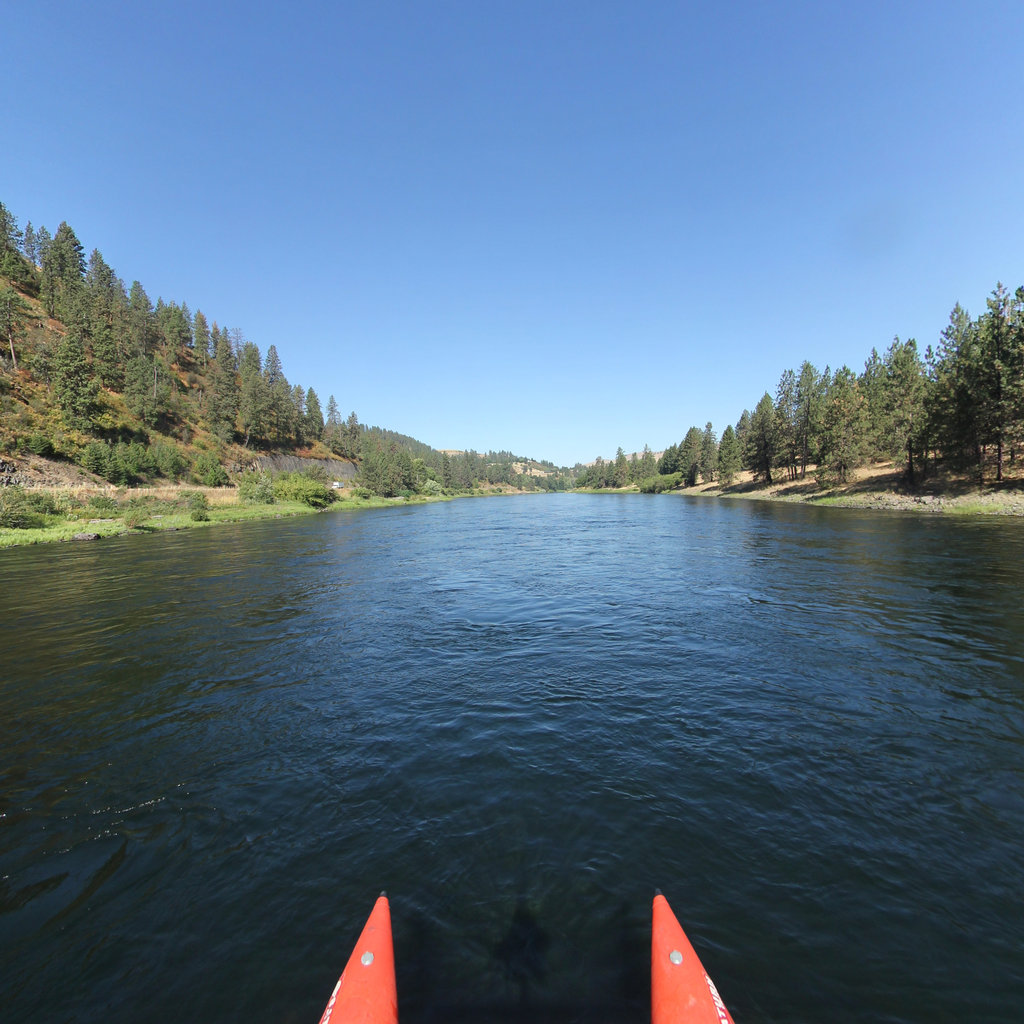
10 frames across 1.6 mi of the route around this location
Analyses
- Cows Roots, Sweat Lodges, and a Squawling Bird: Four Voices at Camp Chopunnish
- Silas Goodrich: The Expedition’s Fisherman
- York: The Enslaved Man Who Crossed a Continent
- John Colter: The Hunter Who Walked Away From Home
- Jean Baptiste Charbonneau: The Infant Traveler of the Corps of Discovery
- George Shannon: The Youngest Soldier of the Corps of Discovery
Artwork
Help improve this record
See something that needs correcting, or know a source we are missing? The archive gets better through its readers.


