Lewis: May 29, 1806
Thursday May 29th 1806. No movement of the party today worthy of notice.
we have once more a good stock of meat and roots. Bratton is recovering
his strength very fast; the Child and the Indian Cheif are also on the
recovery. the cheif has much more uce of his hands and arms. he washed his
face himself today which he has been unable to do previously for more than
twelvemonths. we would have repeated the sweat today had not been cloudy
and frequently raining. a speceis of Lizzard called by the French engages
prarie buffaloe are native of these plains as well as of those of the
Missouri. I have called them the horned Lizzard. they are about the size
and a good deel the figure of the common black lizzard. but their bellies
are broader, the tail shorter and their action much slower; they crawl
much like the toad. they are of brown colour with yellowish and
yellowishbrown spots. it is covered with minute scales intermixed with
little horny prosesses like blont prickles on the upper surface of the
body. the belley and throat is more like the frog and are of a light
yelowish brown colour. arround the edge of the belley is regularly set
with little horney projections which give to those edges a serrate figure
the eye is small and of a dark colour. above and behind the eyes there are
several projections of the bone which being armed at their extremities
with a firm black substance has the appearance of horns sprouting out from
the head. this part has induced me to distinguish it by the apppellation
of the horned Lizzard. I cannot conceive how the engages ever assimilated
this animal with the buffaloe for there is not greater analogy than
between the horse and the frog. this animal is found in greatest numbers
in the sandy open parts of the plains, and appear in great abundance after
a shower of rain; they are sometimes found basking in the sunshine but
conceal themselves in little holes in the earth much the greater
preportion of their time. they are numerous about the falls of the
Missouri and in the plains through which we past lately above the
Wallahwallahs.The Choke Cherry has been in blume since the 20th
inst. it is a simple branching ascending stem. the cortex smooth and of a
dark brown with a redish cast. the leaf is scattered petiolate oval accute
at its apex finely serrate smooth and of an ordinary green. from 11/2 to 3
inches in length and 13/4 to 2 in width. the peduncles are common,
cilindric, and from 4 to 5 inches in length and are inserted promiscuously
on the twigs of the preceeding years growth. on the lower portion of the
common peduncle are frequently from 3 to 4 small leaves being the same in
form as those last discribed. other peduncles 1/4 of an inch in length are
thickly scattered and inserted on all sides of the common peduncle at
wright angles with it each elivating a single flower, which has five
obtuse short patent white petals with short claws inserted on the upper
edge of the calyx. the calyx is a perianth including both stamens and
germ, one leafed fine cleft entire simiglobular, infrior, deciduous. the
stamens are upwards of twenty and are seated on the margin of the flower
cup or what I have called the perianth. the filaments are unequal in
length subulate inflected and superior membranous. the anthers are equal
in number with the filaments, they are very short oblong & flat, naked
and situated at the extremity of the filaments, is of a yelow colour as is
also the pollen. one pistillum. the germen is ovate, smooth, superior,
sessile, very small; the Style is very short, simple, erect, on the top of
the germen, deciduous. the stigma is simple, flat very short.-
Entities mentioned in this entry
Auto-extracted from the entry text. Hover any entity for context.
Terrain360 · the place today
Camp Chopunnish (Long Camp), waiting for snow to melt in 360°
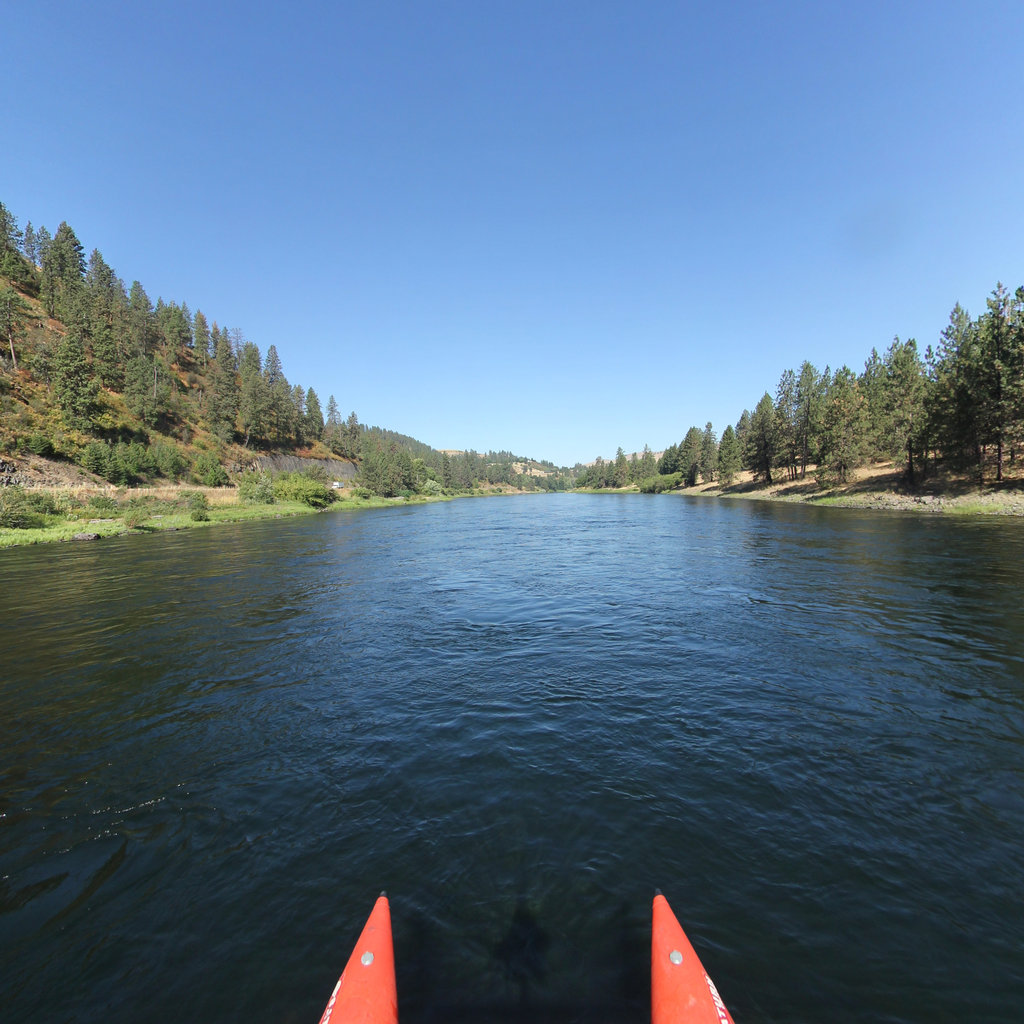
10 frames across 1.6 mi of the route around this location
Analyses
Artwork
Help improve this record
See something that needs correcting, or know a source we are missing? The archive gets better through its readers.


