Lewis: May 30, 1805
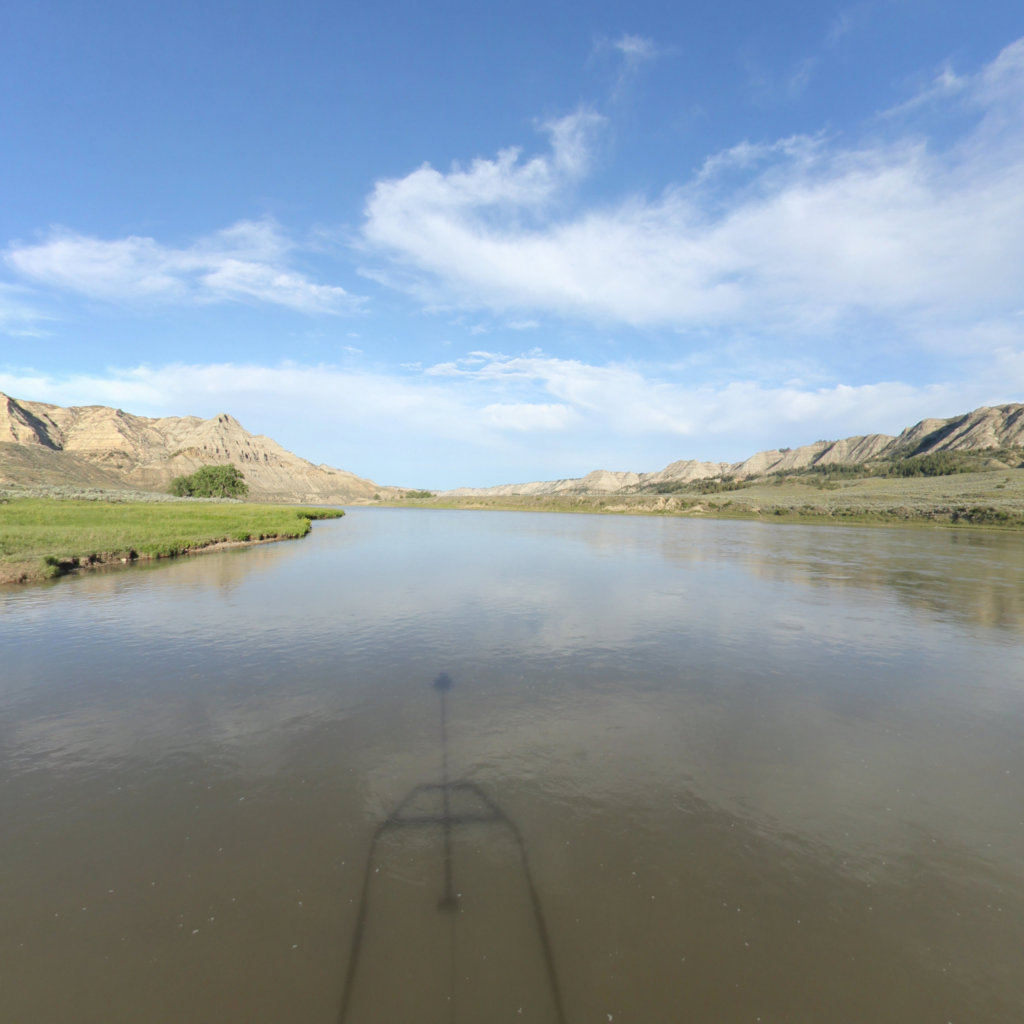
Heavy rain and high wind delayed the expedition's departure until 11 a.m., marking the most rainfall they'd seen since September. Lewis noted the unusually dry air, evidenced by quickly evaporating water and shrinking wood on his sextant case. The day's travel was especially difficult: rapid currents, rocky points, slippery banks, and falling debris from steep bluffs forced reliance on towing cords, which broke several times. A scout reported snow on the heights and level country beyond. They passed several abandoned Indian encampments, possibly Blackfoot, and killed two buffalo near camp.
Thursday May 30th 1805. The rain which commenced last evening continued
with little intermission untill 11this morning when we set out; the high
wind which accompanied the rain rendered it impracticable to procede
earlyer. more rain has now fallen than we have experienced since the 15th
of September last. many circumstances indicate our near approach to a
country whos climate differs considerably from that in which we have been
for many months. the air of the open country is asstonishingly dry as well
as pure. I found by several experiments that a table spoon full of water
exposed to the air in a saucer would avaporate in 36 hours when the
murcury did not stand higher than the temperate point at the greatest heat
of the day; my inkstand so frequently becoming dry put me on this
experiment. I also observed the well seasoned case of my sextant shrunk
considerably and the joints opened. The water of the river still continues
to become clearer and notwithstanding the rain which has fallen it is
still much clearer than it was a few days past. this day we proceded with
more labour and difficulty than we have yet experienced; in addition to
the imbarrasments of the rappid courant, riffles, & rockey point which
were as bad if not worse than yesterday, the banks and sides of the bluff
were more steep than usual and were now rendered so slippery by the late
rain that the men could scarcely walk. the chord is our only dependance
for the courant is too rappid to be resisted with the oar and the river
too deep in most places for the pole. the earth and stone also falling
from these immence high bluffs render it dangerous to pass under them. the
wind was also hard and against us. our chords broke several times today
but happily without injury to the vessels. we had slight showers of rain
through the course of the day, the air was could and rendered more
disagreeable by the rain. one of the party ascended the river hills and
reported on his return that there was snow intermixed with the rain which
fell on the hights; he also informed us that the country was level a
little back from the river on both sides. there is now no timber on the
hills, an only a few scattering cottonwood, ash, box Alder and willows to
be seen along the river. in the course of the day we passed several old
encampment of Indians, from the apparent dates of which we conceived that
they were the several encampments of a band of about 100 lodges who were
progressing slowly up the river; the most recent appeared to have been
evacuated about 5 weeks since. these we supposed to be the Minetares or
black foot Indians who inhabit the country watered by the Suskashawan and
who resort to the establishment of Fort de Prarie, no part of the Missouri
from the Minetaries to this place furnishes a perminent residence for any
nation yet there is no part of it but what exhibits appearances of being
occasionally visited by some nation on hunting excurtions. The Minnetares
of the Missoury we know extend their excurtions on the S. side as high as
the yellowstone river; the Assinniboins still higher on the N. side most
probably as high as about Porcupine river and from thence upwards most
probably as far as the mountains by the Minetares of Fort de Prarie and
the Black Foot Indians who inhabit the S. fork of the Suskashawan. I say
the Missouri to the Rocky mountains for I am convinced that it penetrates
those mountains for a considerable distance.Two buffaloe killed
this evening a little above our encampment.
Read this entry in modern English AI-translated
Thursday, May 30th, 1805. The rain that started last evening continued with little break until 11 this morning, when we set out; the high wind that accompanied the rain made it impractical to proceed earlier. More rain has now fallen than we have experienced since the 15th of September last. Many circumstances indicate that we are nearing a country whose climate differs considerably from the one we have been in for many months. The air of the open country is astonishingly dry as well as pure. I found by several experiments that a tablespoonful of water exposed to the air in a saucer would evaporate in 36 hours, even when the mercury did not rise higher than the temperate point at the greatest heat of the day; my inkstand so frequently becoming dry led me to this experiment. I also observed that the well-seasoned case of my sextant had shrunk considerably and the joints had opened. The water of the river still continues to become clearer, and despite the rain that has fallen, it is still much clearer than it was a few days ago.
Today we proceeded with more labor and difficulty than we have yet experienced. In addition to the obstacles of the rapid current, riffles, and rocky points—which were as bad if not worse than yesterday—the banks and sides of the bluffs were steeper than usual and were now made so slippery by the recent rain that the men could scarcely walk. The cord is our only resource, for the current is too rapid to be resisted with the oar, and the river is too deep in most places for the pole. The earth and stones falling from these immensely high bluffs also make it dangerous to pass under them. The wind was also strong and against us. Our cords broke several times today, but fortunately without injury to the vessels. We had slight showers of rain throughout the day; the air was cold and made more disagreeable by the rain. One of the party climbed the river hills and reported on his return that there was snow mixed with the rain that fell on the heights; he also told us that the country was level a little back from the river on both sides. There is now no timber on the hills, and only a few scattered cottonwood, ash, box elder, and willows to be seen along the river.
In the course of the day we passed several old Indian encampments, from the apparent dates of which we judged that they were the successive camps of a band of about 100 lodges that was progressing slowly up the river; the most recent appeared to have been abandoned about 5 weeks ago. We supposed these to be the Minetares or Blackfoot Indians, who inhabit the country watered by the Suskashawan (Saskatchewan) and who go to the trading post of Fort de Prairie. No part of the Missouri from the Minetaries to this place provides a permanent residence for any nation, yet there is no part of it that does not show signs of being occasionally visited by some nation on hunting excursions. The Minnetares of the Missouri, we know, extend their excursions on the south side as high as the Yellowstone River; the Assinniboins still higher on the north side, most probably as high as about Porcupine River; and from there upward, most probably as far as the mountains, by the Minetares of Fort de Prairie and the Blackfoot Indians, who inhabit the south fork of the Suskashawan (Saskatchewan). I say the Missouri to the Rocky Mountains, for I am convinced that it penetrates those mountains for a considerable distance. Two buffalo were killed this evening a little above our camp.
This modernization is AI-generated for accessibility. The original above is the authoritative version.
Entities mentioned in this entry
Auto-extracted from the entry text. Hover any entity for context.