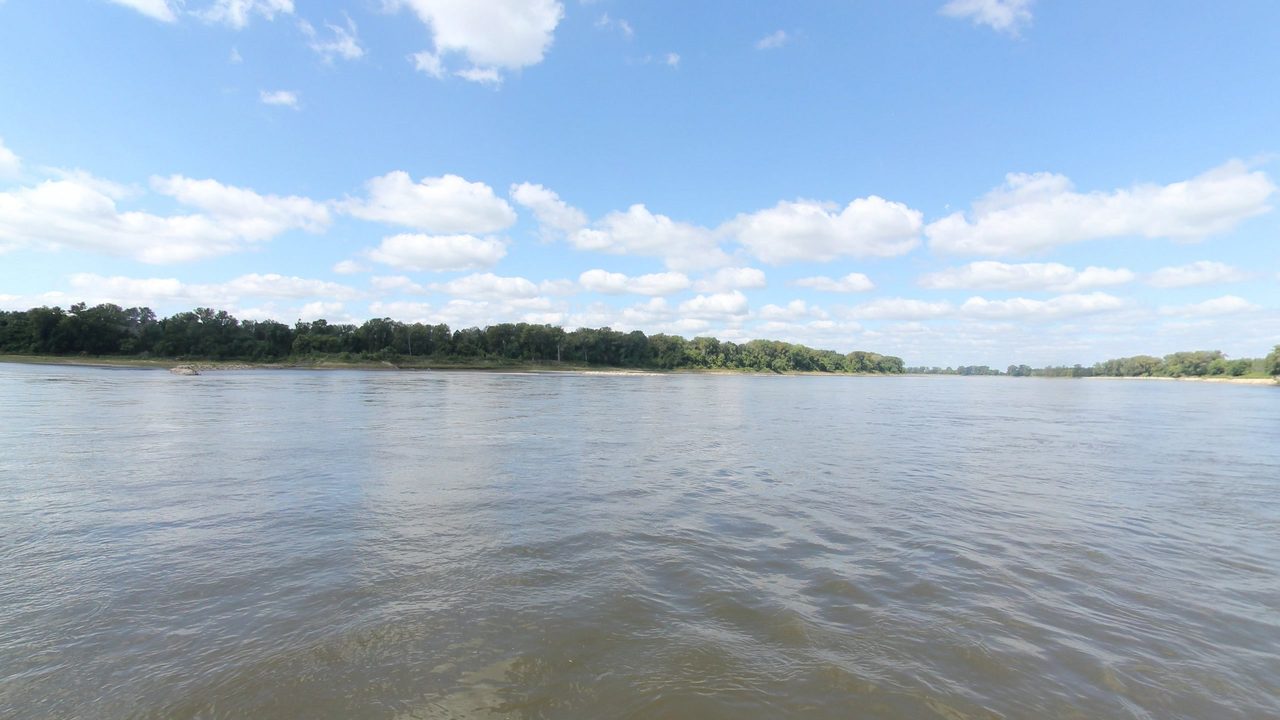


May 15, 1804 was the expedition’s first full day of upstream travel after the previous day’s departure from Camp River Dubois. The party made only nine miles in driving rain before camping at a Mr. Piper’s (or Pifer’s) landing on the starboard shore. Five narrators preserved entries for the day, and the comparison reveals how quickly the documentary division of labor had settled into place — and how quickly the enlisted men’s journals had begun to converge.
Lewis Diagnoses, Clark Inventories
Lewis’s entry is the day’s most analytical. He alone explains why the barge ran foul of submerged logs three times:
this was cased by her being too heavily laden in the stern. Persons accustomed to the navigation of the Missouri and the Mississippi also below the mouth of this river, uniformly take the precaution to load their vessels heavyest in the bow when they ascend the stream in order to avoid the danger incedent to runing foul of the concealed timber which lyes in great quantities in the beds of these rivers.
This is characteristic Lewis: a particular incident generalized into a piece of river-craft pedagogy, complete with the regional convention he had presumably absorbed from St. Louis boatmen over the winter. He also notes that the barge was “several minutes in eminent danger” — a phrase no other narrator uses.
Clark, by contrast, registers the same event almost flatly — “the Boat run on Logs three times to day, owing her being too heavyly loaded a Sturn” — and devotes more attention to logistics and landscape: extinguished fires, wet provisions on the pirogue, two hunters sent inland, fowls purchased from settlers in the prairie, an undermanned pirogue, a coal bank on the south side, and “a number of Goslings” along the shore. Clark’s second pass through the day, his “Refurences,” adds the rock formation called the Plattes and the proximity of the Mississippi within a mile and a half. Where Lewis reasons, Clark catalogues.
The Sergeants Converge
The most striking pattern is the near-identity of the Ordway, Floyd, and Whitehouse entries. Ordway writes that the party “Sailed Some, encamped on N. Side Some land cleared, the Soil verry Rich, &c.” Floyd writes: “Sailed som and encamped on the N. side some Land Cleared the Soil verry Rich.” The wording is essentially the same sentence with minor orthographic variation. Whitehouse, covering the same stretch, gives a slightly fuller version — “the current Swift, & water muddy. passed Islands & Some inhabitants” — but lands on the same closing detail: “we Camped on the North Side.”
Note also that all three sergeants disagree with the captains on which bank the camp lay. Lewis and Clark both specify the starboard (south) side at Piper’s landing; Ordway, Floyd, and Whitehouse all say the north. The discrepancy likely reflects the enlisted men working from a shared oral summary rather than independent observation — a phenomenon that becomes pronounced later in the journey, particularly in Whitehouse’s documented copying from Ordway.
What Each Narrator Uniquely Preserves
Stripping out the overlap, each journal contributes something the others omit. Lewis alone supplies the river-pilot’s rationale for bow-heavy loading and the phrase “wild gees with their young brudes.” Clark alone records the extinguished fires, the wet provisions, the dispatched hunters, the purchase of fowls from prairie settlers, and the undermanned pirogue — the housekeeping of a captain still shaking the expedition into working order. Ordway and Floyd, nearly interchangeable on the 15th, both press forward into May 16th and capture the arrival at St. Charles: the single gun fired in salute, the “great nomber of French people” who came to see the boat, and the identification of the village as “an old French Settlement & Roman Catholick.” Whitehouse, also looking ahead to the 16th, adds the social texture the others omit — the evening passed “with a great deal of Satisfaction, all chearful and in good spirits” and the inhabitants described as “dressy polite people.”
The composite picture is of a party nine miles upstream, soaked, briefly imperiled by its own loading error, and already producing the layered documentary record — captain’s analysis, captain’s inventory, sergeants’ shared shorthand — that would characterize the next twenty-eight months.


