Clark’s Drawing of the Eulachon (Candlefish)
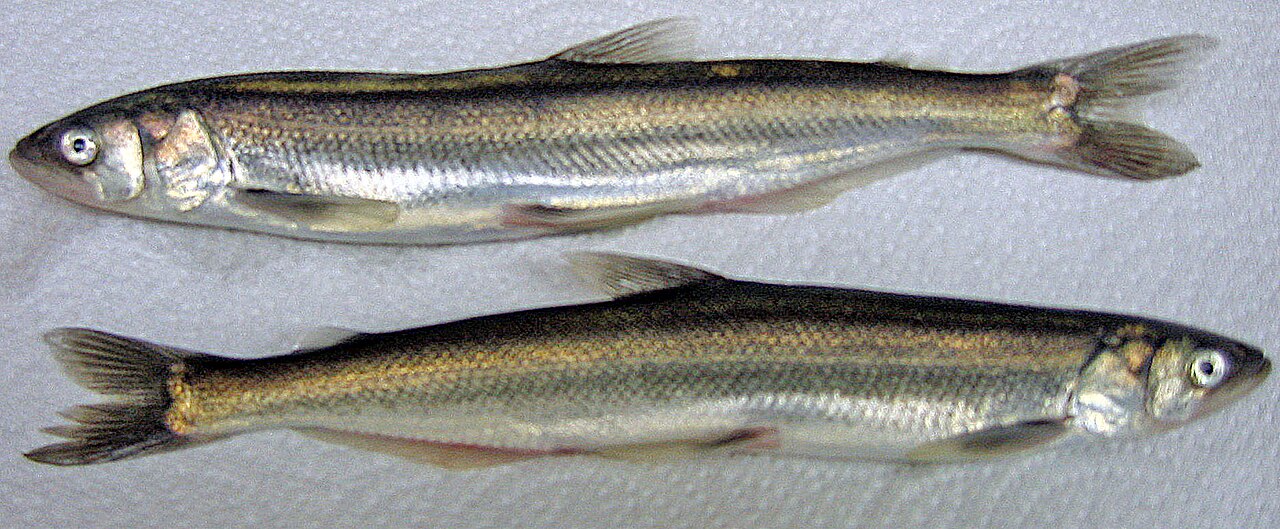
Clark’s drawing of the eulachon occupies a page of his expedition journal entry for February 25, 1806, made during the Corps of Discovery’s winter encampment at Fort Clatsop near the mouth of the Columbia River. The sketch shows the small anadromous smelt in profile, rendered in ink with attention to the proportions of the head, the placement of the dorsal and pelvic fins, the forked caudal fin, and the lateral line. Clark drew the fish at what he indicated was actual size, surrounding the image with measurements and descriptive notes on its anatomy, color, and the texture of its flesh. The drawing is unsigned in any formal sense, integrated directly into the running text of the field journal.
The eulachon (Thaleichthys pacificus), known commonly as the candlefish for its high oil content, was traded to the captains by Clatsop or Chinookan neighbors in late February 1806, as the expedition was preparing for its return journey east. Clark recorded that the fish were so rich they could be dried and burned like tapers, and he praised the flavor above any fish he had previously eaten. The drawing was part of the systematic natural-history documentation Lewis and Clark had been charged with by President Thomas Jefferson, who instructed them to record species unknown to science. The eulachon was one of numerous fish, mammals, birds, and plants the captains described for the first time in the Euro-American scientific record during the Pacific winter.
William Clark, trained as a frontier officer and surveyor rather than as a naturalist or draftsman, produced functional rather than decorative illustrations; his fish, birds, and maps were working documents meant to accompany written descriptions. The journal containing this sketch passed to the American Philosophical Society in Philadelphia, the institution Jefferson designated as the repository for the expedition’s papers, where it remains among the most frequently reproduced pages from the Lewis and Clark journals. The eulachon drawing has been used widely in published editions of the journals, beginning with Reuben Gold Thwaites’s 1904–1905 edition and continuing through Gary Moulton’s definitive Nebraska edition, and is often cited in discussions of the expedition’s contributions to ichthyology.