River Bluffs, 1320 Miles above St. Louis
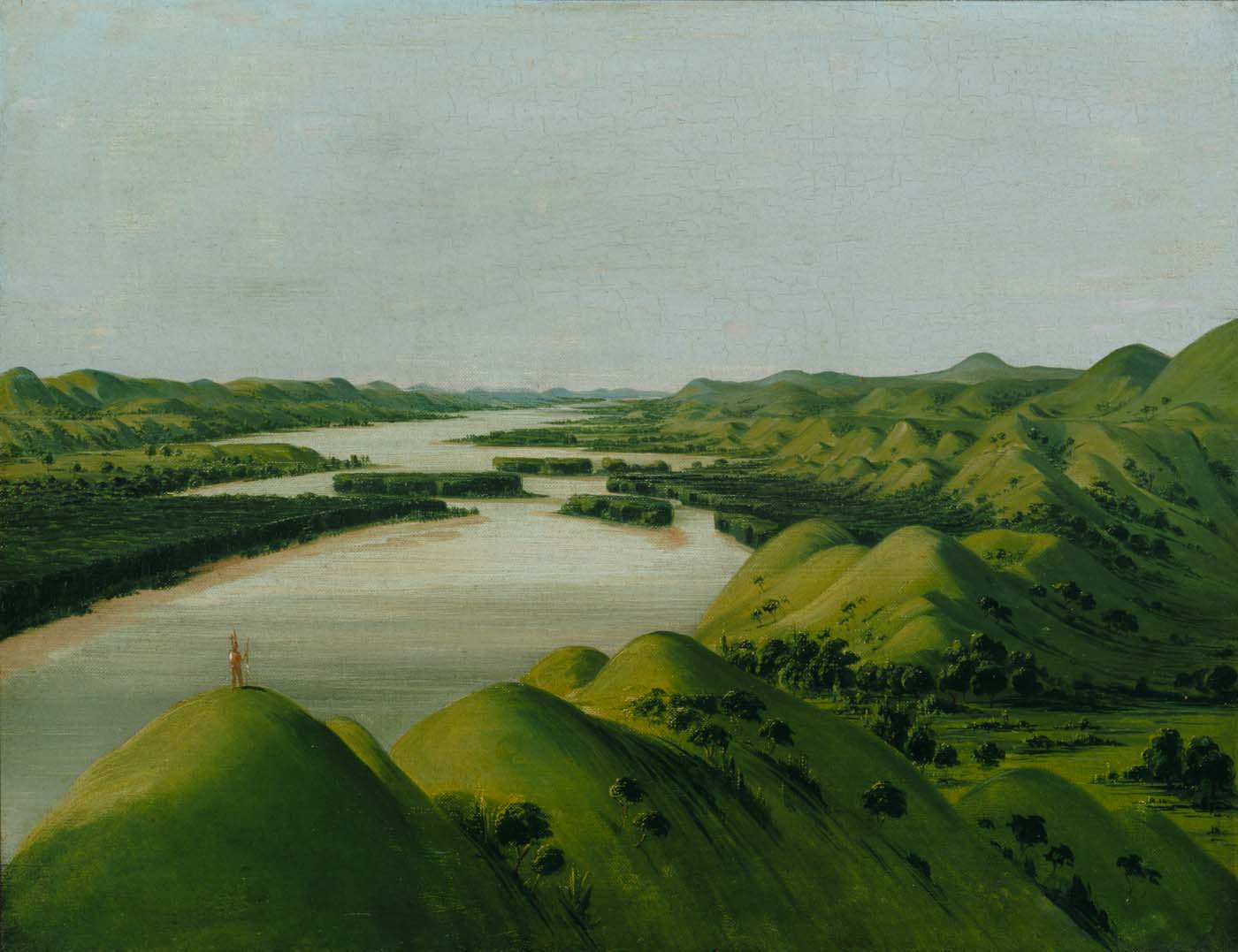
Catlin’s small oil shows a stretch of the upper Missouri River where wind- and water-cut bluffs rise above the channel. The composition is horizontal, with the river occupying the foreground as a broad pale band, a low shoreline of scrub and sandbar in the middle distance, and the eroded bluff faces filling the upper register. Catlin renders the formations in soft ochres, tans, and dusty greens, with light cloud cover overhead. There are no figures; the scene is purely topographical, recording the character of the bluffs as the artist observed them from a passing vessel. The brushwork is rapid and thin, consistent with field sketches worked up in oil rather than studio compositions.
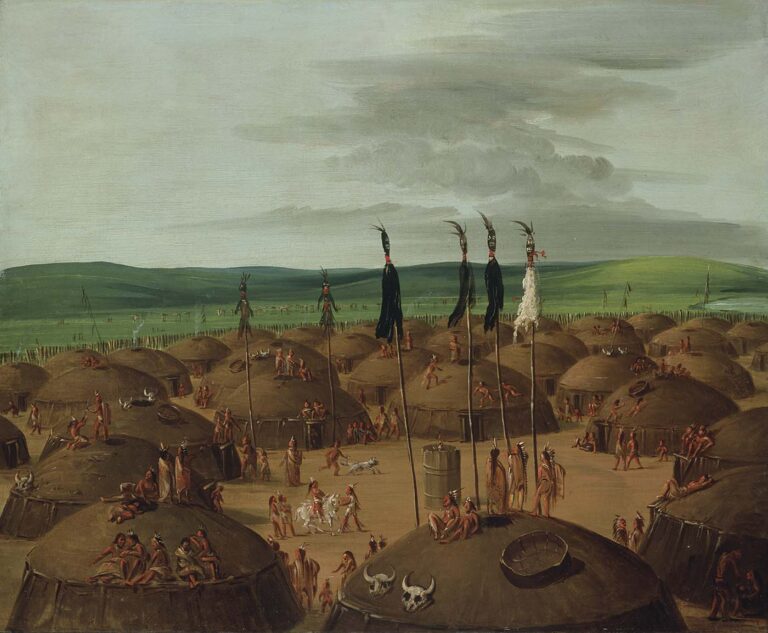
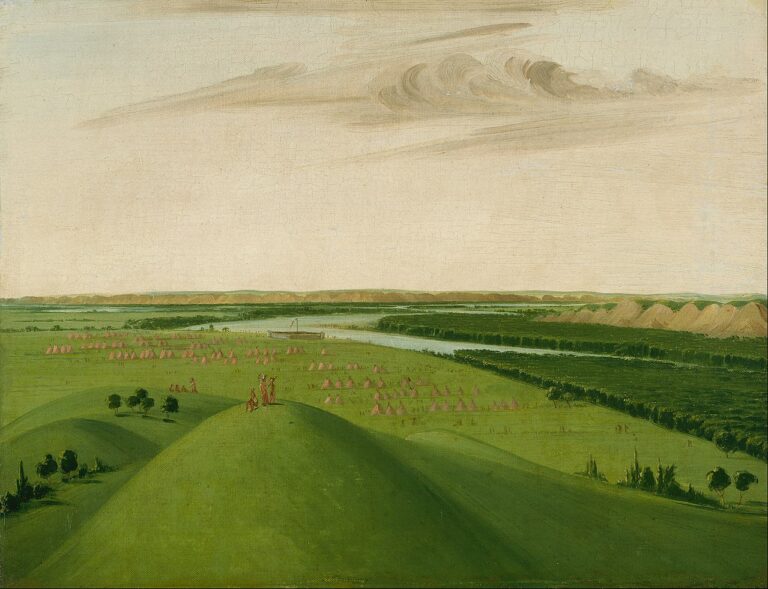
The painting was made in 1832 during Catlin’s ascent of the Missouri aboard the American Fur Company steamboat Yellow Stone, which traveled from St. Louis to Fort Union at the mouth of the Yellowstone River. The title’s distance marker — 1,320 miles above St. Louis — places the view in present-day South Dakota or southern North Dakota, the same reach of river Lewis and Clark had traversed in 1804 and described in their journals as a country of striking eroded formations. Catlin’s 1832 trip was the first major journey of his career devoted to documenting Native peoples and the western landscape, and it produced the core of what he would assemble as his Indian Gallery.
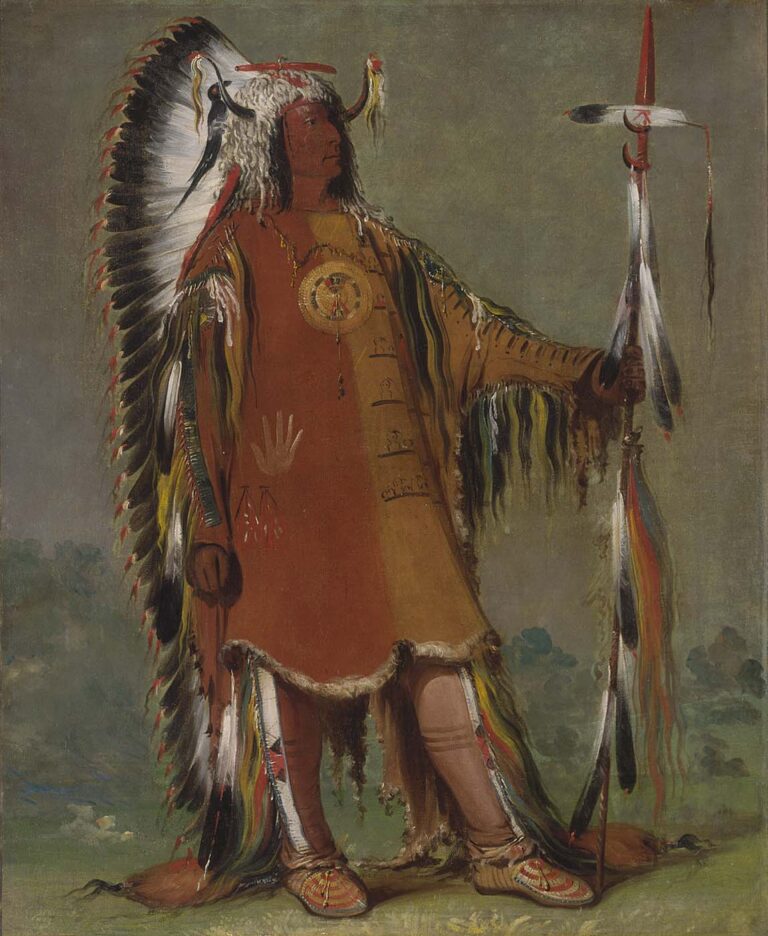
Catlin (1796–1872) trained as a lawyer before turning to portraiture, and he conceived the western project as a systematic visual record before, as he believed, Native life on the plains would be altered beyond recognition. The river-bluff studies, of which this is one of many, served partly as topographical notes and partly as backgrounds against which he could imagine the tribes he had encountered. The painting entered the Smithsonian American Art Museum through the 1879 gift of Mrs. Joseph Harrison, Jr., whose husband had acquired Catlin’s Indian Gallery from the artist in the 1850s after Catlin’s financial collapse in London. The Harrison gift forms the foundation of the Smithsonian’s Catlin holdings and remains the principal source for studying his Missouri River work.