Sacagawea at the Bitterroot
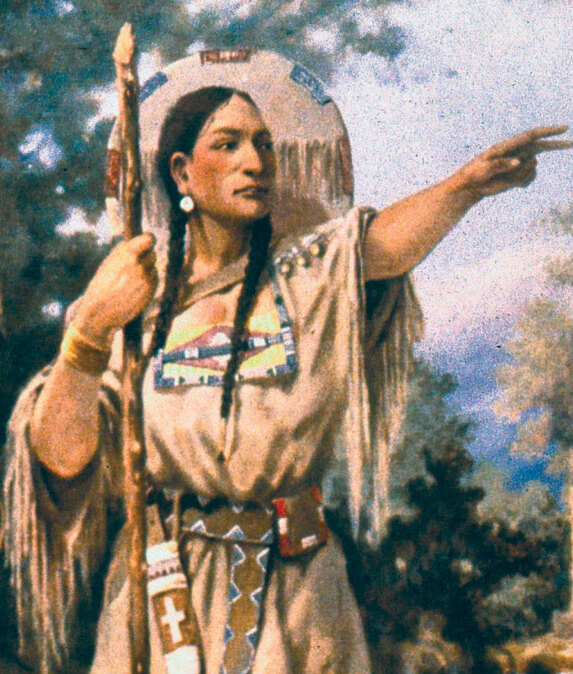
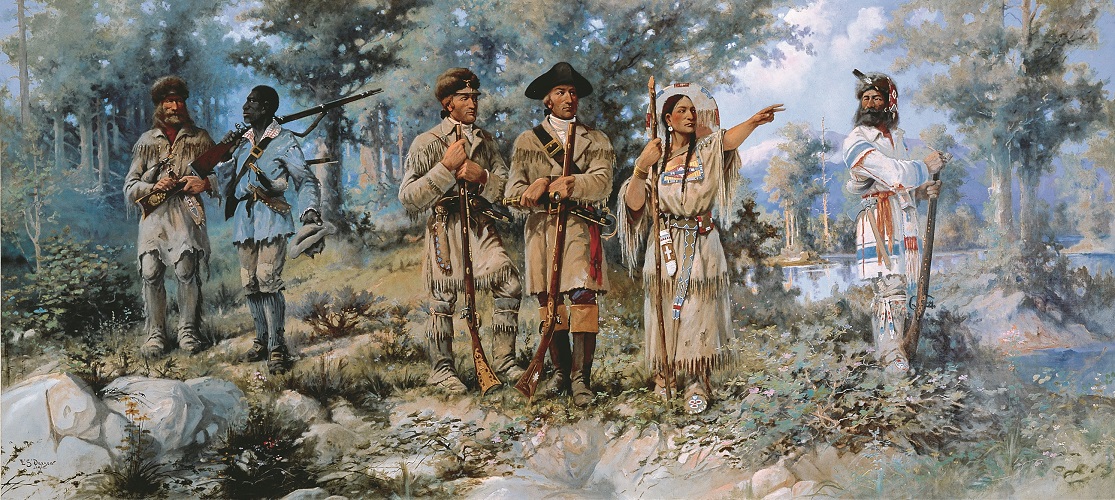
Paxson’s painting shows Sacagawea in the Bitterroot country of western Montana, the rugged mountain region the Corps of Discovery traversed in September 1805. The Shoshone interpreter is positioned as the focal figure, rendered in the detailed, illustrative manner Paxson favored, with the Bitterroot Range providing the backdrop. The composition emphasizes her presence in the landscape rather than a single dramatic incident, treating her as a guide and intermediary at the threshold between the Missouri drainage and the Columbia watershed. Paxson worked in oil with careful attention to costume, beadwork, and the topography of country he knew firsthand.
The work dates to roughly 1905, the centennial period of the Lewis and Clark Expedition, when public interest in the journey produced a wave of commemorative paintings, monuments, and publications. The 1805 crossing of the Bitterroots was among the expedition’s most punishing episodes: the Corps moved south through the Bitterroot Valley, met the Salish at Ross’s Hole, and then turned west over Lolo Pass into present-day Idaho, where hunger and cold nearly broke the party. Sacagawea, traveling with her infant son Jean Baptiste, was in her home region during this phase, and her recognition of landmarks and her Shoshone connections proved essential to securing horses from her brother Cameahwait’s band shortly before the mountain crossing.
Edgar Samuel Paxson (1852–1919) settled in Montana in 1877 and built his career on Western historical subjects, drawing on direct knowledge of the landscape and surviving Indigenous and military informants. He is best known for the large canvas Custer’s Last Stand (1899) and for the six murals he completed for the Missoula County Courthouse in 1912–1914, which include scenes from the Lewis and Clark Expedition. Sacagawea was a recurring subject in his work during the centennial years, and his images helped fix her visual identity in twentieth-century popular memory, particularly within Montana. Sacagawea at the Bitterroot is held by the Montana Historical Society in Helena, the principal repository of Paxson’s expedition-related paintings and a central institution in the state’s Lewis and Clark commemorative tradition.