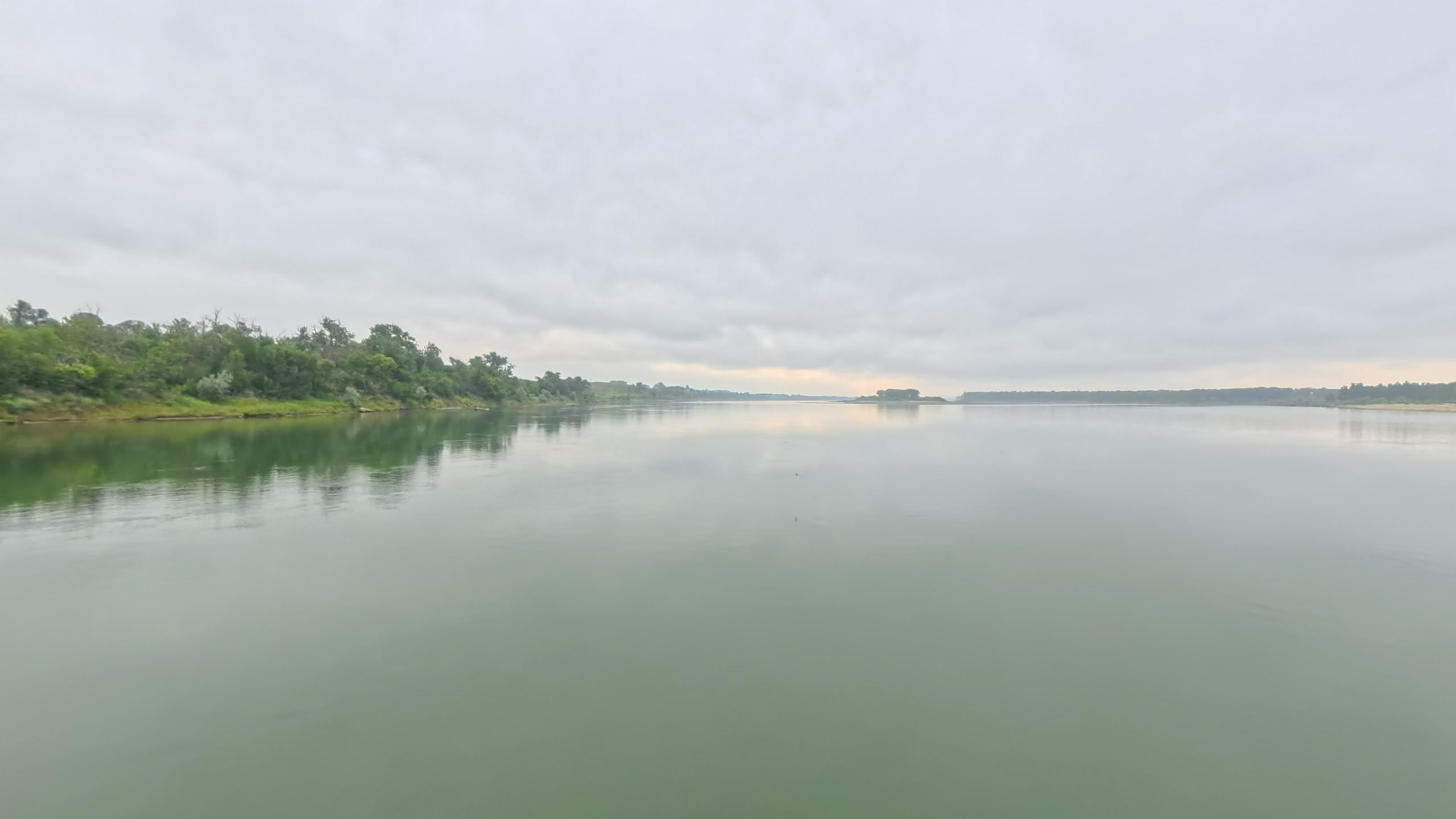
Clark: February 13, 1805
Clark returned exhausted from a nine-day hunting expedition, having walked about 30 miles on ice and through deep snow. The party traveled as far as 60 miles from Fort Mandan, camping at points along the river including near the Heart River. Hunters killed numerous elk, deer, and buffalo, though many bulls were too lean to eat. Clark broke through the ice and blistered his feet, and J. Fields froze an ear in cold northwest winds. Meat was packed, sent back by horse, or stored in log pens to protect it from wolves, ravens, and magpies. Clark also noted ice formation on the Missouri and observed abandoned Mandan villages reportedly destroyed by Sioux attacks and smallpox.
I returned last night from a hunting party much fatigued, haveing walked
30 miles on the ice and through of wood land Points in which the Snow was
nearly Knee Deep
The 1st day I left the fort proceeded on the ice to new Mandan Island, 22
miles & Camped Killed nothing, & nothing to eat,
The 2d day the morning verry Cold & Windey, I broke thro the ice and
got my feet and legs wet, Sent out 4 hunters thro a point to Kill a Deer
& Cook it by the time the party Should get up, those hunters killed a
Deer & 2 Buffalow Bulls the Buffalow too Meagur to eate, we eate the
Deer & proceeded on to an old Indian Lodge, Sent out the hunters &
they brought in three lean Deer, which we made use of for food,walking
on uneaven ice has blistered the bottom of my feat, and walking is
painfull to me
3rd day Cold morning the after party of the Day worm, Camped on a Sand
point near the mouth of a Creek on the S W. Side we Call hunting Creek, I
turned out with the hunters, I Killed 2 Deer the hunters killed an Elk,
Buffalow Bull & 5 Deer. all Meager
4th Day hunted the two bottoms near the Camp Killed 9 Elk, 18 Deer,
brought to camp all the meat fit to eate & had the bones taken out.
every man ingaged either in hunting or Collecting & packing the meat
to Camp
5th Day Dispatched one of the party our Interpeter & 2 french men with
the 3 horses loaded with the best of the meat to the fort 44 miles
Distant, the remaining meat I had packed on the 2 Slays & drawn down
to the next point about 3 miles below, at this place I had all the meat
Collected which was killed yesterday & had escaped the wolves, Raven
& Magpie, (which are verry noumerous about this Place) and put into a
close pen made of logs to secure it from the wolves & birds &
proceeded on to a large bottom nearly opposit the Chisscheter (heart)
River, in this bottom we found but little game, Great No. of wolves, on
the hills Saw Several parsels of Buffalow.Camped. I killed a Buck
6th Day The Buffalow Seen last night provd to be Bulls. lean & unfit
for to make uce of as food, the Distance from Camp being nearly 60 miles,
and the packing of meat that distance attended with much difficuity
deturmined me to return and hunt the points above, we Set out on our
return and halted at an old Indian lodge 40 miles below Fort Mandan Killed
3 Elk & 2 Deer-.
7th Day a cold Day wind blew hard from the N. W. J Fields got one of his
ears frosed deturmined to lay by and hunt today Killed an Elk & 6
deer,* this meat I had Boned & put onto a Close pen made of logs*all
that was fit for use
8th day air keen halted at the old Camp we Stayed in on the 2d night after
we left the Fort, expecting to meat the horses at this Place, killed 3
Deer, Several men being nearly out of Mockersons & the horses not
returning deturmind me to return to the Fort on tomorrow
9th day. Set out early, Saw great numbers of Grouse feeding on the young
willows, on the Sand bars one mans I sent in persute of a gangue of Elk
killed three near the old Ricara Village and joined at the fort, Sent him
back to Secure the meat one man with himThe ice on the parts of the
River which was verry rough, as I went down, was Smothe on my return, this
is owing to the rise and fall of the water, which takes place every day or
two, and Caused by partial thaws, and obstructions in the passage of the
water thro the Ice, which frequently attaches itself to the bottom.the
water when riseing forses its way thro the cracks & air holes above
the old ice, & in one night becoms a Smothe Surface of ice 4 to 6
Inchs thick,the river falls & the ice Sink in places with the
water and attaches itself to the bottom, and when it again rises to its
former hite, frequently leavs a valley of Several feet to Supply with
water to bring it on a leavel Surfice.
The water of the Missouri at this time is Clear with little Tinges.
I saw Several old Villages near the Chisscheta River on enquirey found
they were Mandan Villages destroyed by the Sous & Small Pox, they
noumerous and lived in 6 Villages near that place.
Read this entry in modern English AI-translated
I returned last night from a hunting party much fatigued, having walked 30 miles on the ice and through wooded points in which the snow was nearly knee deep.
The 1st day I left the fort, proceeded on the ice to new Mandan Island, 22 miles, and camped. Killed nothing, and had nothing to eat.
The 2nd day the morning was very cold and windy. I broke through the ice and got my feet and legs wet. Sent out 4 hunters through a point to kill a deer and cook it by the time the party should get up. Those hunters killed a deer and 2 buffalo bulls, the buffalo too meager to eat. We ate the deer and proceeded on to an old Indian lodge. Sent out the hunters and they brought in three lean deer, which we made use of for food. Walking on uneven ice has blistered the bottoms of my feet, and walking is painful to me.
3rd day, cold morning, the after part of the day warm. Camped on a sand point near the mouth of a creek on the S.W. side we call Hunting Creek. I turned out with the hunters. I killed 2 deer; the hunters killed an elk, buffalo bull, and 5 deer, all meager.
4th day, hunted the two bottoms near the camp. Killed 9 elk, 18 deer; brought to camp all the meat fit to eat and had the bones taken out. Every man engaged either in hunting or collecting and packing the meat to camp.
5th day, dispatched one of the party, our interpreter, and 2 Frenchmen with the 3 horses loaded with the best of the meat to the fort, 44 miles distant. The remaining meat I had packed on the 2 sleighs and drawn down to the next point about 3 miles below. At this place I had all the meat collected which was killed yesterday and had escaped the wolves, ravens, and magpies (which are very numerous about this place), and put it into a close pen made of logs to secure it from the wolves and birds, and proceeded on to a large bottom nearly opposite the Chisscheter (Heart) River. In this bottom we found but little game, a great number of wolves. On the hills saw several parcels of buffalo. Camped. I killed a buck.
6th day, the buffalo seen last night proved to be bulls, lean and unfit to make use of as food. The distance from camp being nearly 60 miles, and the packing of meat that distance attended with much difficulty, determined me to return and hunt the points above. We set out on our return and halted at an old Indian lodge 40 miles below Fort Mandan. Killed 3 elk and 2 deer.
7th day, a cold day, wind blew hard from the N.W. J. Fields got one of his ears frosted. Determined to lay by and hunt today. Killed an elk and 6 deer. This meat I had boned and put into a close pen made of logs, all that was fit for use.
8th day, air keen. Halted at the old camp we stayed in on the 2nd night after we left the fort, expecting to meet the horses at this place. Killed 3 deer. Several men being nearly out of moccasins and the horses not returning determined me to return to the fort on tomorrow.
9th day, set out early. Saw great numbers of grouse feeding on the young willows on the sand bars. One man I sent in pursuit of a gang of elk killed three near the old Arikara village and joined us at the fort. Sent him back to secure the meat, one man with him. The ice on the parts of the river which were very rough as I went down was smooth on my return. This is owing to the rise and fall of the water, which takes place every day or two, and is caused by partial thaws and obstructions in the passage of the water through the ice, which frequently attaches itself to the bottom. The water when rising forces its way through the cracks and air holes above the old ice, and in one night becomes a smooth surface of ice 4 to 6 inches thick. The river falls and the ice sinks in places with the water and attaches itself to the bottom, and when it again rises to its former height, frequently leaves a valley of several feet to supply with water to bring it to a level surface.
The water of the Missouri at this time is clear with little tinge.
I saw several old villages near the Chisscheta River. On inquiry, I found they were Mandan villages destroyed by the Sioux and smallpox. They were numerous and lived in 6 villages near that place.
This modernization is AI-generated for accessibility. The original above is the authoritative version.
Entities mentioned in this entry
Auto-extracted from the entry text. Hover any entity for context.