Clark: July 20, 1804
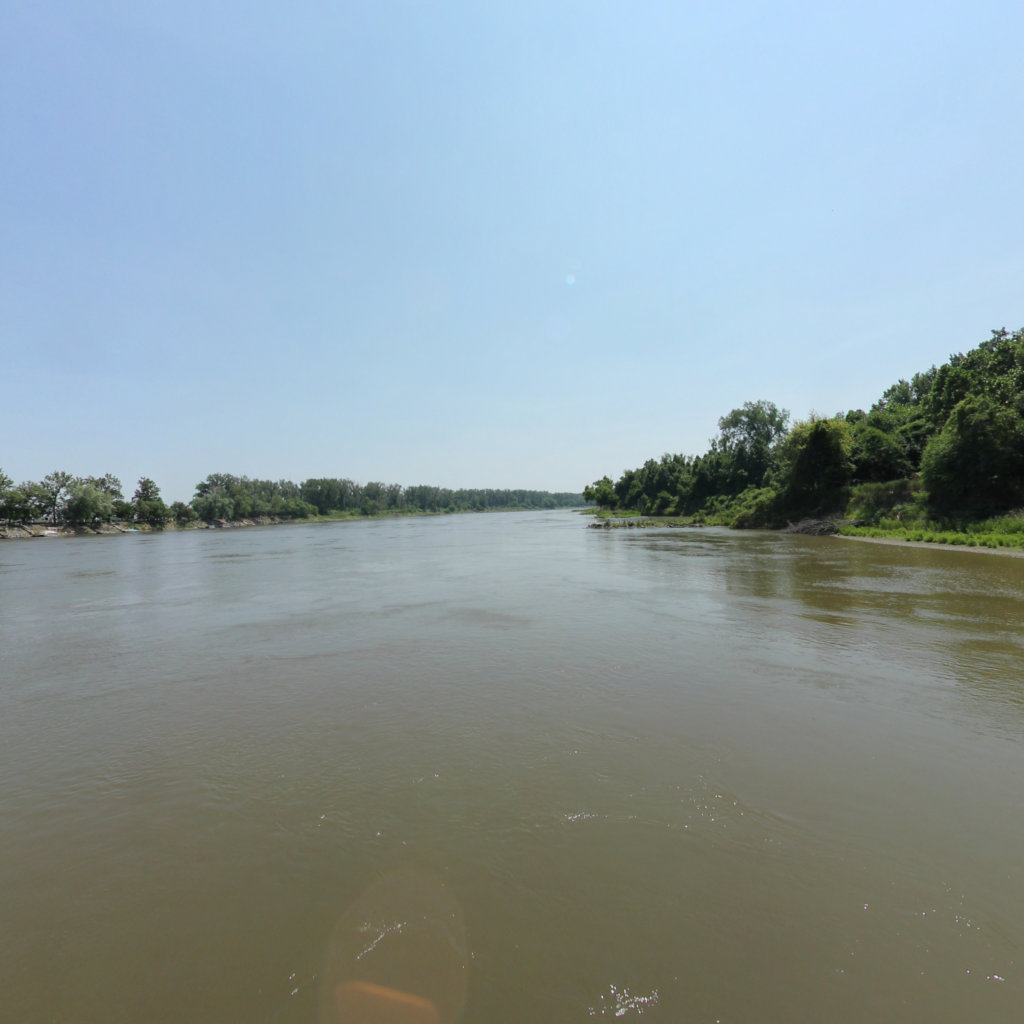
On a cool, foggy morning, the expedition continued upriver despite George Drouillard's illness. Bratton swam back across the river to retrieve a gun and clothes left behind. They passed a large willow island and the mouth of l'Eau qui Pleure ('the Water Which Cries') Creek. Clark went ashore with Reuben Field, hiking through prairies in search of elk; they found none but Clark killed a large yellow wolf. Sergeant Pryor and Joseph Field brought in two deer. The party camped on the south side with a pleasant northwest breeze.
July 20th Friday 1804, a fog this morning and verry Cool George Drewyer
Sick proceed on over a Sand bar, Bratten Swam the river to get his gun
& Clothes left last night psd a large willow Isd. on the L. S. (1)
passed the mouth of l’Eau que pleure the English of which is the water
which Cry’s this Creek is about 20 yards wide falls into the river above a
Gift of brown Clay L. S. opposit a willow Island, at this Creek I went on
Shore took R Fields with me and went up this Creek Several miles &
crossed thro the plains to the river above with the view of finding Elk,
we walked all day through those praries without Seeing any, I killed an
emence large yellow Wolf-The Countrey throu which we walked after leaveing
the Creek was good land covered with Grass interspersed with Groves &
Scattering timber near and about the heads of Branches one of them without
Suckcess, Camped above the bar on the L. S. a verry agreeable Breeze all
night Serjt. Pryor & Jo. Fields brought in two Deer river Still
falling. a large Spring 3/4 me. below camp
—
July 20th, Friday 1804 a cool morning passed a large willow Island (1) on
the S. S. and the mouth of Creek about 25 yds. wide on the L. S. Called by
the french l’Eue-que pleure, or the the Water Which Cry’s this Creek falls
into the river above a Clift of brown Clay opposit the Willow Island, I
went out above the mouth of this Creek and walked the greater part of the
day thro Plains interspesed with Small Groves of Timber on the branches
and Some Scattering trees about the heads of the runs, I Killed a Verry
large yellow wolf, The Soil of Those Praries appears rich but much Parched
with the frequent fires-” after I returned to the Boat we proceeded around
a large Sand bar makeing out from the L. S. opsd. a fountain of water
comeing out of a hill L. S. and affording water Suffient to turn a mill
The Praries as far as I was out appeared to be well watered, with Small
Streems of running water Serjt. Pryor & Jo. Fields brought in two Deer
this eveninga verry Pleasent Breeze from the N. W. all nightriver
falling a little, It is wothey of observation to mention that our party
has been much healthier on the Voyage than parties of the Same Number is
in any other Situation Turners have been troublesom to them all
From this evenings incampment a man may walk to the Pane Village on the S
bank of the Platt River in two days, and to the Otteaus in one day all
those Indians are Situated on the South bank of the Plate River, as those
Indians are now out in the praries following & Hunting the buffalow, I
fear we will not See them.
Read this entry in modern English AI-translated
July 20th, Friday 1804. There was a fog this morning and it was very cool. George Drewyer (Drouillard) was sick. We proceeded on over a sand bar. Bratten swam the river to get his gun and clothes left last night. We passed a large willow island on the L. S. (1), passed the mouth of l'Eau que pleure, the English of which is "the water which cries." This creek is about 20 yards wide and falls into the river above a cliff of brown clay on the L. S., opposite a willow island. At this creek I went on shore, took R. Fields with me, and went up this creek several miles, then crossed through the plains to the river above with the view of finding elk. We walked all day through those prairies without seeing any. I killed an immense large yellow wolf. The country through which we walked after leaving the creek was good land covered with grass interspersed with groves and scattered timber near and about the heads of branches—one of them without success. Camped above the bar on the L. S. A very agreeable breeze all night. Sergeant Pryor and Jo. Fields brought in two deer. River still falling. A large spring 3/4 mile below camp.
July 20th, Friday 1804. A cool morning. We passed a large willow island (1) on the S. S. and the mouth of a creek about 25 yards wide on the L. S., called by the French l'Eau-que-pleure, or "the water which cries." This creek falls into the river above a cliff of brown clay opposite the willow island. I went out above the mouth of this creek and walked the greater part of the day through plains interspersed with small groves of timber on the branches and some scattered trees about the heads of the runs. I killed a very large yellow wolf. The soil of those prairies appears rich but much parched with the frequent fires.
After I returned to the boat, we proceeded around a large sand bar making out from the L. S., opposite a fountain of water coming out of a hill on the L. S. and affording water sufficient to turn a mill. The prairies, as far as I was out, appeared to be well watered with small streams of running water. Sergeant Pryor and Jo. Fields brought in two deer this evening. A very pleasant breeze from the N. W. all night. River falling a little.
It is worthy of observation to mention that our party has been much healthier on the voyage than parties of the same number are in any other situation. Tumors have been troublesome to them all.
From this evening's encampment a man may walk to the Pawnee village on the south bank of the Platte River in two days, and to the Otoes in one day. All those Indians are situated on the south bank of the Platte River. As those Indians are now out in the prairies following and hunting the buffalo, I fear we will not see them.
This modernization is AI-generated for accessibility. The original above is the authoritative version.
Entities mentioned in this entry
Auto-extracted from the entry text. Hover any entity for context.