Clark: March 8, 1806
Saturday March 8th 1806 Bratten is much better this morning, his back givs
him but little pain. Collins returned early in the morning, and informed
us that he had killed three Elk about five miles distance on the edge of
the prarie in point Adams. one of them fell in a deep pond of water and he
could not git to it. the other two he butchered and Saved. he saw two
large herds of Elk in that quarter. we Sent Drewyer & Jos. Field to
hunt these Elk, a party was also Sent with Labiesh for the flesh of the
Elk which Drewyer and himself had killd up the Netul, they returned with
it in the evening. Shields, R. Field and Frasure returned this evening
from the Kilhawanackkle unsuccessfull haveing Seen no Elk. McNeal and
Goodrich haveing recovered from the Louis veneri I detected them to desist
from takeing the murcury or useing in future. willard is yet complaining
and is low Spirited.
The White Brant is very common in this country particularly below tide
water where they remain in vast quantities dureing the winter. they feed
like the Swan Goose &c. on the grass and roots & Seeds which they
find in the marshes this bird is a little larger than the brown brant and
a fourth less than the common wild or Canadian goose. the head is
proportionably with the goose reather large; the beak thicker Shorter and
of the Same form, being of a yellowish white colour except the edges of
the Chaps, which are frequently of a dark brown. the legs and feet are of
the Same form of the goose and are of a redish white or pail flesh colour.
the tail is composed of Sixteen feathers of equal length as those of the
geese and brown brant are, and bears about the Same perpotion in point of
length. the Eye is of a dark colour and nothing remarkable as to Size. the
wings are reather longer compared with those of the goose, but not as much
So as is the brown or pieded brant. the colour of the plumage of this bird
is uniformly a pure white except the large feathers of the extremities of
the wings which are black. The large feathers of the 1st joint of the wing
next to the body are white. the note of this bird differs essentially from
that of the goose; it more resembles that of the brown brant but is
Somewhat different. it is like the note of a young domestic goose which
has not perfectly attained its full note. the flesh of this bird is
exceedingly fine, prefferable to either the goose or pieded brant. the
neck is Shorter in prpotion than that of the goose.
The Brown or pieded brant are nearly the Size and much the Same form of
the white brante only that their wings are considerably longer and more
pointed. the plumage of the upper part of the body, neck, head and tail is
much the Colour of the Common or Canadian Goose but rather darker in
consequence of Some dark brown feathers which are distributed and
irregularly scattered throughout. they have not the white on the neck and
Sides of the head as the goose has nor is the neck darker than the body.
like the goose there are Some white feathers on the rump at the junction
of the tail. the beak, legs and feet are dark, with a greenish cast; the
breast and belly are of a lighter colour than the back and is also
intermixed, irregularly, with dark brown and black feathers which gives it
a pieded appearance. the flesh of this bird is dark, and in my estimation
reather better than that of the goose. the habits of this bird is nearly
the same with the goose and white brant, with this difference that they do
not remain in this Climate in Such numbers dureing the winter as the
others. I See no difference between this bird and that Called Simpilly the
Brant Common to the Lakes and frequently Seen on the Ohio and Mississippi
in large flocks &c.
The Small Goose of this country is reather less than the Brant; it’s head
and neck like the brant are reather larger than that of the goose in
purpotion; their beak is also thicker and Shorter. their notes are more
like those of our taim geese, in all other respect they are the Same with
the large Goose with which, they So frequently ascoiete, that it was Some
time after I first observed this goose before I could whether it was a
distinct Speces or not. I have no hesitation now in declareing them a
distinct Species. the large Goose is the Same as that common to the Ohio,
and atlantic coast, and known by the appellation of the wild, or Canadian
Goose.
Entities mentioned in this entry
Auto-extracted from the entry text. Hover any entity for context.
Terrain360 · the place today
Fort Clatsop, winter quarters in 360°
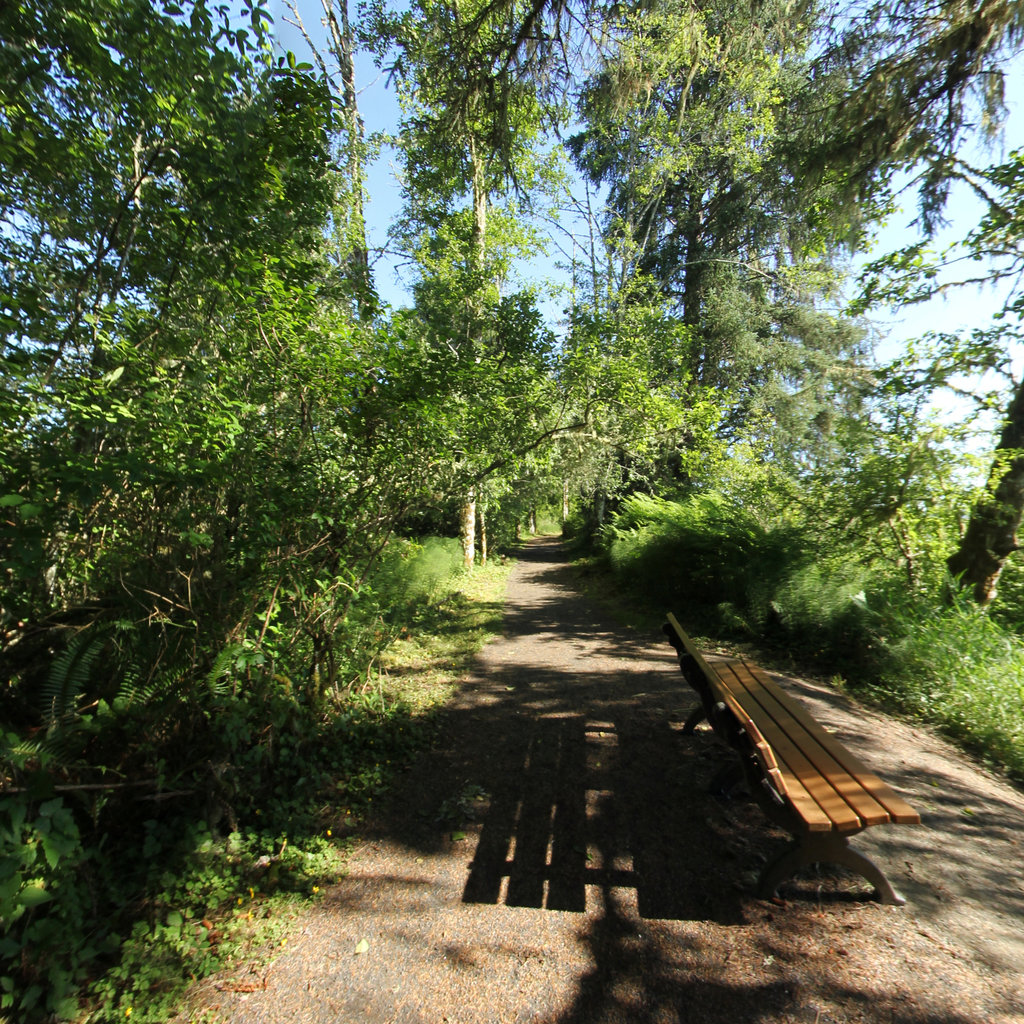
10 frames across 0.8 mi of the route around this location
Analyses
- Four Pens at Fort Clatsop: Hunters’ Returns and a Naturalist’s Catalogue
- Silas Goodrich: The Expedition’s Fisherman
- William Bratton: Hunter, Saltmaker, and Patient of the Corps of Discovery
- Hugh McNeal: A Private’s Long March
- John Shields: The Expedition’s Blacksmith and Gunsmith
- George Drouillard: Hunter, Interpreter, and Sign-Talker of the Corps
Artwork
Help improve this record
See something that needs correcting, or know a source we are missing? The archive gets better through its readers.


