Lewis: April 12, 1806
Heavy rain continued as the party worked to haul their last pirogue up a violent rapid. The boat turned sideways in the current and was lost downstream, raising worries they would need to buy canoes from local Indians at high prices. The men portaged baggage over land, carrying short rifles as a precaution against theft. Lewis recorded a vocabulary of the Wahclellah language, examined an abandoned village with unusually large framed houses, and noted that natives behaved better than the previous day. Sergeant Pryor repaired boats. They traded for a sheepskin and camped due to cold rain.
Saturday April 12th 1806. It rained the greater part of last night and
still continued to rain this morning. I therefore determined to take up
the remaining perogue this morning for which purpose I took with me every
man that could be of any service. a small distance above our camp there is
one of the most difficult parts of the rapid. at this place the current
sets with great violence against a projecting rock. in hawling the perogue
arround this point the bow unfortunately took the current at too great a
distance from the rock, she turned her side to the stream and the utmost
exertions of all the party were unable to resist the forse with which she
was driven by the current, they were compelled to let loose the cord and
of course both perogue and cord went a drift with the stream. the loss of
this perogue will I fear compell us to purchase one or more canoes of the
indians at an extravegant price. after breakfast all hands were employed
in taking our baggage over the portage. we caused all the men who had
short rifles to carry them, in order to be prepared for the natives should
they make any attempts to rob or injure them. I went up to the head of the
rapids and left Capt. C. below. during the day I obtained a vocabulary of
the language of the War-clel-lars &c. I found that their numbers were
precisely those of the Chinnooks but the other parts of their language
essentially different. by 5 P.M. we had brought up all our baggage and
Capt. C. joined me from the lower camp with the Clahclellah cheif. there
is an old village situated about halfway on the portage road the fraim of
the houses, which are remarkably large one 160 by 45 feet, remain almost
entire. the covering of the houses appears to have been sunk in a pond
back of the village. this the chief informed us was the residence
occasionally of his tribe. these houses are fraimed in the usual manner
but consist of a double set as if oune house had been built within the
other. the floors are on a level with the ground. the natives did not
croud about us in such numbers today as yesterday, and behaved themselves
much better; no doubt the precautions which they observed us take had a
good effect. I employed sergt. Pryor the greater part of the day in
reparing and corking the perogue and canoes. it continued to rain by
showers all day. about 20 of the Y-eh-huhs remained with me the greater
part of the day and departed in the evening. they conducted themselves
with much propryety and contemned the conduct of their relations towards
us. We purchased one sheepskin for which we gave the skin of an Elk and
one of a deer. this animal was killed by the man who sold us the skin near
this place; he informed us that they were abundant among the mountains and
usually resorted the rocky parts. the big horned animal is also an
inhabitant of these mountains. I saw several robes of their skins among
the natives.as the evening was rainy cold and far advanced and ourselves
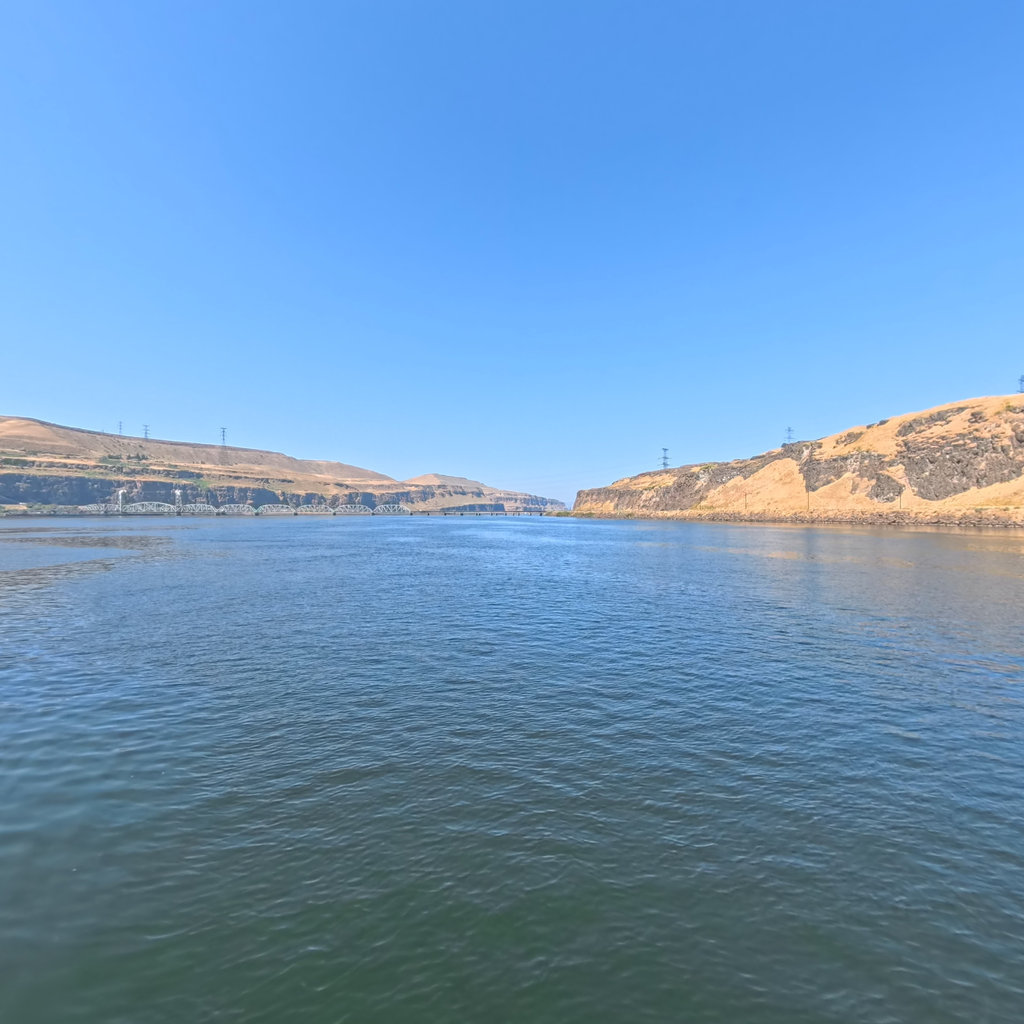
wet we determined to remain all night. the mountains are high steep and
rocky. the rock is principally black. they are covered with fir of several
speceis and the white cedar. near the river we find the Cottonwood, sweet
willow, broad leafed ash, a species of maple, the purple haw, a small
speceis of cherry; purple currant, goosberry, red willow, vining and white
burry honeysuckle, huckkle burry, sacacommis, two speceis of mountain
holley, &common ash. for the three last days this inclusive we have
made only 7 miles.
Read this entry in modern English AI-translated
Saturday, April 12th, 1806. It rained for the greater part of last night and still continued to rain this morning. I therefore determined to bring up the remaining pirogue this morning, and for that purpose I took with me every man who could be of any service. A short distance above our camp lies one of the most difficult parts of the rapid. At this place the current rushes with great violence against a projecting rock. While hauling the pirogue around this point, the bow unfortunately caught the current at too great a distance from the rock; she turned her side to the stream, and the utmost exertions of all the party were unable to resist the force with which she was driven by the current. They were compelled to let go of the cord, and so both pirogue and cord drifted away with the stream. The loss of this pirogue will, I fear, force us to purchase one or more canoes from the Indians at an extravagant price.
After breakfast all hands were employed in carrying our baggage over the portage. We had all the men who had short rifles carry them, so as to be prepared for the natives should they attempt to rob or injure them. I went up to the head of the rapids and left Capt. C. (Capt. Clark) below. During the day I obtained a vocabulary of the language of the War-clel-lars, etc. I found that their numbers were precisely the same as those of the Chinooks, but the other parts of their language were essentially different. By 5 P.M. we had brought up all our baggage, and Capt. C. (Capt. Clark) joined me from the lower camp with the Clahclellah chief.
There is an old village situated about halfway along the portage road; the frames of the houses, which are remarkably large—one 160 by 45 feet—remain almost intact. The covering of the houses appears to have been sunk in a pond behind the village. The chief told us that this was the occasional residence of his tribe. These houses are framed in the usual manner, but consist of a double set, as if one house had been built within another. The floors are level with the ground. The natives did not crowd around us in such numbers today as yesterday, and behaved much better; no doubt the precautions they saw us take had a good effect.
I employed Sergt. Pryor (Sergeant Pryor) for the greater part of the day in repairing and caulking the pirogue and canoes. It continued to rain in showers all day. About 20 of the Y-eh-huhs stayed with me for the greater part of the day and left in the evening. They conducted themselves with much propriety and condemned the conduct of their relations toward us. We purchased one sheepskin, for which we gave the skin of an elk and one of a deer. This animal was killed by the man who sold us the skin near this place; he told us that they were abundant in the mountains and usually frequented the rocky parts. The bighorn animal also inhabits these mountains. I saw several robes made from their skins among the natives.
As the evening was rainy and cold, and far advanced, and we were wet, we decided to remain all night. The mountains are high, steep, and rocky. The rock is principally black. They are covered with fir of several species and the white cedar. Near the river we find the cottonwood, sweet willow, broad-leafed ash, a species of maple, the purple haw, a small species of cherry, purple currant, gooseberry, red willow, vining and white-berry honeysuckle, huckleberry, sacacommis, two species of mountain holly, and common ash. For the three last days, this one included, we have made only 7 miles.
This modernization is AI-generated for accessibility. The original above is the authoritative version.
Entities mentioned in this entry
Auto-extracted from the entry text. Hover any entity for context.