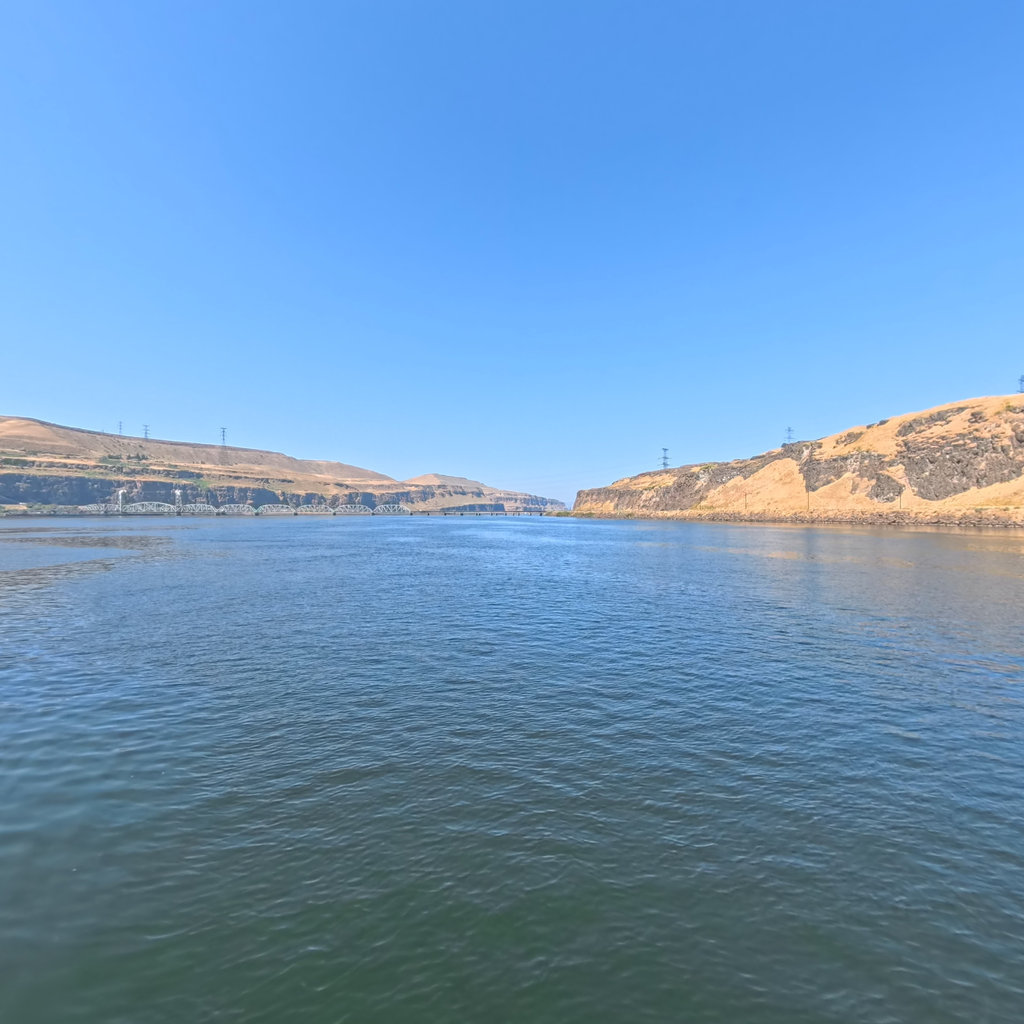
Lewis: April 15, 1806
The expedition delayed departure to attempt trading for horses with local Indians, but the natives refused the offered goods. Setting out at 8 A.M., the party stopped at Sepulchre Rock to examine thirteen burial structures, then tried unsuccessfully to buy horses at several villages along the river, including Chilluckkittequaw villages. They acquired only two dogs. By 3 P.M. they reached Quinnette Creek and made camp at Rockfort Camp, where they arranged to meet villagers from the Great Narrows the next day for trading. Drewyer killed a long-tailed deer that evening. Lewis described the natives' clothing in detail.
Tuesday April 15th 1806 We delayed this morning untill after breakfast in
order to purchase some horses of the Indians; accordingly we exposed some
articles in exchange for horses the natives were unwilling to barter, we
therefore put up our merchandize and at 8 A.M. we set out. we halted a few
minutes at the sepulchre rock, and examined the deposits of the ded at
that place. these were constructed in the same manner of those already
discribed below the rapids. some of them were more than half filled with
dead bodies. there were thirteen sepulchres on this rock which stands near
the center of the river and has a surface of about 2 acres above highwater
mark.from hence we returned to the nothern shore and continued up
it about four miles to another village of the same nation with whom we
remained last night. here we halted and informed the natives of our wish
to purchase horses; the produced us several for sale but would not take
the articles which we had in exchange for them. they wanted an instrumet
which the Northwest traders call an eye-dag which we had not. we procured
two dogs of them and departed. a little below the entrance of Cataract
river we halted at another village of the same people, at which we were
equally unsuccessful) in the purchase of horses. we also halted at the two
villages of the Chilluckkittequaws a few miles above with no better
success. at three in the evening we arrived at the entrance of Quinnette
creek which we ascended a short distance and encamped at the place we have
called rockfort camp. here we were visited by some of the people from the
villages at the great narrows and falls. we informed them of our wish to
purchase horses, & agreed to meet them on the opposite or North side
of the river tomorrow for the purpose of bartering with them. most of them
returned to their villages this evening three only remained with us all
night. these people are much better clad than any of the nations below;
their men have generally leging mockersons and large robes, many of them
wear shirts of the same form those of the Chopunnish and Shoshonees highly
ornamented with the quills of the porcupine as are also their mockersons
and legings. they conceal the parts of generation with the skin of a fox
or some other small animal drawn underneath a girdle and hanging loosly in
front of them like a narrow apron. the dress of their women differs very
little from those about the rapids. both men and women cut their hair in
the forehead which comes down as low as the eyebrows, they have long
earlocks cut square at the end. the other part of their hair is dressed in
the same manner as those of the rapids. after we landed and formed our
camp this evening Drewyer and some others took a hunt and killed a deer of
the longtailed kind. it was a buck and the young horns had shot fourth
about 2 inches.
Read this entry in modern English AI-translated
Tuesday, April 15th, 1806. We delayed this morning until after breakfast in order to purchase some horses from the Indians. Accordingly, we displayed some articles in exchange for horses, but the natives were unwilling to barter, so we put away our merchandise and at 8 A.M. we set out. We halted a few minutes at the Sepulchre Rock and examined the deposits of the dead at that place. These were constructed in the same manner as those already described below the rapids. Some of them were more than half filled with dead bodies. There were thirteen sepulchres on this rock, which stands near the center of the river and has a surface of about 2 acres above the high-water mark.
From there we returned to the northern shore and continued up it about four miles to another village of the same nation with whom we stayed last night. Here we halted and informed the natives of our wish to purchase horses. They produced several for sale but would not take the articles we had in exchange for them. They wanted an instrument which the Northwest traders call an eye-dag, which we did not have. We obtained two dogs from them and departed. A little below the entrance of Cataract River we halted at another village of the same people, where we were equally unsuccessful in the purchase of horses. We also halted at the two villages of the Chilluckkittequaws a few miles above, with no better success.
At three in the evening we arrived at the entrance of Quinnette Creek, which we ascended a short distance, and camped at the place we have called Rockfort Camp. Here we were visited by some of the people from the villages at the Great Narrows and Falls. We informed them of our wish to purchase horses, and agreed to meet them on the opposite, or north, side of the river tomorrow for the purpose of bartering with them. Most of them returned to their villages this evening; only three remained with us all night.
These people are much better clothed than any of the nations below. Their men generally have leggings, moccasins, and large robes, and many of them wear shirts of the same form as those of the Chopunnish and Shoshones, highly ornamented with the quills of the porcupine, as are also their moccasins and leggings. They conceal the parts of generation with the skin of a fox or some other small animal drawn underneath a girdle and hanging loosely in front of them like a narrow apron. The dress of their women differs very little from that of the women about the rapids. Both men and women cut their hair in the forehead, which comes down as low as the eyebrows, and they have long earlocks cut square at the end. The other part of their hair is dressed in the same manner as those of the rapids.
After we landed and formed our camp this evening, Drewyer (Drouillard) and some others went on a hunt and killed a deer of the long-tailed kind. It was a buck, and the young horns had shot forth about 2 inches.
This modernization is AI-generated for accessibility. The original above is the authoritative version.
Entities mentioned in this entry
Auto-extracted from the entry text. Hover any entity for context.