Lewis: August 21, 1805
Wednesday August 21st 1805. This morning was very cold. the ice 1/4 of an
inch thick on the water which stood in the vessels exposed to the air.
some wet deerskins that had been spread the grass last evening are stiffly
frozen. the ink feizes in my pen. the bottoms are perfectly covered with
frost insomuch that they appear to be covered with snow. This morning
early I dispatched two hunters to kill some meat if possible before the
Indians arrive; Drewyer I sent with the horse into the cove for that
purpose. The party pursued their several occupations as yesterday. by
evening I had all the baggage, saddles, and harness completely ready for a
march. after dark, I made the men take the baggage to the cash and deposit
it. I beleve we have been unperceived by the Indians in this movement.
notwithstanding the coldness of the last night the day has proved
excessively warm. neither of the hunters returned this evening and I was
obliged to issue pork and corn. The mockersons of both sexes are usually
the same and are made of deer Elk or buffaloe skin dressed without the
hair. sometimes in the winter they make them of buffaloe skin dressed with
the hair on and turn the hair inwards as the Mandans Minetares and most of
the nations do who inhabit the buffaloe country. the mockerson is formed
with one seem on the outer edge of the foot is cut open at the instep to
admit the foot and sewed up behind. in this rispect they are the same with
the Mandans. they sometimes ornament their mockersons with various figures
wrought with the quills of the Porcupine. some of the dressey young men
orniment the tops of their mockersons with the skins of polecats and trale
the tail of that animal on the ground at their heels as they walk.the robe
of the woman is generally smaller than that of the man but is woarn in the
same manner over the sholders. the Chemise is roomy and comes down below
the middle of the leg the upper part of this garment is formed much like
the shirt of the men except the sholder strap which is never used with the
Chemise. in women who give suck, they are left open at the sides nearly as
low as the waist, in others, close as high as the sleeve. the sleeve
underneath as low as the elbow is open, that part being left very full.
the sides tail and upper part of the sleeves are deeply fringed and
sometimes ornimented in a similar manner with the shirts of the men with
the addition of little patches of red cloth about the tail edged around
with beads. the breast is usually ornament with various figures of party
colours rought with the quills of the Porcupine. it is on this part of the
garment that they appear to exert their greatest ingenuity. a girdle of
dressed leather confines the Chemise around the waist. when either the man
or woman wish to disengage their arm from the sleeve they draw it out by
means of the opening underneath the arm an throw the sleeve behind the
body. the legings of the women reach as high as the knee and are confined
with a garter below. the mockerson covers and confins it’s lower
extremity. they are neither fringed nor ornamented. these legings are made
of the skins of the antelope and the Chemise usually of those of the large
deer Bighorn and the smallest elk.They seldom wear the beads they
possess about their necks at least I have never seen a grown person of
either sex wear them on this part; some their children are seen with them
in this way. the men and women were them suspen from the ear in little
bunches or intermixed with triangular peices of the shells of the perl
oister. the men also were them attached in a similar manner to the hare of
the fore part of the crown of the head; to which they sometimes make the
addition of the wings and tails of birds. the nose in neither sex is
pierced nor do they wear any ornament in it. they have a variety of small
sea shells of which they form collars woarn indiscriminately by both
sexes. these as well as the shell of the perl oister they value very
highly and inform us that they obtain them from their friends and
relations who live beyond the barren plain towards the Ocean in a S.
Westerly direction. these friends of theirs they say inhabit a good
country abounding with Elk, deer, bear, and Antelope, and possess a much
greater number of horses and mules than they do themselves; or using their
own figure that their horses and mules are as numerous as the grass of the
plains. the warriors or such as esteem themselves brave men wear collars
made of the claws of the brown bear which are also esteemed of great value
and are preserved with great care. these claws are ornamented with beads
about the thick end near which they are peirced through their sides and
strung on a throng of dressed leather and tyed about the neck commonly
with the upper edge of the tallon next the breast or neck but sometimes
are reversed. it is esteemed by them an act of equal celebrity the killing
one of these bear or an enimy, and with the means they have of killing
this animal it must really be a serious undertaking. the sweet sented
grass which grows very abundant on this river is either twisted or plaited
and woarn around the neck in ether sex, but most commonly by the men. they
have a collar also woarn by either sex. it generally round and about the
size of a man’s finger; formed of leather or silk-grass twisted or firmly
rolled and covered with the quills of the porcupine of different colours.
the tusks of the Elk are pierced strung on a throng and woarn as an
orniment for the neck, and is most generally woarn by the women and
children. the men frequently wear the skin of a fox or a broad strip of
that of the otter around the forehead and head in form of a bando. they
are also fond of the feathers of the tail of the beautifull eagle or
callumet birds with which they ornament their own hair and the tails and
mains of their horses. The dress of these people is quite as desent and
convenient as that of any nation of Indians I ever saw.
This morning early Capt. C. resumed his march; at the distance of five
miles he arrived at some brush lodges of the Shoshones inhabited by about
seven families here he halted and was very friendly received by these
people, who gave himself and party as much boiled salmon as they could
eat; they also gave him several dryed salmon and a considerable quantity
of dryed chokecherries. after smoking with them he visited their fish wear
which was abut 200 yds. distant. he found the wear extended across four
channels of the river which was here divided by three small islands. three
of these channels were narrow, and were stoped by means of trees fallen
across, supported by which stakes of willow were driven down sufficiently
near each other to prevent the salmon from passing. about the center of
each a cilindric basket of eighteen or 20 feet in length terminating in a
conic shape at it’s lower extremity, formed of willows, was opposed to a
small apperture in the wear with it’s mouth up stream to receive the fish.
the main channel of the water was conducted to this basket, which was so
narrow at it’s lower extremity that the fish when once in could not turn
itself about, and were taken out by untying the small ends of the
longitudinal willows, which frormed the hull of the basket. the wear in
the main channel was somewhat differently contrived. there were two
distinct wears formed of poles and willow sticks, quite across the river,
at no great distance from each other. each of these, were furnished with
two baskets; the one wear to take them ascending and the other in
decending. in constructing these wears, poles were first tyed together in
parcels of three near the smaller extremity; these were set on end, and
spread in a triangular form at the base, in such manner, that two of the
three poles ranged in the direction of the intended work, and the third
down the stream. two ranges of horizontal poles were next lashed with
willow bark and wythes to the ranging poles, and on these willow sticks
were placed perpendicularly, reaching from the bottom of the river to
about 3 or four feet above it’s surface; and placed so near each other, as
not to permit the passage of the fish, and even so thick in some parts, as
with the help of gravel and stone to give a direction to the water which
they wished.the baskets were the same in form of the others. this
is the form of the work, and disposition of the baskets.
After examining the wears Capt. C. returned to the lodges, and shortly
continued his rout and passed the river to the Lard. side a little
distance below the wears. he sent Collins with an Indian down the Lard.
side of the river to the forks 5 me. in surch of Cruzatte who was left at
the upper camp yesterday to purchase a horse and had followed on today and
passed them by another road while they were at the lodges and had gone on
to the forks. while Capt. Clark was at these lodges an Indian brought him
a tomehawk which he said he found in the grass near the lodge where I had
staid at the upper camp when I was first with his nation the tommahawk was
Drewyer’s he missed it in the morning before we had set out and surched
for it but it was not to be found I beleive the young fellow stole it, but
if he did it is the only article they have pilfered and this was now
returned. Capt. C. after traveling about 20 miles through the valley with
the course of the river nearly N. W. encamped on the Stard. side in a
small bottom under a high Clift of rocks. on his way one of the party
killed a very large Salmon in a creek which they passed at the distance of
14 ms. he was joined this evening by Cruzatte and Collins who brought with
them five fresh salmon which had been given them by the Indians at the
forks. the forks of this river is famous as a gig fishery and is much
resorted by the natives.They killed one deer today. The Guide
apeared to be a very friendly intelligent old man, Capt. C. is much
pleased with him.
Entities mentioned in this entry
Auto-extracted from the entry text. Hover any entity for context.
Terrain360 · the place today
Camp Fortunate / Shoshone contact in 360°
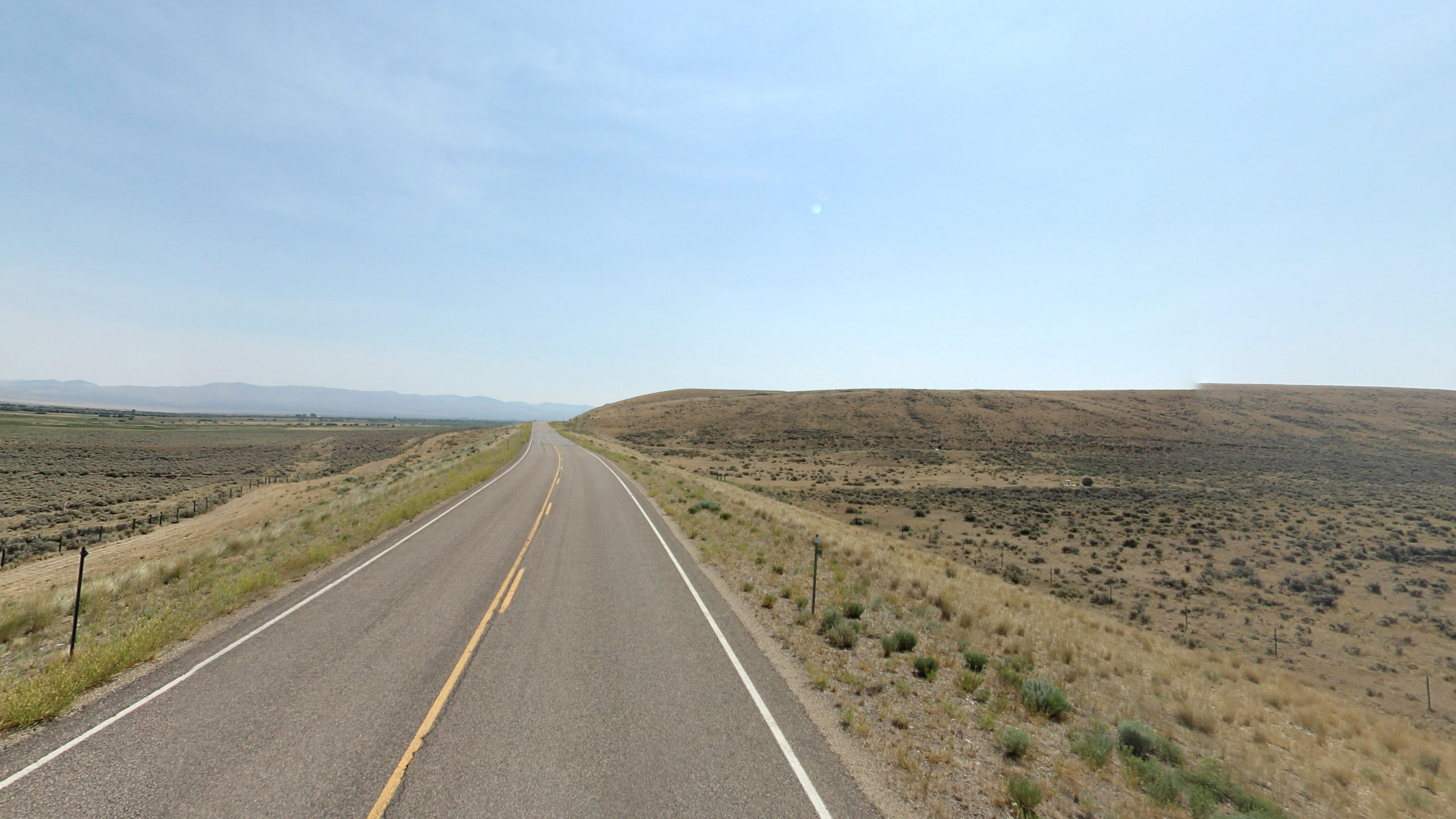
10 frames across 1.6 mi of the route around this location
Analyses
- Pierre Cruzatte: Fiddler, Waterman, and the Man Who Shot Meriwether Lewis
- The Mandan Nation: Heart of the Upper Missouri
- George Drouillard: Hunter, Interpreter, and Sign-Talker of the Corps
- The Captain’s Eye: Meriwether Lewis as Naturalist, Quartermaster, and Reluctant Diarist
- Two Camps, One Cold Morning: The Split Record at Camp Fortunate
Artwork
Help improve this record
See something that needs correcting, or know a source we are missing? The archive gets better through its readers.


