Lewis: June 7, 1806
Saturday June 7th 1806. The two young Cheifs who visited last evening
returned to their village on Commeap C. with some others of the natives.
Sergt. Gass, McNeal, Whitehouse and Goodrich accompanyed them with a view
to procure some pack or lash ropes in exchange for parts of an old sain,
fish giggs, peices of old iron, old files and some bullets. they were also
directed to procure some bags for the purpose of containing our roots
& bread. in the evening they all returned except Whitehouse and
Goodrich who remained all night. they procured a few strings but no bags.
Hohastillpilp passed the river today and brought over a horse which he
gave Frazier one of our party who had previously made him a present of a
pair of Cannadian shoes or shoe-packs. Drewyer set out on a hunting
excurtion up Collins’s Creek this evening. we wish to leave the deer in
the neighbourhood of the quawmash plains undisturbed untill the 10th when
we intend removing thither to lay in some meat for our voyage over the
Mountains. our party are much engaged in preparing their saddles arranging
their loads provisions &c for our departure. There is a speceis of
cherry which grows in this neighbourhood in sitations like the Choke
cherry or near the little rivulets and wartercouses. it seldom grows in
clumps or from the same cluster of roots as the choke cherry dose. the
stem is simple branching reather diffuse stem the cortex is of a redish
dark brown and reather smooth. the leaf is of the ordinary dexture and
colour of those of most cherries, it is petiolate; a long oval 11/4 inhes
in length and 1/2 an inch in width, obtuse, margin so finely serrate that
it is scarcely perseptable & smooth. the peduncle is common 1 inch in
length, branch proceeding from the extremities as well as the sides of the
branches, celindric gradually tapering; the secondary peduncles are about
1/2 an inch in length scattered tho proceeding more from the extremity of
the common peduncle and are each furnished with a small bracted. the parts
of fructification are much like those discribed of the choke cherry except
that the petals are reather longer as is the calix reather deeper. the
cherry appears to be half grown, the stone is begining to be hard and is
in shape somewhat like that of the plumb; it appears that when ripe it
would be as large as the Kentish cherry, which indeed the growth of the
bush somewhat resembles; it rises about 6 or 8 feet high
Entities mentioned in this entry
Auto-extracted from the entry text. Hover any entity for context.
Terrain360 · the place today
Camp Chopunnish (Long Camp), waiting for snow to melt in 360°
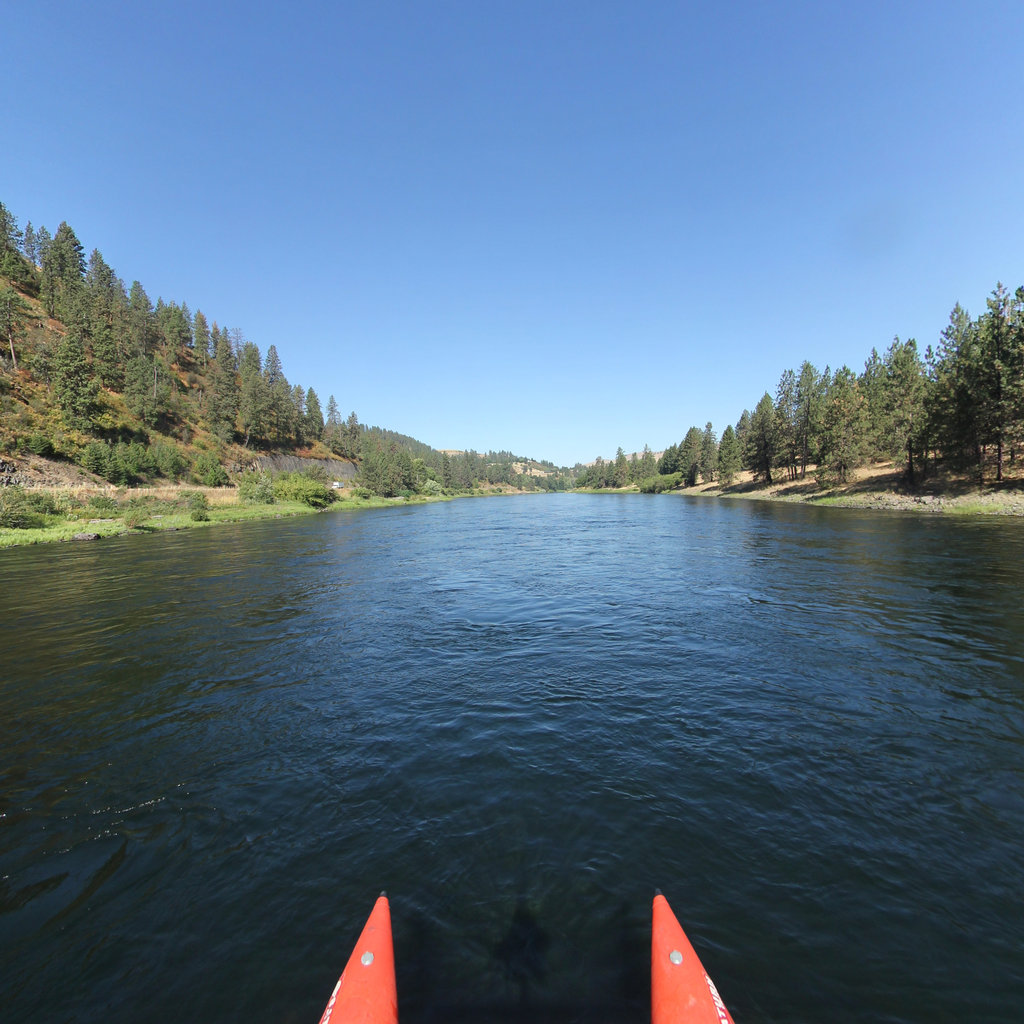
10 frames across 1.6 mi of the route around this location
Analyses
Artwork
Help improve this record
See something that needs correcting, or know a source we are missing? The archive gets better through its readers.


