Journal Entry

Clark: June 7, 1806

June 7, 1806
Camp Chopunnish (Long Camp), waiting for snow to melt
AI Summary

After breakfast, two young Nez Perce chiefs and their companions crossed the river back to their village. Charbonneau, Sergeant Gass, McNeal, Whitehouse, and Goodrich went with them to trade scrap iron, bullets, files, and old seine pieces for ropes, cords, and root bags. Most returned with only a single string each; Whitehouse and Goodrich stayed overnight. Hohastillpilp gave a horse to Frazier in return for Canadian shoes. Drouillard left to hunt up Collins Creek. The party prepared saddles and packed provisions. Clark described the Flathead River and a small, vividly colored orange-yellow and red bird.

Saurday June 7th 1806. The two young cheafs and other Indians who
accompanied them Crossed the river and returned to their Village this
morning after brackfast; Shabono Sergt Gass McNeal, Whitehouse &
Goodrich accompanied them for the purpose of purchaseing or exchangeing
old peces of Sane, fish gig, peces of iron, bullets, and old files and
Such articles as they Could raise for ropes and Strings for to lash their
loads, and bags to Cary their roots in Sergt. Gass, Shabono & McNeal
returned at 2 P M haveing precured a String each only. Whitehouse and
Goodrich continued at the Village all night. Hohastillpilp crossed the
river to day and brought over a horse and gave it to Frazier one of our
party who had made him a present previously of a Par of Canidian Shoes.
one of our men informed me one of the young Chiefs who had given us two
horses already was in Serch of one which he intended to give to me. George
Drewyer Set out on a hunting excurtion up Collins’s Creek alone. our party
are all much engaged in prepareing Sadles and packing up their Stores of
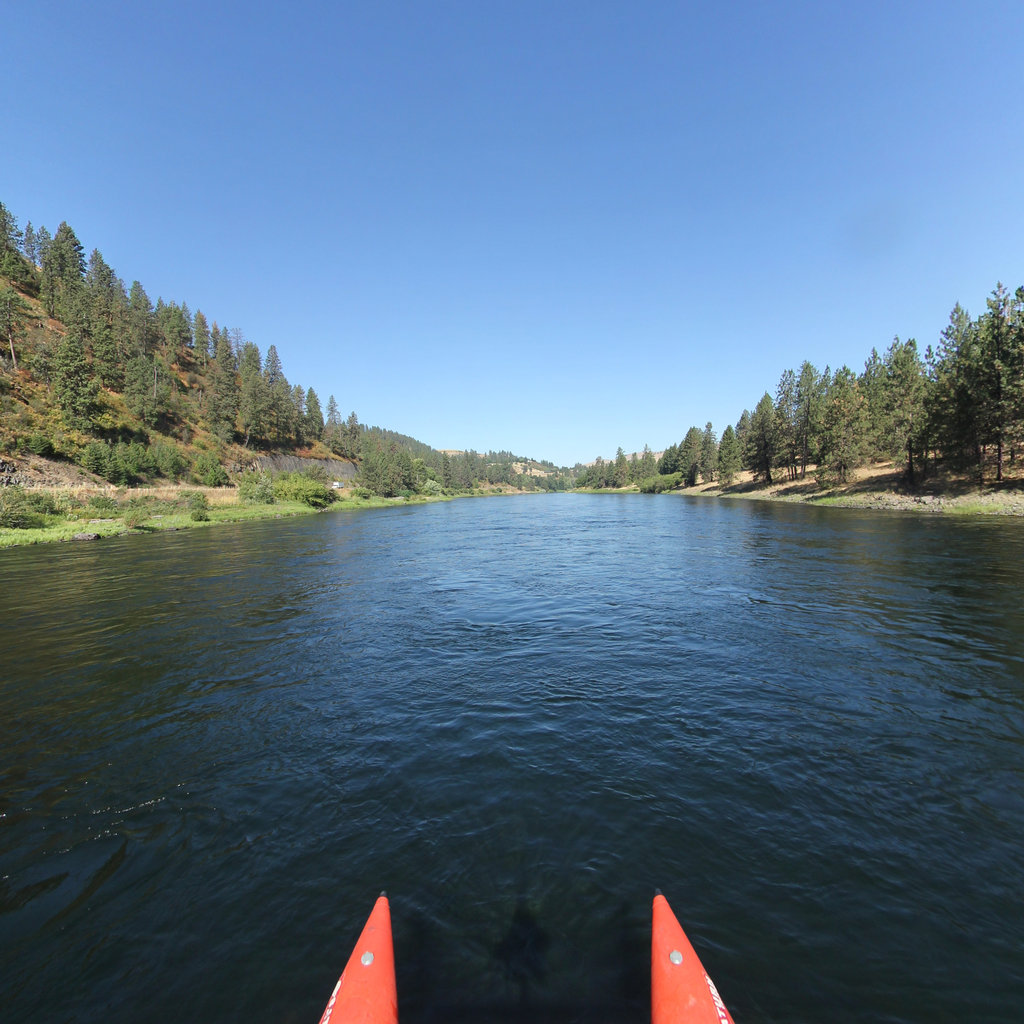
Provisions &c.The Flat Head river is about 150 yards wide at
this place and discharges a vast body of water; notwithstanding it’s high
State the water remains nearly transparent, and it’s temperature appears
to be quit as cold as that of our best Springs. we met with a butifull
little bird in this neighbourhood about the Size and Somewhat the Shape of
the large Sparrow. it measures 7 inches from the extremity of the beak to
that of the tail, the latter Occupying 21/2 inches. the beak is reather
more than half an inch in length, and is formed much like the Virginia
Nightingal; red bd. it is thick and large for a bird of it’s size, wide at
the base, both Chaps convex, and pointed, the upper exceeds the under chap
a little is Somewhat cirved and of a brown Colour; the lower chap of a
Greenish yellow. the eye full reather large and of a black colour both
puple and iris. the plumage is remarkably delicate; that of the neck and
head is of a fine orrange yellow and red. the latter predomonates on the
top of the head and around the base of the beak from whence it gradually
diminishes towards the lower part of the Neck, the orring yellow prevails
most, the red has the Appearance of haveing been laid over a Ground of
yellow. the breast, the Sides, rump and some long feathers which lie
between the legs extend underneath the tail is of a fine orrange yellow.
the tail, back and wings are black, except a Small Strip of yellow on the
outer part of the Middle joint of the wing, 1/4 of an inch wide and an
inch in length. the tail is composed of 12 feathers of which those in the
Center are reather Shortest, and the plumage of all the feathers of the
tail is longest on that Side of the quill next to the Center of the tail.
the legs and feet are black, nails long and Sharp; it has four toes on
each foot, of which three are forward and one behind; that behind is as
long as the two outer of the three toes in front

Read this entry in modern English AI-translated

Saturday, June 7th, 1806. The two young chiefs and the other Indians who accompanied them crossed the river and returned to their village this morning after breakfast. Shabono (Charbonneau), Sergt. Gass, McNeal, Whitehouse, and Goodrich accompanied them for the purpose of purchasing or exchanging old pieces of seine, a fish gig, pieces of iron, bullets, old files, and such articles as they could gather for ropes and strings to lash their loads, and bags to carry their roots in. Sergt. Gass, Shabono, and McNeal returned at 2 P.M., each having procured only one string. Whitehouse and Goodrich stayed at the village all night. Hohastillpilp crossed the river today and brought over a horse, which he gave to Frazier, one of our party, who had previously made him a present of a pair of Canadian shoes. One of our men informed me that one of the young chiefs, who had already given us two horses, was in search of another which he intended to give to me. George Drewyer (Drouillard) set out on a hunting excursion up Collins's Creek alone. Our party are all much engaged in preparing saddles and packing up their stores of provisions, etc.

The Flat Head river is about 150 yards wide at this place and discharges a vast body of water. Notwithstanding its high state, the water remains nearly transparent, and its temperature appears to be quite as cold as that of our best springs.

We met with a beautiful little bird in this neighborhood, about the size and somewhat the shape of the large sparrow. It measures 7 inches from the extremity of the beak to that of the tail, the latter occupying 2 1/2 inches. The beak is rather more than half an inch in length, and is formed much like that of the Virginia Nightingale (red bird). It is thick and large for a bird of its size, wide at the base, both mandibles convex and pointed; the upper exceeds the lower a little, is somewhat curved, and is brown in color; the lower mandible is a greenish yellow. The eye is full, rather large, and black in color, both pupil and iris. The plumage is remarkably delicate. That of the neck and head is a fine orange yellow and red. The red predominates on the top of the head and around the base of the beak, from whence it gradually diminishes toward the lower part of the neck; the orange yellow prevails most, and the red has the appearance of having been laid over a ground of yellow. The breast, sides, rump, and some long feathers which lie between the legs and extend underneath the tail are of a fine orange yellow. The tail, back, and wings are black, except for a small strip of yellow on the outer part of the middle joint of the wing, 1/4 of an inch wide and an inch in length. The tail is composed of 12 feathers, of which those in the center are rather shortest, and the plumage of all the tail feathers is longest on the side of the quill next to the center of the tail. The legs and feet are black, the nails long and sharp. It has four toes on each foot, of which three are forward and one behind; the one behind is as long as the two outer of the three toes in front.

This modernization is AI-generated for accessibility. The original above is the authoritative version.

Our Partners