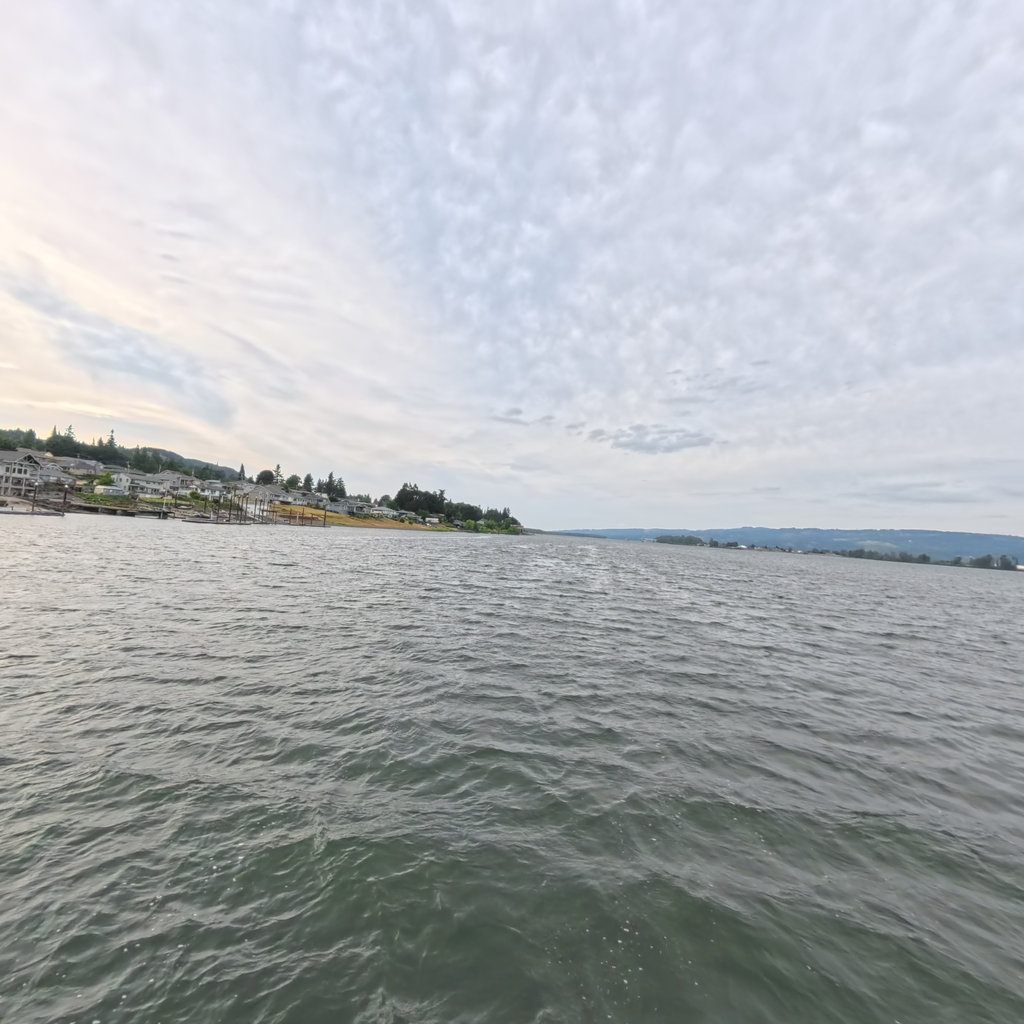
Lewis: March 26, 1806
Strong morning winds delayed departure until 8 A.M. The expedition gave a small medal to Wal-lal-le, a Cathlahmah leader, who reciprocated with a sturgeon, and met head chief Sah-hah-woh-cap, who shared wappato and fish. Two Wackiacum men trailed them trying to trade dogs for tobacco, but supplies were too low; men deprived of tobacco chewed wild crab bark as a substitute. Hunters brought in three eagles and a goose, allowing Lewis to compare bald and grey eagles. The party passed Fanny's Island and camped upriver, traveling about 18 miles.
Wednesday March 26th 1806. The wind blew so hard this morning that we
delayed untill 8 A.M. we gave a medal of small size to a man by the name
of Wal-lal’-le, a principal man among the Cathlahmahs, he appeared very
thankfull for the honour conferred on him and presented us a large
sturgeon. we continued our rout up the river to an old village on the
Stard. side where we halted for dinner. we met on the way the principal
Cheif of the Cathlahmahs, Sah-hah-woh-cap, who had been up the river on a
trading voyage. he gave us some Wappetoe and fish; we also purchased some
of the latter. soon after we halted for dinner the two Wackiacums who have
been pursuing us since yesterday morning with two dogs for sale, arrived.
they wish tobacco in exchange for their dogs which we are not disposed to
give as our stock is now reduced to a very few carrots. our men who have
been accustomed to the use of this article Tobaco and to whom we are now
obliged to deny the uce of this article appear to suffer much for the want
of it. they substitute the bark of the wild crab which they chew; it is
very bitter, and they assure me they find it a good substitute for
tobacco. the smokers substitute the inner bark of the red willow and the
sacacommis. here our hunters joined us having killed three Eagles and a
large goose. I had now an oportunity of comparing the bald with the grey
Eagle; I found that the greay Eagle was about 1/4 larger, it’s legs and
feet were dark while those of the bald Eagle wer of a fine orrange yellow;
the iris of the eye is also of a dark yellowish brown while that of the
other is of a bright silvery colour with a slight admixture of yellow.
after dinner we proceeded on and passed an Elegant and extensive bottom on
the South side and an island near it’s upper point which we call Fanny’s
Island and bottom. the greater part of the bottom is a high dry prarie.
near the river towards the upper point we saw a fine grove of whiteoak
trees; we saw some deer and Elk at a distance in the prarie, but did not
delay for the purpose of hunting them. we continued our rout after dinner
untill late in the evening and encamped on the next island above fanny’s
Island. we found it difficult to obtain as much wood as answered our
purposes. the hunters who had proceeded on before us after dinner did not
join us this evening. some Indians visited us after dark, but did not
remain long. agreeably to our estimate as we decended the river, we came
16 m. 23rd, 16 m. the 24th, 15 the 25th, and 18 m. the 26th, tho I now
think that our estimate in decending the river was too short.
Read this entry in modern English AI-translated
Wednesday, March 26th, 1806. The wind blew so hard this morning that we delayed until 8 A.M. We gave a medal of small size to a man by the name of Wal-lal'-le, a principal man among the Cathlahmahs. He appeared very thankful for the honor conferred on him and presented us a large sturgeon. We continued our route up the river to an old village on the starboard side, where we halted for dinner. We met on the way the principal chief of the Cathlahmahs, Sah-hah-woh-cap, who had been up the river on a trading voyage. He gave us some wappetoe and fish; we also purchased some of the latter. Soon after we halted for dinner, the two Wackiacums who have been pursuing us since yesterday morning with two dogs for sale arrived. They wish tobacco in exchange for their dogs, which we are not disposed to give, as our stock is now reduced to a very few carrots. Our men, who have been accustomed to the use of this article, tobacco, and to whom we are now obliged to deny the use of this article, appear to suffer much for the want of it. They substitute the bark of the wild crab, which they chew; it is very bitter, and they assure me they find it a good substitute for tobacco. The smokers substitute the inner bark of the red willow and the sacacommis.
Here our hunters joined us, having killed three eagles and a large goose. I now had an opportunity of comparing the bald with the gray eagle; I found that the gray eagle was about 1/4 larger, its legs and feet were dark while those of the bald eagle were of a fine orange yellow; the iris of the eye is also of a dark yellowish brown, while that of the other is of a bright silvery color with a slight admixture of yellow.
After dinner we proceeded on and passed an elegant and extensive bottom on the south side and an island near its upper point, which we call Fanny's Island and Bottom. The greater part of the bottom is a high dry prairie. Near the river towards the upper point we saw a fine grove of white oak trees; we saw some deer and elk at a distance in the prairie, but did not delay for the purpose of hunting them. We continued our route after dinner until late in the evening and camped on the next island above Fanny's Island. We found it difficult to obtain as much wood as answered our purposes. The hunters who had proceeded on before us after dinner did not join us this evening. Some Indians visited us after dark, but did not remain long. According to our estimate as we descended the river, we came 16 miles on the 23rd, 16 miles on the 24th, 15 on the 25th, and 18 miles on the 26th, though I now think that our estimate in descending the river was too short.
This modernization is AI-generated for accessibility. The original above is the authoritative version.
Entities mentioned in this entry
Auto-extracted from the entry text. Hover any entity for context.