Lewis: March 30, 1806
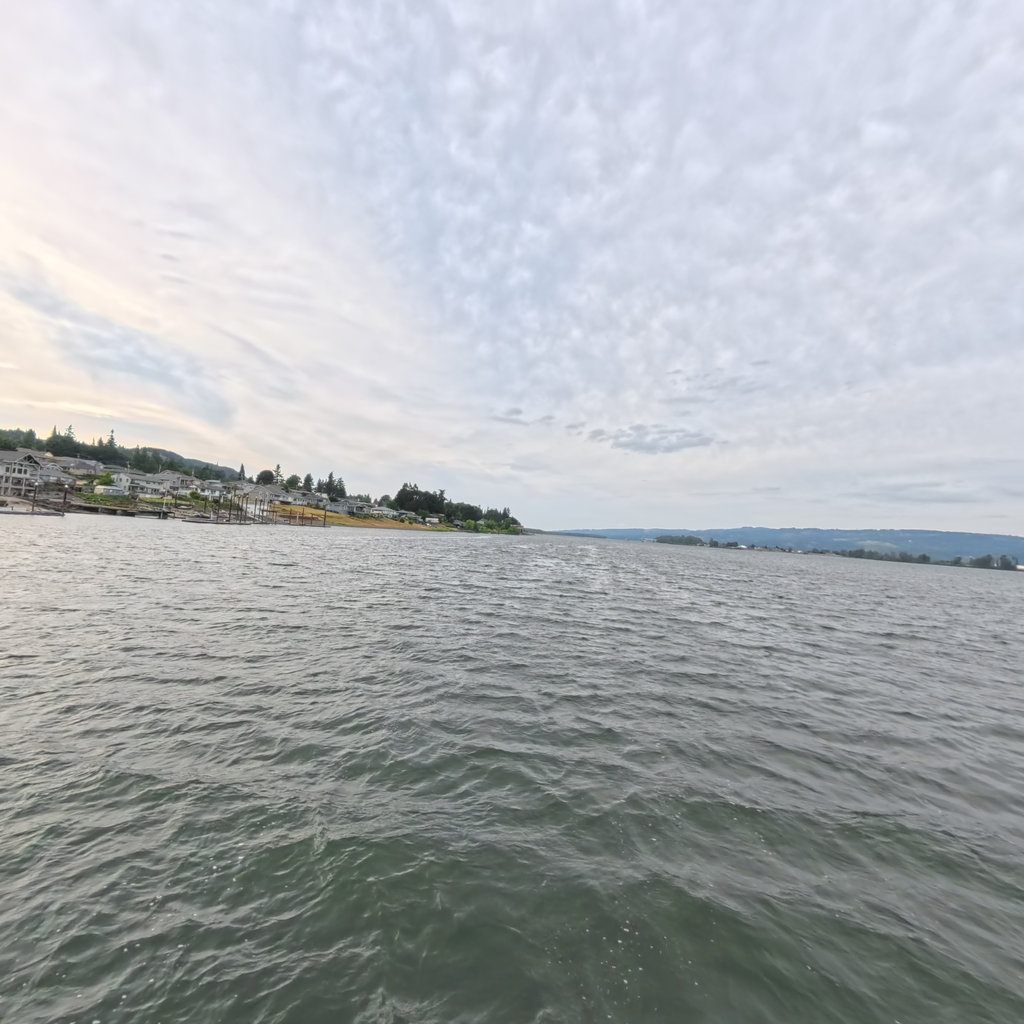
The expedition departed early and traveled 23 miles up the Columbia along Wappetoe Island, encountering numerous canoes of friendly Clannahminnamun, Claxtar, Cathlahcump, Clannahquah, Multnomah, and Shoto natives who came to trade and observe them. Lewis purchased sturgeon and wappetoe roots in exchange for fishhooks. They camped in a prairie opposite Image Canoe Island, where Lewis walked through oak groves and saw deer. Lewis described the fertile Wappetoe Island, viewed Mounts St. Helens and Hood, and judged the broad valley capable of supporting 40,000-50,000 settlers, calling it the only desirable settlement site west of the Rockies.
Sunday March 30th 1806. We got under way very early in the morning, and
had not reached the head of the island before we were met by three men of
the Clan-nah-minna-mun nation one of whom we recognized being the same who
had accompanied us yesterday, and who was very pressing in his entreaties
that we should visit his nation on the inlet S. W. of Wappetoe island. at
the distance of about 2 M. or at the head of the quathlahpahtle island we
met a party of the Claxtars and Cathlahcumups in two canoes; soon after we
were met by several canoes of the different nations who reside on each
side of the river near this place. Wappetoe Island is about 20 miles long
and from 5 to 10 in width; the land is high and extreemly fertile and
intersected in many parts with ponds which produce great quantities of the
sagittaria Sagittifolia, the bulb of which the natives call wappetoe.
there is a heavy growth of Cottonwood, ash, the large leafed ash and sweet
willow on most parts of this island. the black alder common on the coast
has now disappeared. we passed several fishing camps on wappetoe island
and at the distance of 5 miles above quathlahpotle Island on the N. E.
side we halted for breakfast near the place we had encamped on the evening
of the 4th of November last; here we were visited by several canoes which
came off from two towns situated a little distance above us on wappetoe
Island. the 1st of these tribes about 2 miles above us call themselves
Clan-nah-quah, the other about a mile above them call themselves
Mult-no-mah. from these visiters we purchased a sturgeon and some wappetoe
and pashequa, for which we gave some small fishinghooks. these like the
natives below are great higglers in dealing. at 10 A.M. we set out and had
not proceeded far before we came to a landing place of the natives where
there were several large canoes drawn out on shore and several natives
seting in a canoe apparently waiting our arrival; they joined the fleet
and continued with us some miles. we halted a few minutes at this landing
and the Indians pointed to a village which was situated abut 2 miles from
the river behid a pond lying parallel with it on the N. E. side nearly
opposite to the Clan-nah-quah town. here they informed us that the
Sho-toes resided. here we were joined by several other canoes of natives
from the Island. most of these people accompanyed us untill 4 in the
evening when they all returned; their principal object I beive was merely
to indulge their curiossity in looking at us. they appeared very friendly,
tho most had taken the precaution to bring with them their warlike
implements. we continued our rout along the N. E. shore of the river to
the place we had halted to dine on the 4th of Novembr opposite to the
center of Immage canoe island where the Indians stole Capt. Clarks
tomahawk. here we encamped a little before sunset in a beautifull prarie
above a large pond having traveled 23 M. I took a walk of a few miles
through the prarie and an open grove of oak timber which borders the
prarie on the back part. I saw 4 deer in the course of my walk and much
appearance of both Elk and deer. Joseph feields who was also out a little
above me saw several Elk and deer but killed none of them; they are very
shye and the annual furn which is now dry and abundant in the bottoms
makes so much nois in passing through it that it is extreemly difficult to
get within reach of the game. Fends killed and brought with him a duck.
about 10 P.M. an indian alone in a small canoe arrived at our camp, he had
some conversation with the centinel and soon departed. The natives who
inhabit this valley are larger and reather better made than those of the
coast. like those people they are fond of cold, hot, & vapor baths of
which they make frequent uce both in sickness and in health and at all
seasons of the year. they have also a very singular custom among them of
baithing themselves allover with urine every morning. The timber and
apearance of the country is much as before discribed. the up lands are
covered almost entirely with a heavy growth of fir of several speceis like
those discribed in the neighbourhood of Fort Clatsop; the white cedar is
also found hereof large size; no white pine nor pine of any other kind. we
had a view of mount St. helines and Mount Hood. the 1st is the most noble
looking object of it’s kind in nature. it’s figure is a regular cone. both
these mountains are perfectly covered with snow; at least the parts of
them which are visible. the highlands in this valley are rolling tho by no
means too steep for cultivation they are generally fertile of a dark rich
loam and tolerably free of stones. this valley is terminated on it’s lower
side by the mountanous country which borders the coast, and above by the
rainge of mountains which pass the Columbia between the great falls and
rapids of the Columbia river. it is about 70 miles wide on a direct line
and it’s length I beleive to be very extensive tho how far I cannot
determine. this valley would be copetent to the mantainance of 40 or 50
thousand souls if properly cultivated and is indeed the only desireable
situation for a settlement which I have seen on the West side of the Rocky
mountains.
Read this entry in modern English AI-translated
Sunday March 30th 1806. We got under way very early in the morning, and had not reached the head of the island before we were met by three men of the Clan-nah-minna-mun nation. We recognized one of them as the same man who had accompanied us yesterday, and who was very pressing in his entreaties that we should visit his nation on the inlet southwest of Wappetoe Island. At the distance of about 2 miles, or at the head of the Quathlahpahtle Island, we met a party of the Claxtars and Cathlahcumups in two canoes. Soon after, we were met by several canoes of the different nations who reside on each side of the river near this place.
Wappetoe Island is about 20 miles long and from 5 to 10 miles in width. The land is high and extremely fertile, and intersected in many parts with ponds which produce great quantities of the Sagittaria sagittifolia, the bulb of which the natives call wappetoe. There is a heavy growth of cottonwood, ash, the large-leafed ash, and sweet willow on most parts of this island. The black alder common on the coast has now disappeared. We passed several fishing camps on Wappetoe Island, and at the distance of 5 miles above Quathlahpotle Island, on the northeast side, we halted for breakfast near the place we had camped on the evening of the 4th of November last.
Here we were visited by several canoes which came off from two towns situated a little distance above us on Wappetoe Island. The first of these tribes, about 2 miles above us, call themselves Clan-nah-quah; the other, about a mile above them, call themselves Mult-no-mah. From these visitors we purchased a sturgeon and some wappetoe and pashequa, for which we gave some small fishhooks. These, like the natives below, are great hagglers in dealing.
At 10 a.m. we set out, and had not proceeded far before we came to a landing place of the natives where there were several large canoes drawn out on shore and several natives sitting in a canoe, apparently waiting our arrival. They joined the fleet and continued with us some miles. We halted a few minutes at this landing, and the Indians pointed to a village which was situated about 2 miles from the river behind a pond lying parallel with it on the northeast side, nearly opposite the Clan-nah-quah town. Here they informed us that the Sho-toes resided. Here we were joined by several other canoes of natives from the island. Most of these people accompanied us until 4 in the evening, when they all returned. Their principal object, I believe, was merely to indulge their curiosity in looking at us. They appeared very friendly, though most had taken the precaution to bring with them their warlike implements.
We continued our route along the northeast shore of the river to the place we had halted to dine on the 4th of November, opposite the center of Image Canoe Island, where the Indians stole Capt. Clark's (Captain Clark's) tomahawk. Here we camped a little before sunset in a beautiful prairie above a large pond, having traveled 23 miles. I took a walk of a few miles through the prairie and an open grove of oak timber which borders the prairie on the back part. I saw 4 deer in the course of my walk and much sign of both elk and deer. Joseph Fields, who was also out a little above me, saw several elk and deer but killed none of them. They are very shy, and the annual fern, which is now dry and abundant in the bottoms, makes so much noise in passing through it that it is extremely difficult to get within reach of the game. Fields killed and brought with him a duck. About 10 p.m. an Indian alone in a small canoe arrived at our camp; he had some conversation with the sentinel and soon departed.
The natives who inhabit this valley are larger and rather better made than those of the coast. Like those people, they are fond of cold, hot, and vapor baths, which they make frequent use of both in sickness and in health and at all seasons of the year. They have also a very singular custom among them of bathing themselves all over with urine every morning.
The timber and appearance of the country is much as before described. The uplands are covered almost entirely with a heavy growth of fir of several species like those described in the neighborhood of Fort Clatsop. The white cedar is also found here, of large size; no white pine, nor pine of any other kind. We had a view of Mount St. Helens and Mount Hood. The first is the most noble-looking object of its kind in nature. Its figure is a regular cone. Both these mountains are perfectly covered with snow, at least the parts of them which are visible.
The highlands in this valley are rolling, though by no means too steep for cultivation. They are generally fertile, of a dark rich loam, and tolerably free of stones. This valley is terminated on its lower side by the mountainous country which borders the coast, and above by the range of mountains which the Columbia passes between the great falls and rapids of the Columbia River. It is about 70 miles wide on a direct line, and its length I believe to be very extensive, though how far I cannot determine. This valley would be competent to the maintenance of 40 or 50 thousand souls if properly cultivated, and is indeed the only desirable situation for a settlement which I have seen on the west side of the Rocky Mountains.
This modernization is AI-generated for accessibility. The original above is the authoritative version.
Entities mentioned in this entry
Auto-extracted from the entry text. Hover any entity for context.