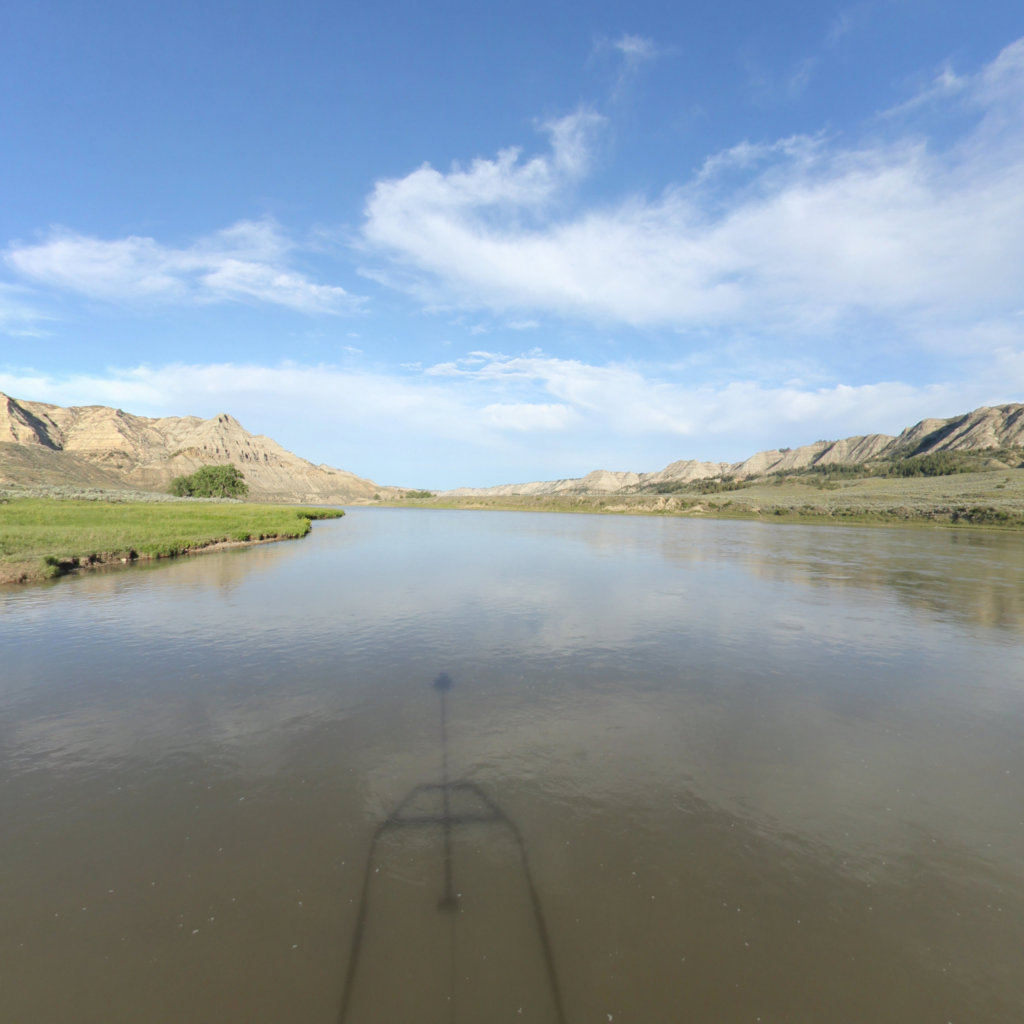
Lewis: May 28, 1805
The expedition set out early under dark, smoky skies with light rain. The crew struggled to haul the boats with worn elk-skin ropes through dangerous, rocky riffles, narrowly avoiding wrecks when the cords broke. They found a recently drifted Indian lodge pole, a football, and other items, suggesting nearby Indians, possibly Minetaries of Fort de Prairie. Late in the day they reached a large creek where the country opened into fertile valleys with wooded islands. Captain Clark killed a bighorn sheep, distant thunder was heard for the first time since leaving the Mandans, and they camped on the starboard side.
Tuesday May 28th 1805. This morning we set forward at an early hour; the
weather dark and cloudy, the are smokey, had a few drops of rain; we
employed the chord generally to which we also gave the assistance of the
pole at the riffles and rocky points; these are as numerous and many of
them much worse than those we passed yesterday; arround those points the
water drives with great force, and we are obliged in many instaces to
steer our vessels through the appertures formed by the points of large
sharp rocks which reach a few inches above the surface of the water, here
sould our chord give way the bough is instantly drivin outwards by the
stream and the vessel thrown with her side on the rocks where she must
inevitably overset or perhaps be dashed to peices; our ropes are but
slender, all of them except one being made of Elk’s skin and much woarn,
frequently wet and exposed to the heat of the weather are weak and rotten;
they have given way several times in the course of the day but happily at
such places that the vessel had room to wheel free of the rocks and
therefore escaped injury; with every precaution we can take it is with
much labour and infinite risk that we are enabled to get around these
points. found a new indian lodge pole today which had been brought down by
the stream, it was woarn at one end as if draged by dogs or horses; a
football also, and several other articles were found, which have been
recently brought down by the courant; these are strong evedences of
Indians being on the river above us, and probably at no great distance;
the football is such as I have seen among the Minetaries and therefore
think it most probable that they are a band of the Minetaries of Fort de
Prarie. the river country &c continued much as yesterday untill late
in the evening when we arrived at the entrance of a large Creek discharges
itself on the Stard. side, is 35 Yd. wide and contains runing water; here
the hills recede from the river on both sides, the bottoms extensive
particularly on the Stard. side where the hills are comparitively low and
open into three large vallies which extend for a considerable distance in
a Northwardly direction; here also the river spreads to more than 3 times
it’s former width and is filled with a number of small and handsome
Islands covered with cottonwood some timber also in the bottoms, the land
again fertile. These appearances were quite reviving after the drairy
country through which we had been passing. Capt. C. walked on shore in the
early part of the day and killed a big horned anamal; he saw a great
number of them as well as ourselves in the broken country. at 10 A.M. a
few drops of rain again fell and were attended with distant thunder which
is the first we have heated since we left the Mandans.This evening
we encamped on Stard. opposite to the entrance of a small Creek. I beleive
the bighorn have their young at a very early season, say early in March
for they appear now to be half grown. One of the party saw a very large
bear today but being some distance from the river and no timber to conceal
him he did not think proper to fire on him.
Read this entry in modern English AI-translated
Tuesday, May 28th, 1805. This morning we set forward at an early hour; the weather was dark and cloudy, the air smoky, and we had a few drops of rain. We generally used the cord (towrope), and we also gave it the assistance of the pole at the riffles and rocky points. These are as numerous and many of them much worse than those we passed yesterday. Around those points the water drives with great force, and we are obliged in many instances to steer our vessels through the openings formed by the points of large sharp rocks which reach a few inches above the surface of the water. Here, should our cord give way, the bow is instantly driven outwards by the stream and the vessel thrown with her side on the rocks, where she must inevitably overset or perhaps be dashed to pieces. Our ropes are but slender, all of them except one being made of elk's skin and much worn; frequently wet and exposed to the heat of the weather, they are weak and rotten. They have given way several times in the course of the day, but happily at such places that the vessel had room to wheel free of the rocks and therefore escaped injury. With every precaution we can take, it is with much labor and infinite risk that we are able to get around these points.
We found a new Indian lodge pole today which had been brought down by the stream; it was worn at one end as if dragged by dogs or horses. A football also, and several other articles, were found which have been recently brought down by the current. These are strong evidence of Indians being on the river above us, and probably at no great distance. The football is such as I have seen among the Minetaries (Minnetarees), and therefore I think it most probable that they are a band of the Minetaries of Fort de Prairie.
The river, country, etc. continued much as yesterday until late in the evening, when we arrived at the entrance of a large creek that discharges itself on the starboard side. It is 35 yards wide and contains running water. Here the hills recede from the river on both sides, the bottoms extensive, particularly on the starboard side, where the hills are comparatively low and open into three large valleys which extend for a considerable distance in a northwardly direction. Here also the river spreads to more than three times its former width and is filled with a number of small and handsome islands covered with cottonwood, with some timber also in the bottoms, and the land again fertile. These appearances were quite reviving after the dreary country through which we had been passing.
Capt. C. (Capt. Clark) walked on shore in the early part of the day and killed a bighorn animal; he saw a great number of them, as well as ourselves, in the broken country. At 10 A.M. a few drops of rain again fell and were attended with distant thunder, which is the first we have heard since we left the Mandans. This evening we camped on the starboard side, opposite the entrance of a small creek. I believe the bighorn have their young at a very early season, say early in March, for they appear now to be half grown. One of the party saw a very large bear today, but being some distance from the river and with no timber to conceal him, he did not think it proper to fire on him.
This modernization is AI-generated for accessibility. The original above is the authoritative version.
Entities mentioned in this entry
Auto-extracted from the entry text. Hover any entity for context.