Journal Entry

Clark: May 28, 1805

May 28, 1805
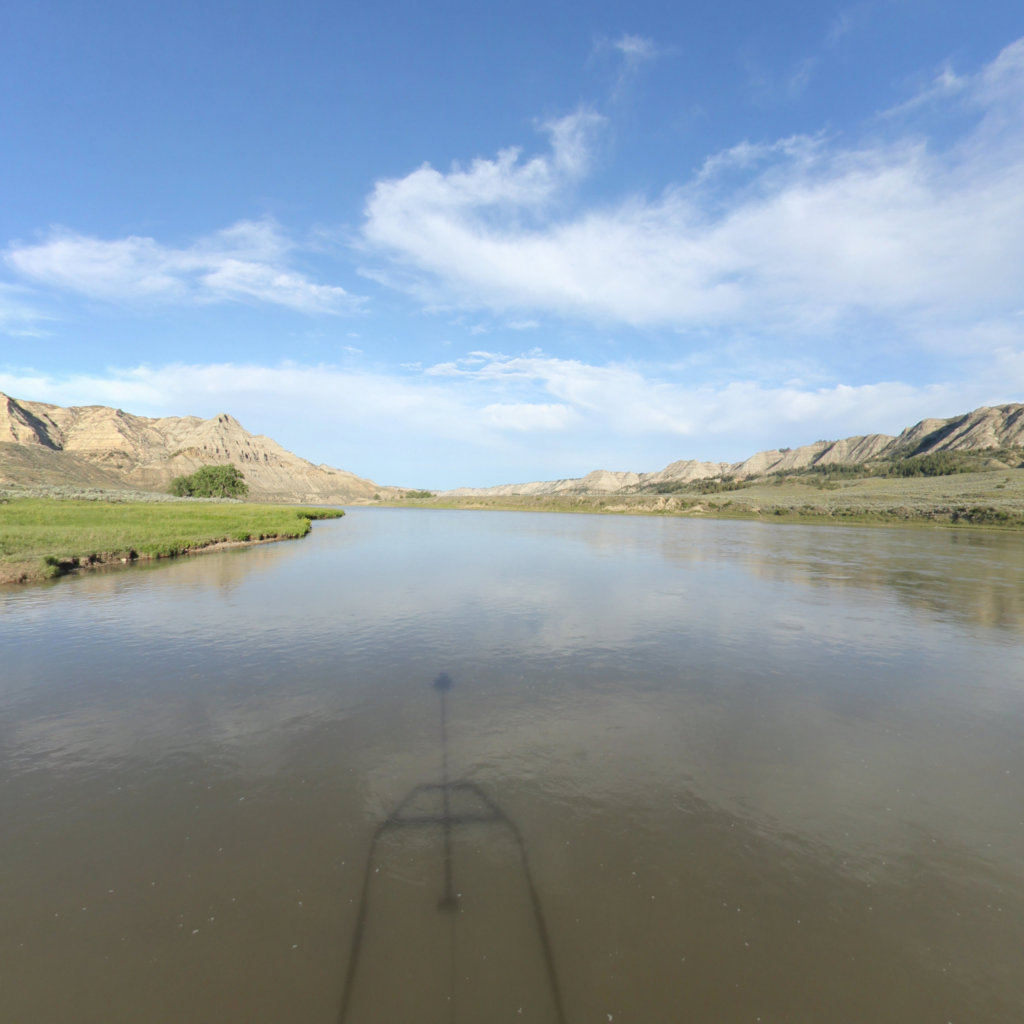
Missouri River, first view of Rocky Mountains
AI Summary

On a cloudy, smoky morning with a southwest wind, the expedition set out early and struggled through numerous shoals, relying on cords, poles, and fragile elkskin tow ropes that risked capsizing the boats. Clark walked ashore in rugged country, killed a bighorn sheep, and the party found a lodge pole, a football, and other items signaling Native people upriver. The first thunder since Fort Mandan rolled at 1 p.m. They camped near two creeks, naming one Thompson's Creek after a party member and the other Bull Creek after a buffalo that charged through camp at night without injuring anyone.

May 28th Tuesday 1805 a Cloudy morning Some fiew drops of rain and verry
Smokey wind from the S. W. we Set out at an early hour, the Shoaley places
are verry numerous and Some bad to get around we have to make use of the
Cord & Poles, and our tow. ropes are all except one of Elkskin, &
Stretch and Sometimes brake which indanger the Perogues or Canoe, as it
imedeately turns and if any rock Should chance to be below, the rapidity
of the current would turn her over, She Should chance to Strike the rock
we observe great Caution at those places.

I walked on Shore found the Countrey ruged and as described yesterday, I
Saw great numbers of the Big horned animals, one of which I killed their
fauns are nearly half grownone of the Party Saw a verry large bear,
picked up on the Shore a pole which had been made use of by the Nativs for
lodge poles, & haul’d by dogs it is new and is a Certain Sign of the
Indians being on the river above a foot ball and Several other articles
are also found to Substantiate this oppinion-. at 1 oClock we had a few
drops of rain and Some thunder whic is the first thunder we have had Sinc
we Set out from Fort Mandan; at 10 miles the the hills begin to widen
& the river Spreds & is crouded with Islands the bottoms Contain
Some Scattering Cotton wood the Islands also Contain timberpassed a
Creek of running water on the Stard Side about 35 yards wide and camped
imedeately opposit to a Small Creek on the Lard. Side we call Bull Creek
from the Circumstance of a Buffalow Bull swiming from the opposit Side and
comeing out of the river imedeately across one of the Perogues without
Sinking or injureing any thing in the Perogue, and passing with great
violence thro our Camp in the night makeing 3 angles without hurting a
man, altho they lay in every direction, and it was very dark The Creek
below 35 yards wide I call Thompsons Creek after a valuable member of our
partythis Creek contains a Greater preportion of running water than
Common.

Read this entry in modern English AI-translated

May 28th, Tuesday 1805. A cloudy morning with a few drops of rain and very smoky air, wind from the S.W. We set out at an early hour. The shoaly places are very numerous and some are hard to get around. We have to make use of the cord and poles, and our tow ropes are all elkskin except one. They stretch and sometimes break, which endangers the pirogues or canoe, as the boat immediately turns, and if any rock should happen to be below, the rapidity of the current would turn her over should she chance to strike the rock. We observe great caution at those places.

I walked on shore and found the country rugged, as described yesterday. I saw great numbers of the bighorn animals, one of which I killed. Their fawns are nearly half grown. One of the party saw a very large bear. I picked up on the shore a pole which had been made use of by the natives for lodge poles, and hauled by dogs. It is new, and is a certain sign that Indians are on the river above. A football and several other articles were also found to substantiate this opinion. At 1 o'clock we had a few drops of rain and some thunder, which is the first thunder we have had since we set out from Fort Mandan. At 10 miles the hills begin to widen and the river spreads and is crowded with islands. The bottoms contain some scattered cottonwood, and the islands also contain timber. We passed a creek of running water on the starboard side about 35 yards wide, and camped immediately opposite a small creek on the larboard side which we call Bull Creek, from the circumstance of a buffalo bull swimming from the opposite side and coming out of the river immediately across one of the pirogues, without sinking or injuring anything in the pirogue, and passing with great violence through our camp in the night, making 3 angles without hurting a man, although they lay in every direction, and it was very dark. The creek below, 35 yards wide, I call Thompson's Creek, after a valuable member of our party. This creek contains a greater proportion of running water than common.

This modernization is AI-generated for accessibility. The original above is the authoritative version.

Our Partners