Meriwether Lewis in Shoshone Dress
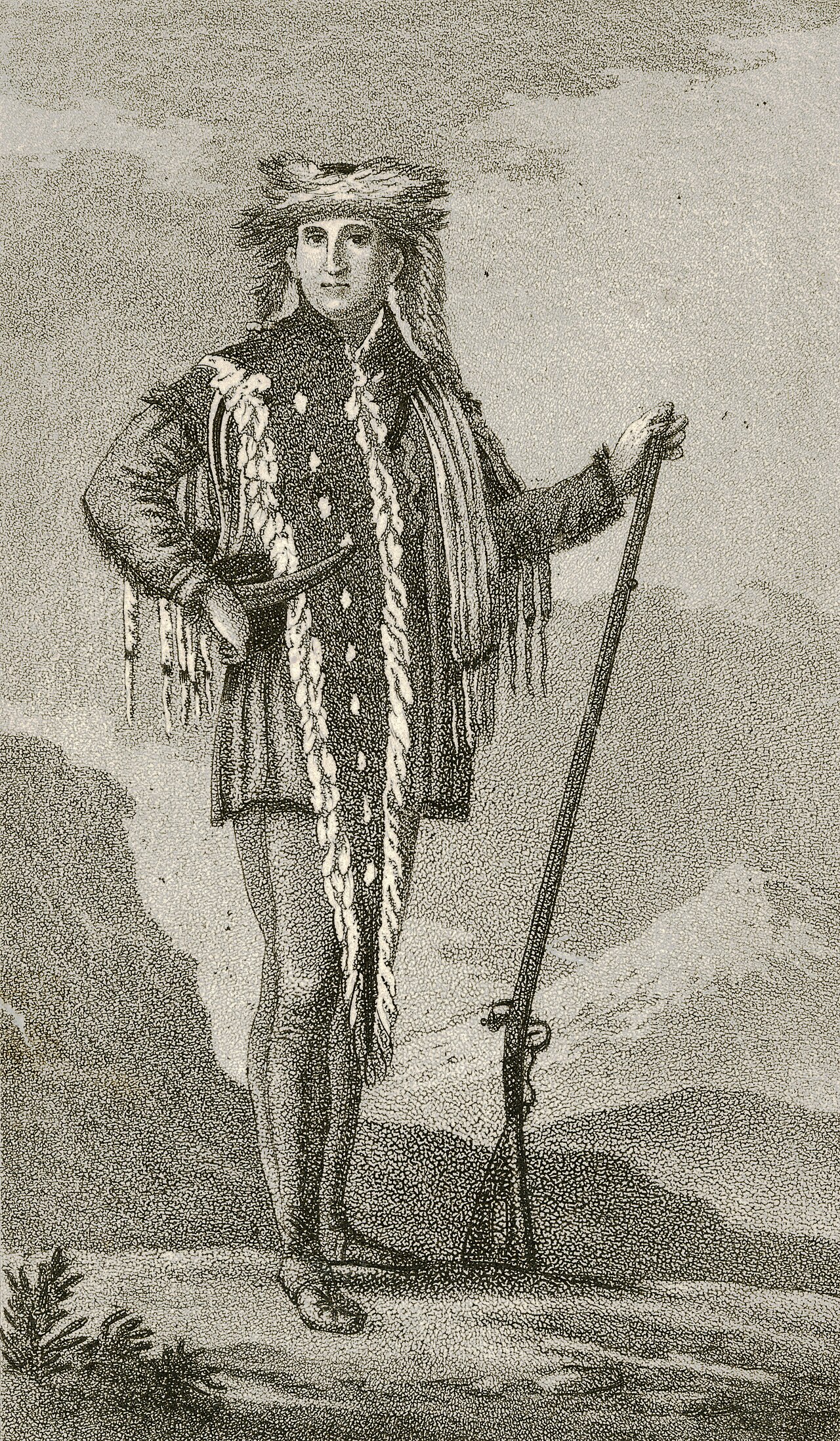
The portrait shows Meriwether Lewis at three-quarter length, wearing an ermine-trimmed tippet given to him by the Shoshone leader Cameahwait during the Corps of Discovery’s transit of the Continental Divide in August 1805. Lewis stands holding a long rifle, dressed in fringed leather and the white ermine-skin garment that drapes across his chest. Saint-Mémin worked in watercolor with careful attention to the texture of the ermine pelts and the leather fringes, while keeping the figure isolated against a plain ground in the manner of his profile portraiture practice. Lewis faces the viewer at a slight angle, his expression composed and direct.
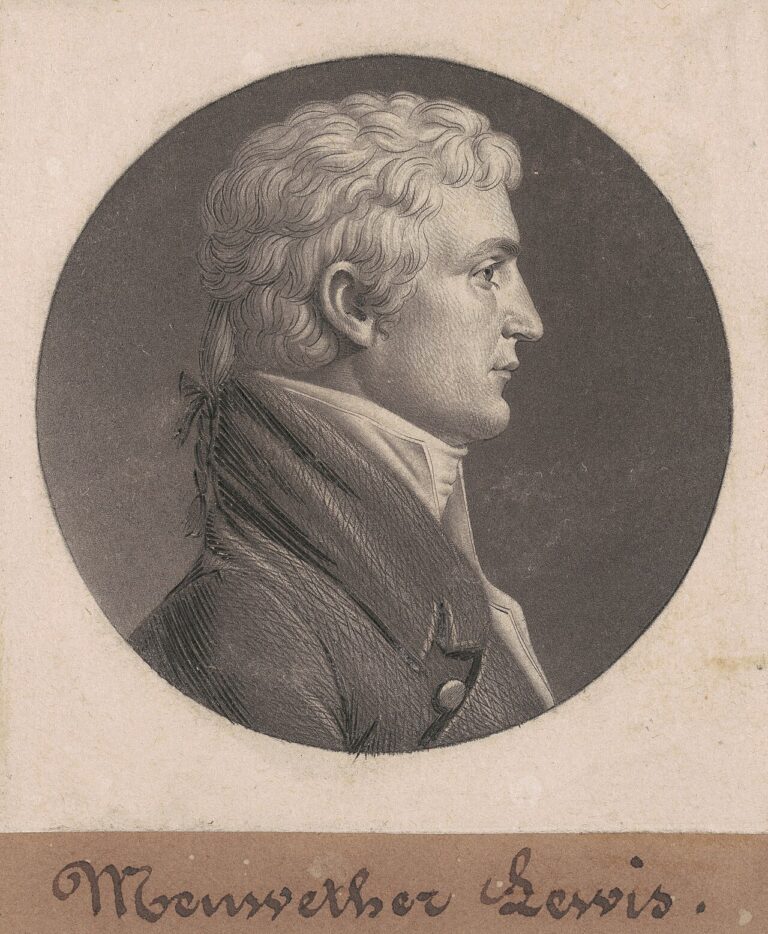
Saint-Mémin executed the watercolor in 1807, shortly after Lewis returned to the eastern United States from the Pacific. Lewis had reached Washington in late 1806 and spent much of 1807 in Philadelphia overseeing the preparation of expedition specimens, maps, and the eventual publication of the journals. During this period he sat for Saint-Mémin, who produced several likenesses of him, including a profile in black and white chalk and this fuller watercolor showing him in the Shoshone garments he had brought back. The ermine tippet itself was a diplomatic gift, exchanged during the negotiations that secured horses for the expedition’s crossing of the Bitterroots, and Lewis appears to have valued it as a tangible record of that encounter.
Charles Balthazar Julien Fevret de Saint-Mémin (1770–1852) was a French émigré who fled the Revolution and settled in the United States in 1793, building a portrait practice that relied on the physiognotrace, a mechanical drawing device that produced accurate profiles. He drew many of the prominent figures of the early republic before returning to France in 1814. The Lewis watercolor is unusual within his output for its full-color treatment and ethnographic subject matter, and it is one of only a handful of life portraits of Lewis. The work is held by the New-York Historical Society and has been reproduced widely in expedition scholarship and exhibitions, serving as the standard visual reference for Lewis’s appearance in Native-made dress and for the Shoshone tippet itself.