William Clark (Profile Portrait)
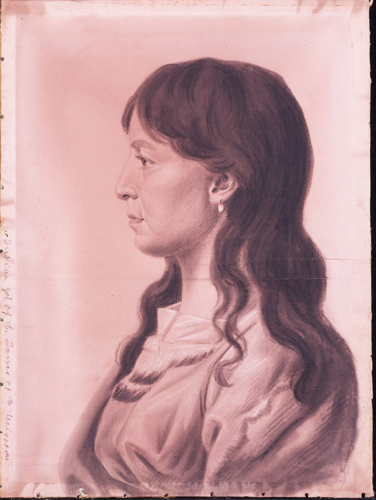
This life-size profile portrait shows William Clark in right-facing profile, rendered in chalk and crayon on paper. Saint-Mémin captures Clark in middle age, with his hair worn back from a high forehead, the line of the jaw and nose carefully delineated. The artist favored crisp profile silhouettes against plain grounds, a format borrowed from neoclassical portraiture and from his use of the physiognotrace—a mechanical device that traced a sitter’s profile at full scale. The result is a portrait that emphasizes contour and bone structure over expression or narrative incident.
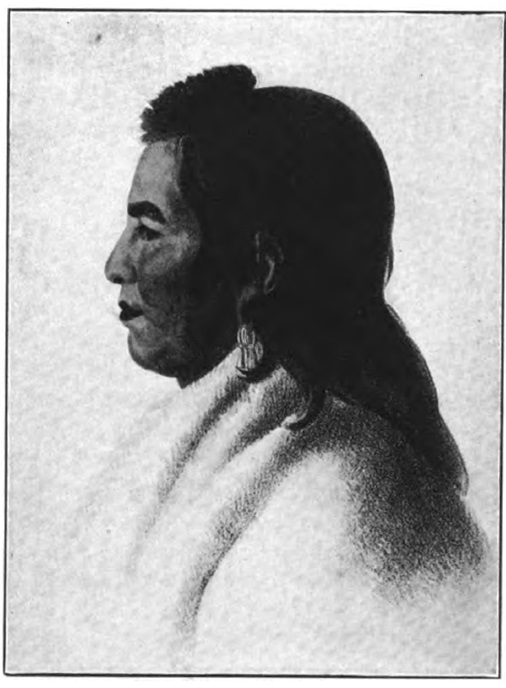
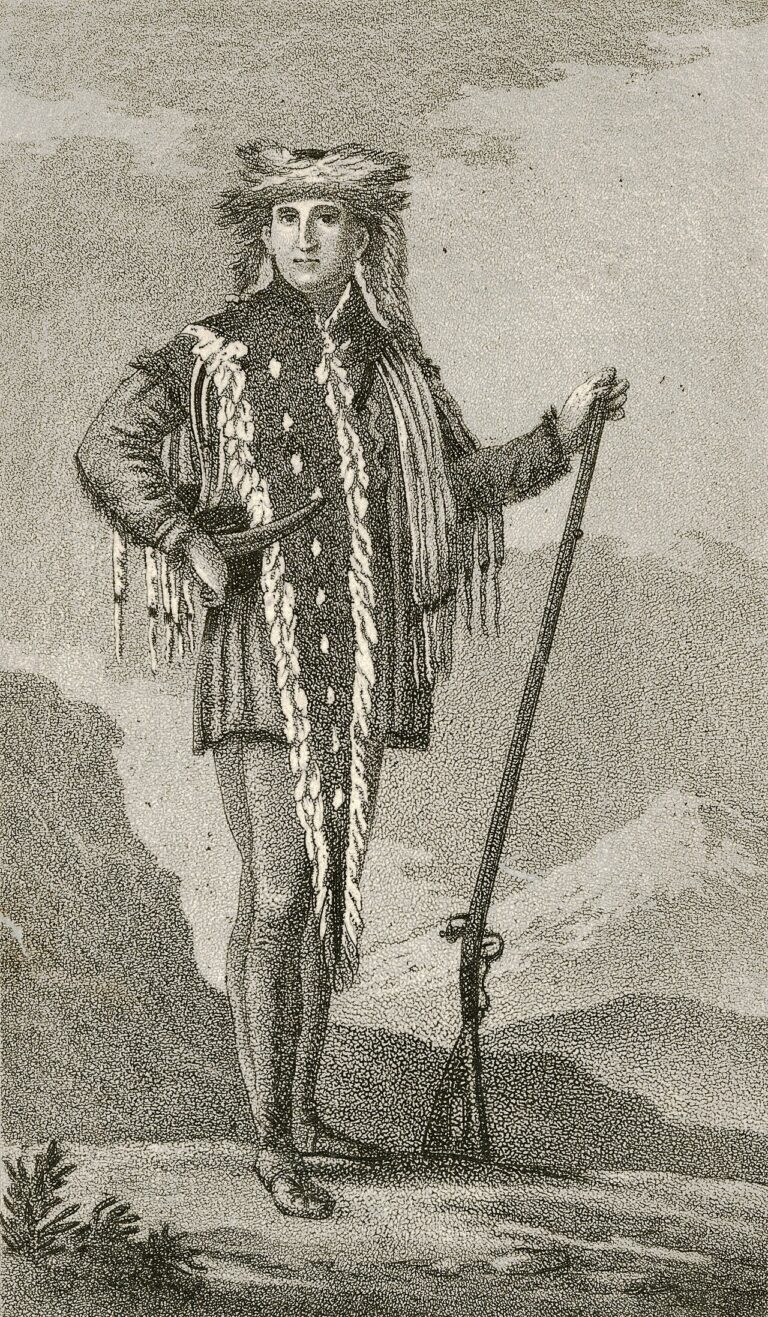
The portrait dates to roughly 1807–1808, the period immediately following Clark’s return from the Pacific. By 1807 Clark had been appointed Brigadier General of the Louisiana Territory militia and Indian agent for the western tribes, and was traveling between Washington, Philadelphia, and St. Louis as he took up these duties. Saint-Mémin was then the leading profile portraitist in the federal cities, and prominent figures connected to the expedition—Meriwether Lewis, several of the Indian delegates Lewis and Clark brought east, and Clark himself—sat for him during this brief window. The Saint-Mémin profiles thus form a visual record of the expedition’s immediate aftermath, when its members were celebrated public figures in eastern political circles.
Charles Balthazar Julien Févret de Saint-Mémin (1770–1852) was a French émigré aristocrat who fled the Revolution and supported himself in the United States by producing profile portraits, typically delivering a large chalk drawing along with a small engraved version. He worked in this manner for roughly two decades before returning to France in 1814. His sitters included Thomas Jefferson, Paul Revere, and a wide range of federal officials, making his output one of the most systematic visual catalogues of early republican America. The Clark profile is held by the Missouri History Museum in St. Louis, the principal repository for Clark family material, where it sits alongside other portraits, manuscripts, and objects connected to his career as explorer, territorial governor, and Superintendent of Indian Affairs. It is among the earliest portraits of Clark drawn from life and has been reproduced widely in expedition scholarship.