William Clark
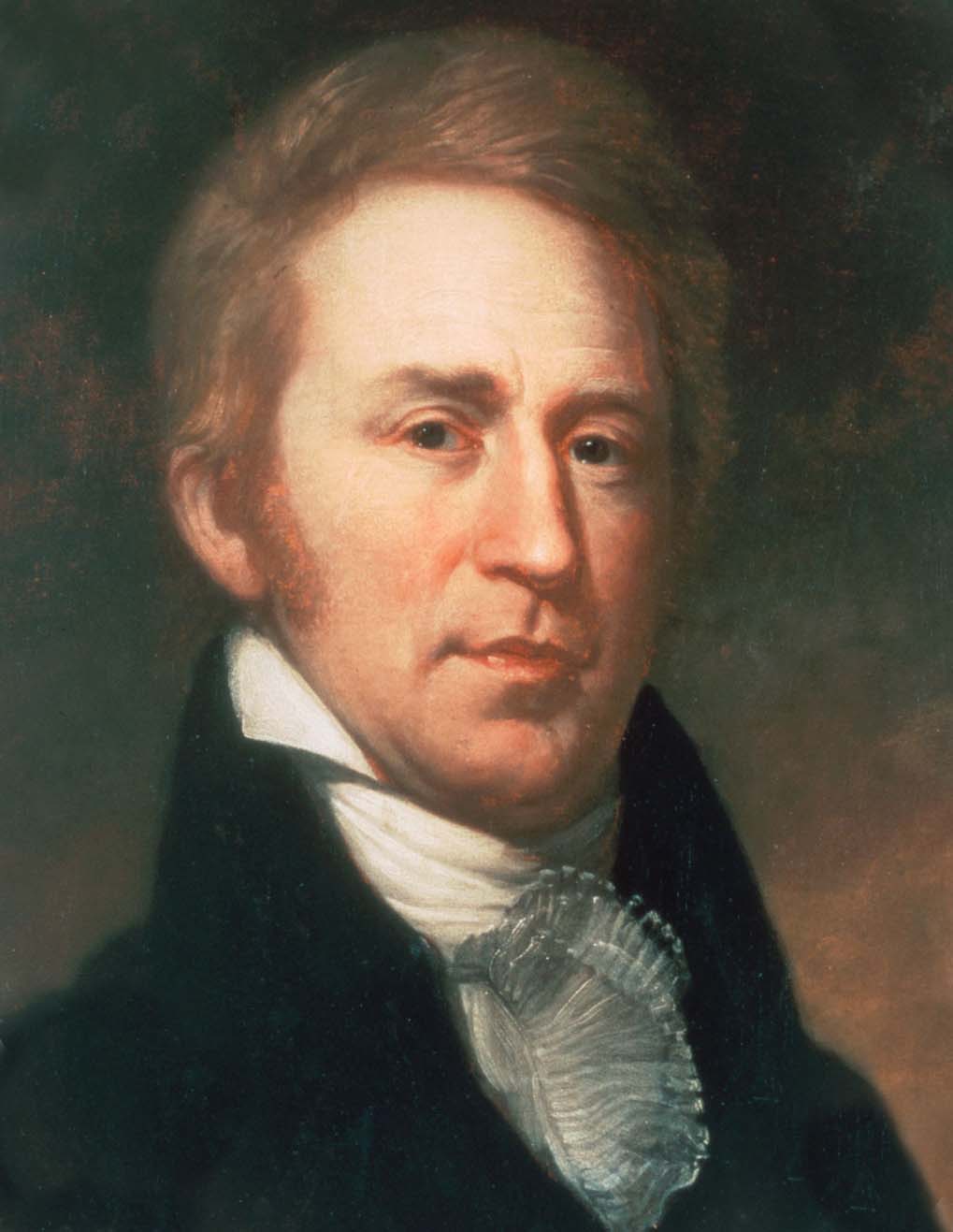
Charles Willson Peale’s portrait of William Clark shows the explorer in bust-length view, dressed in civilian clothing appropriate to his postexpedition station rather than military uniform. Clark faces the viewer in a three-quarter pose with the dark, neutral background typical of Peale’s portrait practice. The brushwork concentrates attention on the face: the high forehead, reddish hair, and direct gaze that contemporaries consistently described. Peale used the conventions of American Federal-era portraiture—restrained palette, even studio lighting, minimal accessory detail—to produce a likeness intended for documentary as well as commemorative purposes.
The portrait was painted in Philadelphia shortly after Clark returned from the Pacific. Lewis and Clark had reached St. Louis on September 23, 1806, and in the months that followed both captains traveled east to report to President Jefferson, settle expedition accounts, and prepare materials for publication. Clark sat for Peale during one of these visits, probably in 1807 or early 1808. By that point, Clark had been appointed brigadier general of the Louisiana Territory militia and principal Indian agent for the western tribes, and was beginning the long collaboration with Nicholas Biddle that would eventually produce the published expedition narrative in 1814. Peale was simultaneously painting Meriwether Lewis, several expedition members, and a number of Native delegates who came east in the wake of the journey.
Peale (1741–1827) was by this date the senior figure in American portraiture and the proprietor of the Philadelphia Museum, where he displayed natural history specimens alongside portraits of figures he considered consequential to the early Republic. The Clark and Lewis portraits were painted for that museum, which functioned as a kind of national gallery of revolutionary and scientific worthies. After the museum’s nineteenth-century dispersal, many of the Peale portraits eventually entered the collection of Independence National Historical Park in Philadelphia, where this likeness is now held. The painting has served as the principal visual reference for Clark in scholarly publications, exhibition catalogues, and popular histories of the expedition since the late nineteenth century, and it remains the image most frequently reproduced in studies of the Corps of Discovery.