Clark: April 10, 1806
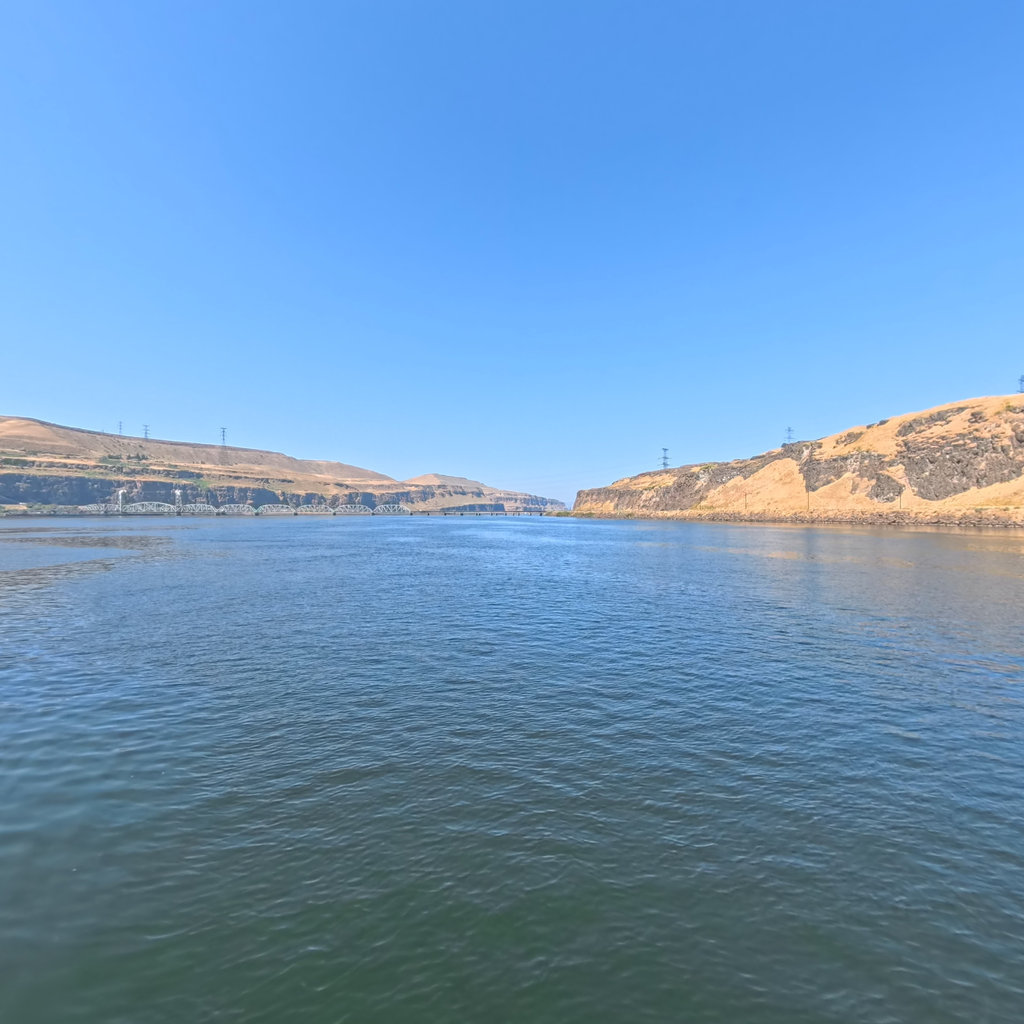
The expedition set out at 6 AM, hauling canoes up a quarter-mile rapid at the lower end of an island. Sergeant Pryor was left to wait for hunters Collins and Gibson while the main party crossed the 400-yard river to a four-house Clah-lah-lar village for breakfast. There they traded a knife and two elk skins for a young mountain sheep skin and learned the animals lived in the nearby mountains. After Pryor, Gibson, and Collins rejoined with three deer, the group struggled upriver against strong currents and rocky shores, reaching a portage by evening. A drifting small canoe was recovered by Indians and returned for two knives.
Thursday April 10th 1806 Collins went out in the bottom to hunt agreeable
to the order of last evening, and gibsons Crew was derected to delay for
Collins dureing which time they were derected to Collect rozin from the
pines in the bottom near our Camp at 6 A M. we Set out and proceeded to
the lower point of the Island from whence we were Compelled to draw our
Canoes up a rapid for about 1/4 mile which we Soon performed. Collins
& gibson haveing not yet Come over we derected Serjt. Pryor to delay
on the Island untill Gibson Came over & assist him with the large toe
roap which we also left and to join us at a village of four houses of the
Clah-lah-lar Tribe which is opposit to this Island on North Side at which
place we intened to brackfast. in crossing the River which at this place
is not more than 400 yards wide we fell down a great distance owing to the
rapidity of the Current. I entered one of the houses of those people and
was Scercely Seated before they offered me a Sheep Skin for Sale nothing
could be more acceptable except the Animal itself in examoning this Skin I
found it was a young one, the Skin of the head was Cased So as to fit the
head of a man and was esteemed as a great orniment and highly prised by
them. we precured this Cased head for a knife and, the Skin we were
obliged to give two Raw Elk Skins for. Soon after they offered a large one
for Sall. after finding us anxious to purchase they declined silling this
Skin. those people informed us that they killed those Animals among the
rocks in the mountains under which they live; and that great numbers of
those animals inhabit those mountains & that the lamb was killed out
of a gange of 36 at a Short distance from their village. The wool of the
full grown Sheep, or that on the Skin which we Saw was much Corser than
that of the one which we purchased, the Skin was about the Size of that of
a Common deer. The Skin we obtained appeared to be the Skin of a Sheep not
fully grown, the wool fine, the Horns were abought 4 inches long,
Celindric, Smooth, black, a little bending backwards and pointed; they
rise from the Middle of the foeheard, and a little above the eyes, and
appeared to possess all the marks of the Common Sheep as already
discribed. We could precure no provisions from those people except four
white Salmon trout. at 10 oClock Sergt. Pryor and Gibson joined us with
Collins who had killed 3 deer. these were all of the blacktailed fallow
kind. We Set out and Continued up on the N. Side of the river with great
dificuelty in Consequence of the Rapidity of the Current and the large
rocks which forms this Shore; the South Side of the river is impassable.
As we had but one Sufficent toe roap and were obliged to employ the Cord
in getting on our Canoes the greater part of the way we could only take
them one at a time which retarded our progress very much. by evening we
arived at the portage on the N. Side where we landed and Conveyed our
baggage to the top of the hill about 200 paces distant where we found a
Camp. we had the Canoes drawn on Shore and Secured. the Small Canoe got
loose from the hunters and went adrift with a tin cup & a tomahawk in
her; the Indians Caught her at the last Village and brought her up to us
this evening for which we gave them two knives; the Canoe overset and lost
the articles which were in her.-.
Read this entry in modern English AI-translated
Thursday, April 10th, 1806. Collins went out into the bottom to hunt according to the order given last evening, and Gibson's crew was directed to wait for Collins, during which time they were directed to collect rosin from the pines in the bottom near our camp. At 6 A.M. we set out and proceeded to the lower point of the island, from which we were compelled to draw our canoes up a rapid for about 1/4 mile, which we soon accomplished. Collins and Gibson having not yet come over, we directed Sergeant Pryor to wait on the island until Gibson came over, and to assist him with the large tow rope, which we also left, and to join us at a village of four houses of the Clah-lah-lar tribe which is opposite this island on the north side, at which place we intended to have breakfast. In crossing the river, which at this place is not more than 400 yards wide, we drifted down a great distance owing to the rapidity of the current.
I entered one of the houses of these people and was scarcely seated before they offered me a sheep skin for sale. Nothing could be more acceptable except the animal itself. In examining this skin, I found it was from a young one. The skin of the head was cased so as to fit the head of a man and was esteemed as a great ornament and highly prized by them. We procured this cased head for a knife, and we were obliged to give two raw elk skins for the skin. Soon after, they offered a large one for sale. After finding us anxious to purchase, they declined selling this skin. These people informed us that they killed these animals among the rocks in the mountains under which they live, and that great numbers of these animals inhabit those mountains, and that the lamb was killed out of a herd of 36 at a short distance from their village. The wool of the full-grown sheep, or that on the skin which we saw, was much coarser than that of the one which we purchased. The skin was about the size of that of a common deer. The skin we obtained appeared to be the skin of a sheep not fully grown; the wool was fine, the horns were about 4 inches long, cylindrical, smooth, black, a little bending backwards, and pointed. They rise from the middle of the forehead, and a little above the eyes, and appeared to possess all the marks of the common sheep as already described. We could procure no provisions from these people except four white salmon trout.
At 10 o'clock, Sergeant Pryor and Gibson joined us with Collins, who had killed 3 deer. These were all of the black-tailed fallow kind. We set out and continued up the north side of the river with great difficulty in consequence of the rapidity of the current and the large rocks which form this shore; the south side of the river is impassable. As we had but one sufficient tow rope and were obliged to employ the cord in getting our canoes along the greater part of the way, we could only take them one at a time, which retarded our progress very much. By evening we arrived at the portage on the north side, where we landed and carried our baggage to the top of the hill about 200 paces distant, where we found a camping spot. We had the canoes drawn on shore and secured. The small canoe got loose from the hunters and drifted away with a tin cup and a tomahawk in her. The Indians caught her at the last village and brought her up to us this evening, for which we gave them two knives. The canoe had overturned and lost the articles which were in her.
This modernization is AI-generated for accessibility. The original above is the authoritative version.
Entities mentioned in this entry
Auto-extracted from the entry text. Hover any entity for context.