Journal Entry

Lewis: April 9, 1806

April 9, 1806
Portaging Cascades of the Columbia upstream
AI Summary

The party reloaded canoes and traveled upriver, breakfasting at the Wah-clel-lah village on the Columbia's north side below Beacon Rock. John Colter recovered a tomahawk stolen from them the previous November. Lewis described the village's architecture, the inhabitants' removal to summer fishing sites, and the women's nose ornaments. He noted unfriendly behavior, beautiful cascades along the cliffs, and the first turkey buzzards seen west of the Rockies. Friendly Chilluckittoquaw chiefs were greeted. The group continued to the Clahclellah village, bought dogs, then crossed to camp near Brant Island in cold, windy rain.

Wednesday April 9th 1806. This morning early we commenced the operation of
reloading our canoes; at 7 A.M. we departed and proceeded on to the Camp
of Reubin and Joseph Fields they had not killed any game; we made no halt
at this place but continued our rout to the Wah-clel-lah Village which is
situated on the North side of the river about a mile below the beacon
rock; here we halted and took breakfast. John Colter one of our party
observed the tomehawk in one of the lodges which had been stolen from us
on the 4th of November last as we decended this river; the natives
attempted to wrest the tomahawk from him but he retained it. they
indeavoured afterwards to exculpate themselves from the odium of having
stolen it, they alledged that they had bought it from the natives below;
but their neighbours had several days previously, informed us that these
people had stolen the Tommehawk and then had it at their village. this
village appears to be the winter station of the Wah-clel-lahs and
Clahclellars, the greater part of the former have lately removed to the
falls of the Multnomah, and the latter have established themselves a few
miles above on the North side of the river opposite the lower point of
brant island, being the commencement of the rapids, here they also take
their salmon; they are now in the act of removing, and not only take with
them their furniture and effects but also the bark and most of the boards
which formed their houses. 14 houses remain entire but are at this time
but thinly inhabited, nine others appear to have been lately removed, and
the traces of ten or twelve others of ancient date were to be seen in the
rear of their present village. they sometimes sink their houses in the
earth, and at other times have their floors level with the surface of the
earth; they are generally built with boards and covered with Cedar bark.
most of them have a devision in their houses near the entrance wich is at
the end or in the event of it’s bing a double house is from the center of
a narrow passage. several families inhabit one appartment. the women of
these people pierce the cartelage of the nose in which they wear various
ornaments in other rispects they do not differ from those in the
neighbourhood of the Diamond island; tho most of the women brad their hair
which hanges in two tresses one hanging over each ear. these people were
very unfriendly, and seemed illy disposed had our numbers not detered them
any acts of violence. with some difficuly we obtained five dogs from them
and a few wappetoe. on our way to this village we passed several
beautifull cascades which fell from a great hight over the stupendious
rocks which cloles the river on both sides nearly, except a small bottom
on the South side in which our hunters were encamped. the most remarkable
of these casscades falls about 300 feet perpendicularly over a solid rock
into a narrow bottom of the river on the south side. it is a large creek,
situated about 5 miles above our encampment of the last evening. several
small streams fall from a much greater hight, and in their decent become a
perfect mist which collecting on the rocks below again become visible and
decend a second time in the same manner before they reach the base of the
rocks. the hills have now become mountains high on each side are rocky
steep and covered generally with fir and white cedar. we saw some turkey
buzzards this morning of the speceis common to the United states which are
the first we have seen on this side the rocky mountains. during our halt
at this village the grand Cheif and two inferior Cheifs of the
Chil-luck-kit-to-quaw nation arrived with several men and women of their
nation in two large canoes. these people were on their return up the
river, having been on a trading voyage to the Columbean vally, and were
loaded with wappetoe dryed anchovies, with some beads &c which they
had received in exchange for dryed and pounded salmon shappelell beargrass
&c. These people had been very kind to us as we decended the river we
therefore smoked with them and treated them with every attention. at 2
P.M. we renewed our voyage; passed under the beacon rock on the north
side, to the left of two small islands situated near the shore. at four
P.M. we arrived at the Clah-clel-lah village; here we found the natives
busily engaged in erecting their new habitations, which appear to be
reather of a temperary kind; it is most probable that they only reside
here during the salmon season. we purchased two dogs of these people who
like those of the village blow were but sulky and illy disposed; they are
great rogues and we are obliged to keep them at a proper distance from our
bag-gage. as we could not ascend the rapid by the North side of the river
with our large canoes, we passed to the oposite side and entered the
narrow channel which seperates brant Island from the South shore; the
evening being far spent and the wind high raining and very cold we thought
best not to attempt the rapids this evening, we therefore sought a safe
harbour in this narrow channel and encamped on the main shore. our small
canoe with Drewer and the two feildses was unable to pass the river with
us in consequence of the waves they therefore toed her up along the N.
side of the river and encamped opposite the upper point of brant Island.
after halting this evening I took a turn with my gun in order to kill a
deer, but was unsuccessfull. I saw much fresh sign. the fir has been
lately injured by a fire near this place and many of them have discharged
considerable quantities of rozin. we directed that Collins should hunt a
few hours tomorrow morning and that Gibson and his crew should remain at
his place untill we returned and employ themselves in collectng rozin
which our canoes are now in want of.

Read this entry in modern English AI-translated

Wednesday April 9th 1806. Early this morning we began the work of reloading our canoes. At 7 A.M. we departed and proceeded on to the camp of Reubin and Joseph Fields. They had not killed any game; we made no halt at this place but continued our route to the Wah-clel-lah Village, which is situated on the north side of the river about a mile below the Beacon Rock. Here we halted and took breakfast.

John Colter, one of our party, noticed in one of the lodges the tomahawk that had been stolen from us on the 4th of November last as we descended this river. The natives attempted to wrest the tomahawk from him, but he retained it. They afterwards tried to clear themselves from the blame of having stolen it, claiming they had bought it from the natives below; but their neighbors had several days previously informed us that these people had stolen the tomahawk and then kept it at their village.

This village appears to be the winter station of the Wah-clel-lahs and Clahclellars. The greater part of the former have lately removed to the falls of the Multnomah, and the latter have established themselves a few miles above on the north side of the river opposite the lower point of Brant Island, at the beginning of the rapids, where they also take their salmon. They are now in the act of moving, and not only take with them their furniture and effects but also the bark and most of the boards which formed their houses. Fourteen houses remain intact but are at this time only thinly inhabited; nine others appear to have been recently removed, and the traces of ten or twelve others of older date were to be seen in the rear of their present village.

They sometimes sink their houses into the earth, and at other times have their floors level with the surface of the ground. They are generally built with boards and covered with cedar bark. Most of them have a partition in their houses near the entrance, which is at the end, or, in the case of a double house, from the center of a narrow passage. Several families inhabit one apartment. The women of these people pierce the cartilage of the nose, in which they wear various ornaments. In other respects they do not differ from those in the neighborhood of Diamond Island, though most of the women braid their hair, which hangs in two tresses, one over each ear.

These people were very unfriendly, and seemed ill-disposed; had our numbers not deterred them, they might have committed acts of violence. With some difficulty we obtained five dogs from them and a few wappetoe.

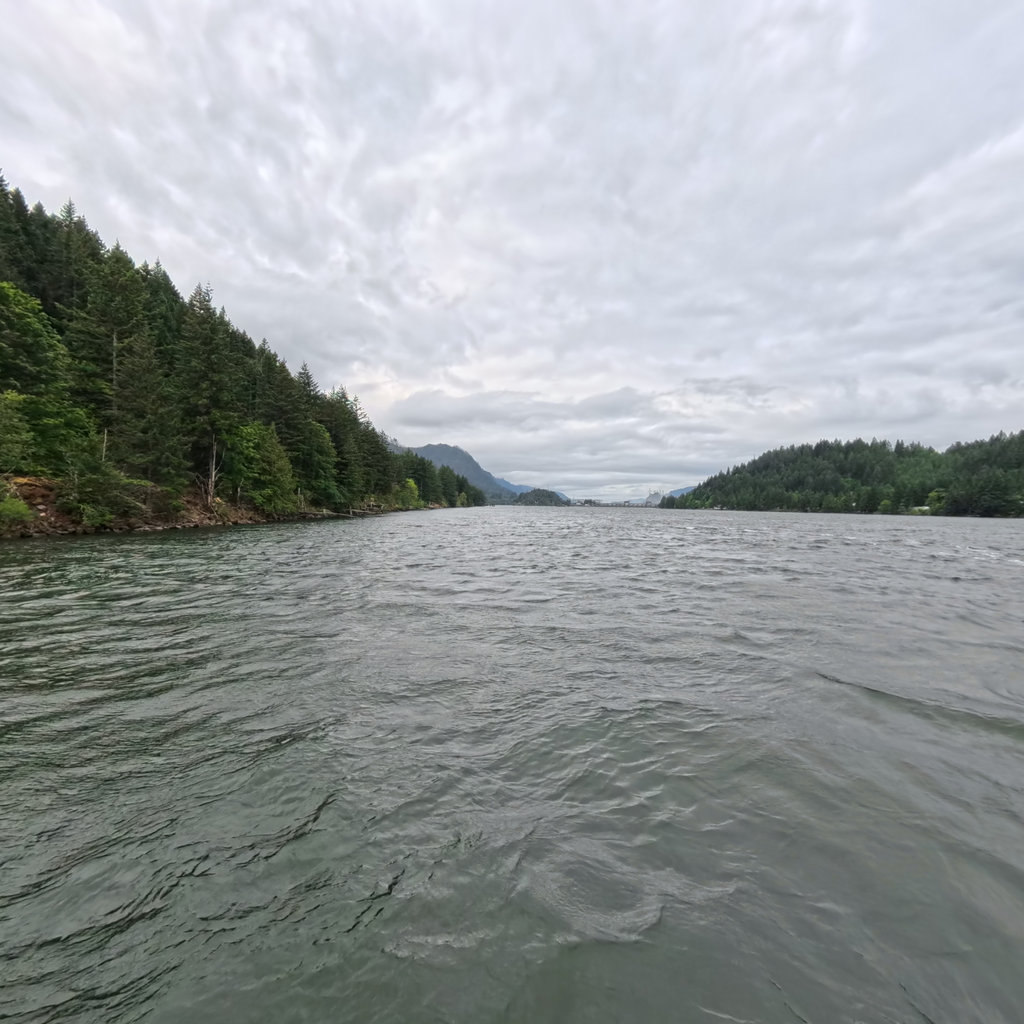
On our way to this village we passed several beautiful cascades which fell from a great height over the stupendous rocks that nearly enclose the river on both sides, except for a small bottom on the south side in which our hunters were camped. The most remarkable of these cascades falls about 300 feet perpendicularly over a solid rock into a narrow bottom of the river on the south side. It is a large creek, situated about 5 miles above our camp of last evening. Several small streams fall from a much greater height, and in their descent become a perfect mist which, collecting on the rocks below, again becomes visible and descends a second time in the same manner before reaching the base of the rocks. The hills have now become mountains; high on each side, rocky and steep, and generally covered with fir and white cedar. We saw some turkey buzzards this morning of the species common to the United States, which are the first we have seen on this side of the Rocky Mountains.

During our halt at this village, the grand chief and two inferior chiefs of the Chil-luck-kit-to-quaw nation arrived with several men and women of their nation in two large canoes. These people were on their way back up the river, having been on a trading voyage to the Columbian valley, and were loaded with wappetoe, dried anchovies, and some beads, etc., which they had received in exchange for dried and pounded salmon, shappelell, beargrass, etc. These people had been very kind to us as we descended the river, so we smoked with them and treated them with every attention.

At 2 P.M. we renewed our voyage. We passed under the Beacon Rock on the north side, to the left of two small islands situated near the shore. At 4 P.M. we arrived at the Clah-clel-lah village. Here we found the natives busily engaged in building their new dwellings, which appear to be rather of a temporary kind; most likely they only reside here during the salmon season. We bought two dogs from these people, who, like those of the village below, were sulky and ill-disposed. They are great thieves, and we are obliged to keep them at a proper distance from our baggage.

As we could not ascend the rapid by the north side of the river with our large canoes, we crossed to the opposite side and entered the narrow channel that separates Brant Island from the south shore. The evening being far spent and the wind high, raining and very cold, we thought it best not to attempt the rapids this evening; we therefore sought a safe harbor in this narrow channel and camped on the main shore. Our small canoe, with Drewer and the two Fieldses, was unable to cross the river with us because of the waves; they therefore towed her up along the north side of the river and camped opposite the upper point of Brant Island.

After stopping this evening, I took a turn with my gun in order to kill a deer, but was unsuccessful. I saw much fresh sign. The fir has been recently damaged by a fire near this place, and many of the trees have discharged considerable quantities of rosin. We directed that Collins should hunt for a few hours tomorrow morning, and that Gibson and his crew should remain at this place until we returned, employing themselves in collecting rosin, which our canoes are now in need of.

This modernization is AI-generated for accessibility. The original above is the authoritative version.

Our Partners