Clark: April 14, 1806
Monday April 14th 1806 This morning at 7 oClock we were joined by Sgt.
Pryor and they three hunters they brought with them 4 deer which drewyer
had killed yesterday. we took brackfast and departed at 9 A.M. the wind
rose and Continued to blow hard all day but not so violent as to prevent
our proceeding. we kept Close allong the N. Shore all day. the river from
the rapids to the Commencement of the narrows is from 1/2 to 3/4 of a Mile
in wedth, and possesses but little Current. the bead is rock except at the
enterence of Labiech’s river which heads in Mt. Hood and like the quick
Sand River brings down from thence Vast bodies of Sand the Mountains
through which the river passes nearly to Cataract River are high broken
rocky, particularly Covered with fir and white Cedar, and in maney places
very romantic scenes. Some handsom Cascades are Seen on either Side
tumbling from the Stupendious rocks of the mountains into the river. I
observe near the river the long leafed Pine which increas as we assend and
Superseeds the fir altogether about the Sepulchre rock. We find the trunks
of maney large pine trees Standing erect as they grew, at present in 30
feet water; they are much doated and none of them vegitateing. at the
lowest water of the river maney of those trees are in 10 feet water. the
Cause I have attempted to account for as I decended. at 1 P M. we arrived
at a large village Situated in a narrow bottom on the N. Side a little
above the enterance of Canoe Creek. their houses are reather detached, and
extend for Several Miles. they are about 20 in number. those people Call
themselves Wil-la-cum. they differ but little in appearance dress &c.
from those of the rapids. their men have Some legins and mockersons among
them. those are in the Stile of Chopunnish. they have Some good horss of
which we Saw 10 or 12 these are the first horses we have met with Since we
left this neighbourhood last fall in Short the Country below this place
will not permit the use of this valuable animal except in the Columbian
vally, and there the present inhabitents have no use for them as they
reside imediately on the river and the Country is too thickly timbd. We
halted at this village Dined and purchased five dogs, Some roots
Chappalell, Philberds and dried berries of the inhabitents. here I
observed Several habitations under ground; they were Sunk about 8 feet
deep and covered with Strong timber and Several feet of earth in a conic
form. those habitations are avacuated at present. they are about 16 feet
diamieter, nearly Circular, and are entered through a hole at top which
appears to answer the double purpose of a Chimney and a dore. from this
enterance you decend to the flore by a ladder. the present habitations of
those people were on the Surface of the ground and do not differ from
those of the tribes about the Rapids. their language is the Same with the
Che luck kit to quaws. these people appeared very friendly. Some of them
informed us that they had latterly returned from the War excurtion against
the Snake Indians who inhabit the upper part of the Multnomah river to the
S. E. of them they Call them To wan nah hi ooks. that they had been
fortunate in the expidition and had taken from their enimies most of the
horses which we Saw in their possession. after dinner we proceeded on our
voyage. I walked on Shore with Shabono on the N. Side through a handsom
bottom. met Several parties of women and boys in Serch of herbs &
roots to Subsist on maney of them had parcels of the Stems of the
Sunflower. I joined Capt Lewis and the party at 6 miles, at which place
the river washed the bottom of high Clifts on the N. Side. Several Canoes
over take us with families moveing up. we passed 3 encampments and came
too in the mouth of a Small Creek on the N. Side imediately below a
village and opposit the Sepulchar rock. this village Consists of about 100
fighting men of Several tribes from the plains to the North Collected here
waiting for the Salmon. they do not differ in any respect from those
below. many of them visited our Camp this evening and remaind. with us
untill we went to bead. they then left us and returned to their quarters.
made ____ miles.
Entities mentioned in this entry
Auto-extracted from the entry text. Hover any entity for context.
Terrain360 · the place today
Celilo Falls and The Dalles portage in 360°
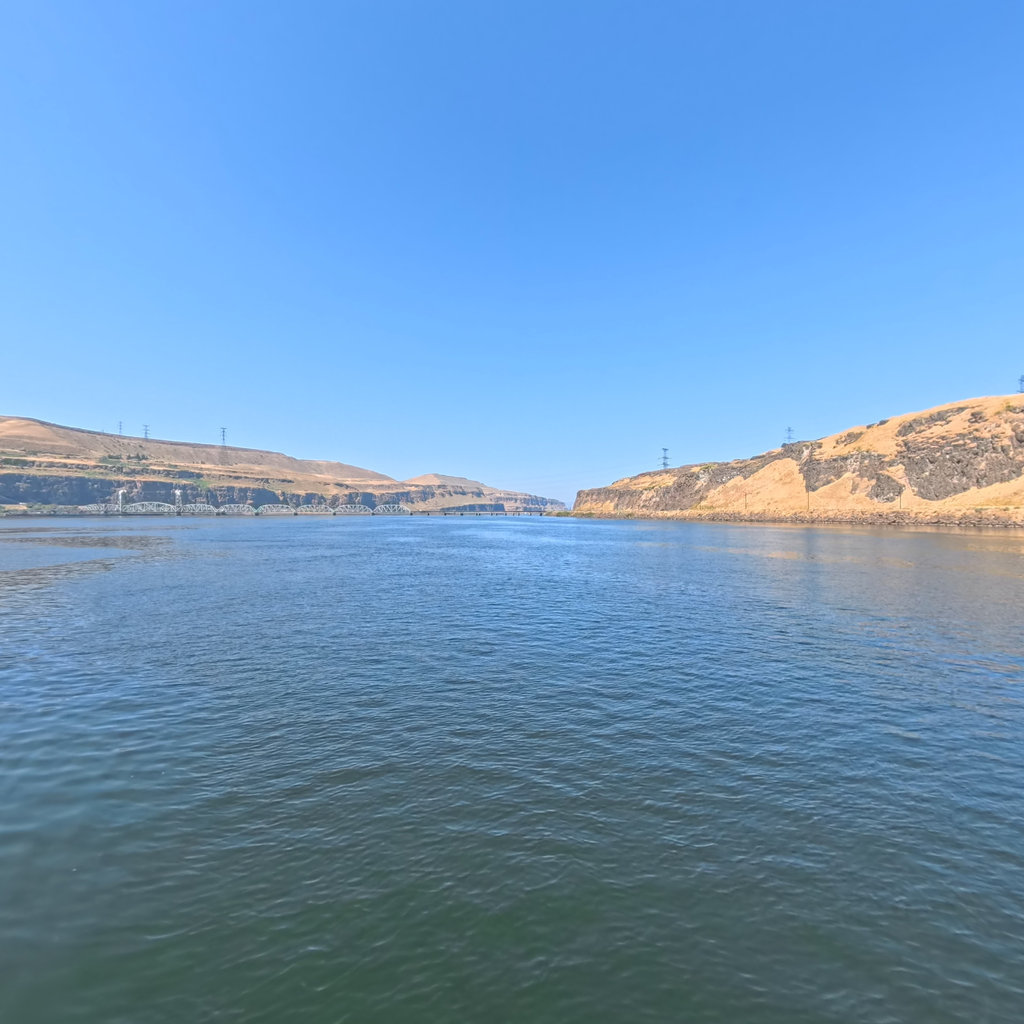
10 frames across 1.8 mi of the route around this location
Analyses
- First Horses Since October: Four Voices Above the Rapids
- François Labiche: Hunter, Waterman, and Interpreter of the Corps of Discovery
- Toussaint Charbonneau: The Interpreter Who Brought Sacagawea
- The Nez Perce (Chopunnish): Allies of the Bitterroot and Kooskooske
- George Drouillard: Hunter, Interpreter, and Sign-Talker of the Corps
Artwork
Help improve this record
See something that needs correcting, or know a source we are missing? The archive gets better through its readers.


