Journal Entry

Clark: August 31, 1804

August 31, 1804
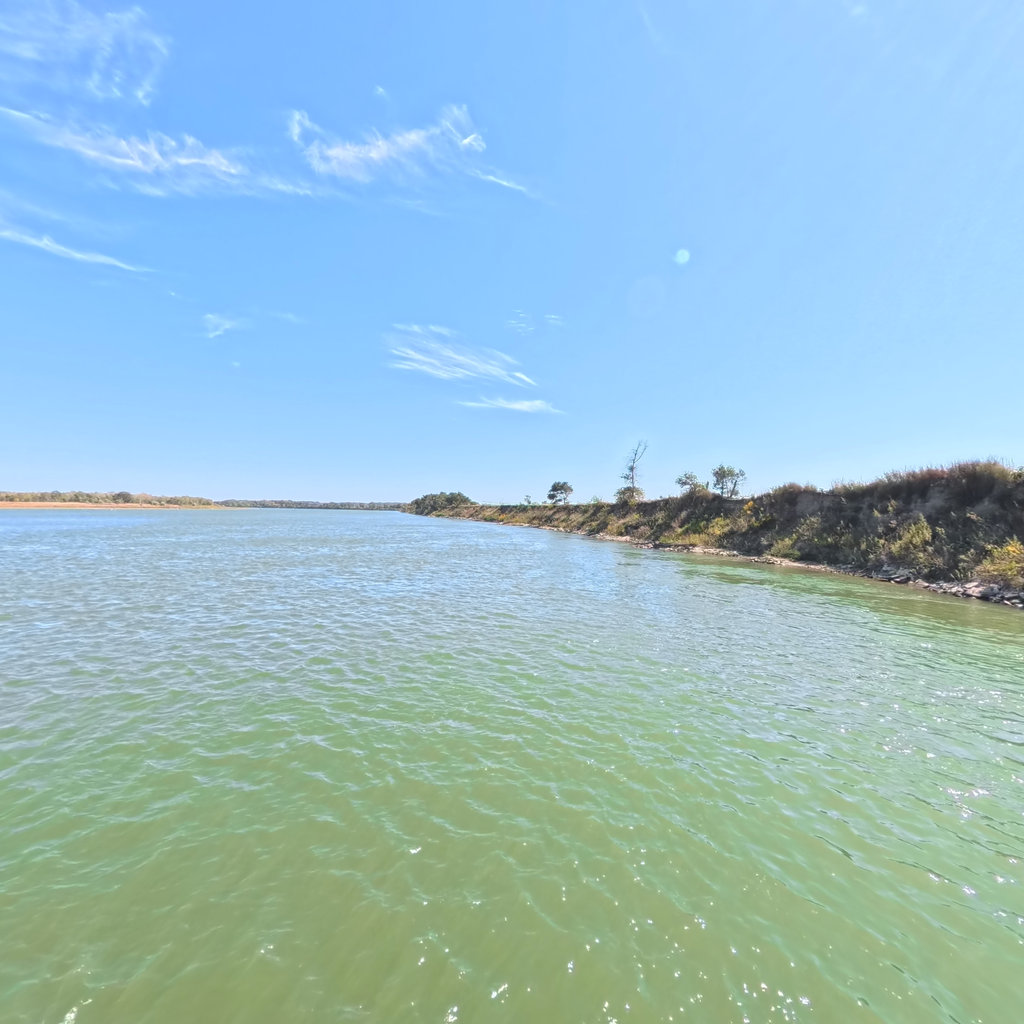
Calumet Bluff, meeting with Yankton Sioux
AI Summary

On a fair Friday near the Yankton Sioux camp, the captains held a council where Chief Shake Hand and several other chiefs delivered speeches accepting the Americans' message, asking for traders, powder, ball, and clothing, and agreeing to visit the President. Clark issued certificates and tobacco to two warriors and commissioned Pierre Dorion to broker peace among the Sioux, Omahas, Poncas, Pawnees, Otoes, and Missouris and escort chiefs to Washington. Clark recorded a Sioux vocabulary and notes on the nation's 20 tribes, trade, and wars. Dorion crossed the river with the chiefs that evening before a violent northwest windstorm and rain struck.

31st of August Friday rose early a fair Daya curioes Society among
this nation worthey of remark, ie, formed of their active deturmined young
men, with a vow never to give back, let the danger or deficuelty be what
it may, in war parties they always go forward, without Screening
themselves behind trees or anything else, to this vow they Strictly adheer
dureing their Lives, an Instance of it, is last winter on a march in
Crossing the Missourei a hole was in the ice immediately in their Course
which might easily be avoided by going around, the fore most man went on
and was drowned, the others were caught by their party and draged aroundin
a battle with the Crow de Curbo Indians out of 22 of this Society 18 was
killed, the remaining four was draged off by their friends, and are now
herethey assocate together Camp together and are merry fellows,
This Custom the Souex learned of the de Carbours inhabiting the Gout Noie
or Black mountain all the Chiefs Delivered a Speech agreeing to what we
Said &. &. & beged which I answered from my notes. We made or
gav a certificate to two Brave men the attendants of the Great Chief gave
them Some tobacco and prepared a Commission for Mr. Darion to make a peace
with all the nations in the neighbourhood, Mahas, Porncases, Panic, Loups,
Ottoes and Missouries& to take to the President Some of the Gt
Chiefs of each nations who would accompany him allso to do certain other
things, and wrot Instructionsgave him a flag and Some Cloathsthe
Chiefs Sent all their young men home, and they Stayed for Mr. Dorionin
the evening late we gave the Comsn. & Instruction to Mr. Durion &
he recved them with pleasa, & promised to do all which was necessary.
I took a Vocabulary of the Seouex language, and a fiew answers to Some
queries I put to Mr. Pitte Dorion respecting the War No. Situation Trad
&c. &. of that people which is divided into 20 tribes possessing
Sepperate interest they are numerous between 2 & 3000 men, divided
into 20 tribes who view their interests as defferent Some bands at War
with Nations which other bands are at peaceThis nation call
themselves-Dar co tar. The french call them Souex Their language is not
perculiar to themselves as has been Stated, a great many words is the Same
with the Mahas, Ponckais, Osarge, Kanzies &c. Clearly proves to me
those people had the Same Oregeanthis nations inhabit the red river
of Hudson bay St. Peters Missippi, Demoin R. Jacque & on the Missourie
they are at War with 20 nations, and at piece with 8 onlythey
recved their trade from the British except a few on the Missourie they
furnish Beaver Martain Loues orter, Pekon Bear and Deer and have forty
Traders at least among them. The names of the Different bands of this
nation are-

1st Che the ree or Bois ruley (the present band) Inhabit the Souex Jacque
& Demoin Rivers

2nd Ho in de bor to or poles. They live on the head of the Suouex River

3rd Me ma car jo (or make fence on the river.) the Country near the Big
bend of the Missouri.

4th Son on to ton (People of the Prarie) they rove North of the Missourie
in the Praries above.

5th Wau pa Coo do (Beeds) they live near the Prarie de Chaine on the
Missippi

6th Te tar ton (or Village of Prarie) on the waters of the Mississippi
above Prate de Chain (Dog Prarie)

7th Ne was tar ton (Big Water Town) on the Mississippi above the mouth of
the St. Peters River.

8th Wau pa to (Leaf Nation). 10 Leagues up St. Peters

9th Cass car ba (White man) 35 Lgs. up St Peters

10 Mi ac cu op si ba (Cut Bank) reside on the head of St. Peters river

11 Son onon St. Peters in the Praries

12th Se si toons40 Leagues up St Peters.

The names of the other tribes I could not get In

31st August 1804 Speeches

at 8 oClock the Chiefs and warriers met us in Council all with their pipes
with the Stems presented towards us, after a Silence of abt. ____ The
great Chief Dressed himself in his fine Cloathes and two warriers in the
uniform and armer of their Nation Stood on his left with a War Club &
Speer each, & Dressed in feathurs.

The Shake hand 1st Chief Spoke

My Father. I am glad to here the word of my G. F. and all my warriers and
men about me are also glad.

My Father.now I see my two fathers the Children, of my great
father, & what you have Said I believe and all my people do believ
also

My FatherWe are verry glad you would take pitty on them this Day,
we are pore and have no powder and ball.

My Father.We are verry Sorry our women are naked and all our
children, no petiecoats or cloathes

My FatherYou do not want me to Stop the boats going up if we See,

I wish a man out of your boat to bring about a peace, between all the
Indians, & he can do So.

My FatherListen to what I say I had an English medal when I went to
See them, I went to the Spanoriards they give me a meadel and Some goods,
I wish you would do the Same for my people.

My Father.I have your word I am glad of it & as Soon as the Ice
is don running I will go down & take with me, Some great men of the
other bands of the Soues

My FatherI will be glad to See My Grand Father but our Women has
got no Cloathes and we have no Powder & Ball, take pity on us this
day.

My FatherI want to listen and observe wath you Say, we want our old
friend (Mr. Durion) to Stay with us and bring the Indians with my Self
down this Spring.

My FatherI opend my ears and all my yound men and we wish you to
let Mr. Durion Stay, and a Perogue for to take us down in the Spring.

The speach of th White Crain Mar to ree 2d Chief

My Fathr’s listen to my word, I am a young man and do not intend to talk
much, but will Say a few words.

My Fathermy father was a Chief, and you have made me a Chief I now
think I am a chief agreeable to your word as I am a young man and
inexperienced, cannot say much What the Great Chief has Said is as much as
I could Say

Par nar ne Ar par be Struck by the Pana 3d Chief

My father’s I cant Speek much I will Speek a litle to you

My fathers.ther’s the Chiefs you have made high, we will obey them,
as also my young men, the Pipe I hold in my hand is the pipe of my father,
I am pore as you See, take pity on me I believe what you have Said

My fathersYou think the great meadel you gave My great Chief
pleases me and the small one you gave me gives me the heart to go with him
to See my Great father. What the Great Chief has Said is all I could Say.
I am young and Cant Speek.

A Warrier by name Tar ro mo nee Spoke

My fatherI am verry glad you have made this man our great

Chief, the British & Spaniards have acknowledged him before but never
Cloathed him. you have Cloathed him, he is going to see our Great father,
We do not wish to spear him but he must go and see his great father

My Fathr’s, my great Chief must go and See his Gd father, give him some of
your milk to Speek to his young men,

My father. our people are naked, we wish a trader to Stop among us, I
would be verry glad our two fathers would give us some powder and ball and
some Milk with the flag.

Speech of Ar ca we char chi the half man 3d Chief

My fathr’s I do not Speak verry well, I am a pore man and

My Fathr’s. I was once a Chiefs boy now I am a man and a Chief of Some
note

My Fat hr’sI am glad you have made my old Chief a fine and a great
man, I have been a great warrier but now I here your words, I will berry
my hatchet and be at peace with all & go with my Great Chief to see my
great father.

My fath-s. When I was a young man I went to the Spaniards to see ther
fassion, I like you talk and will pursue you advice, Since you have given
me a meadal. I will tell you the talk of the Spaniards

My Father’s.I am glad my Grand father has sent you to the read
people on this river, and that he has given us a flag large and handsom
the Shade of which we can Sit under

My Fathr’s.We want one thing for our nation very much we have no
trader, and often in want of goods

My FathersI am glad as well as all around me to here your word, and
we open our ears, and I think our old Frend Mr. Durion can open the ears
of the other bands of Soux. but I fear those nations above will not open
their ears, and you cannot I fear open them

My Fathers. You tell us that you wish us to make peace with the Ottoes
& M. You have given 5 Medles I wish you to give 5 Kigz with them

My Fathers.My horses are pore running the Buffalow give us

Some powder and ball to hunt with, and leave old Mr. Durion with us to get
us a trader

My Father.The Spaniards did not keep the Medal of the Token of our
Great Chief when they gave him one You have Dressed him and I like it I am
pore & take pitey on me

My fathersI am glad you have put heart in our great Chief he can
now speak with confidence, I will support him in all your Councilsafter
all the chief presented the pipe to us

The Half man rose & spoke as follows viz.

My fatherWhat you have Said is well, but you have not given any
thing to the attendants of the Great Chiefs after which

In the evening late we gave Mr. Dorion a bottle of whiskey and himself
with the Chiefs Crossed the river and Camped on the opposit bank Soon
after a violent Wind from the N W. accompanied with rain

31st of August We gave a Certificate to two Men of War, attendants on the
Chief gave to all the Chiefs a Carrot of Tobaccohad a talk with Mr.
Dorion, who agreed to Stay and Collect the Chiefs from as many Bands of
Soux as he coud this fall & bring about a peace between the Sciuex
& their neighbours &. &c. &c.

after Dinner we gave Mr. Peter Darion, a Comission to act with a flag
& some Cloathes & Provisions & instructions to bring about a
peace with the Scioux Mahars, Panies, Ponceries, Ottoes & Missouriesand
to employ any trader to take Some of the Cheifs of each or as many of
those nations as he Could Perticularly the SceiouexI took a
Vocabulary of the Scioux Languageand the Answer to a fiew quaries
Such as refured to ther Situation, Trade, number War, &c. &c.This
Nation is Divided into 20 Tribes, possessing Seperate interests-
Collectively they are noumerous Say from 2 to 3000 men, their interests
are so unconnected that Some bands are at war with Nations which other
bands are on the most friendly terms. This Great Nation who the French has
given the nickname of Sciouex, Call them selves Dar co tar their language
is not peculiarly their own, they Speak a great number of words, which is
the Same in every respect with the Maha, Poncaser, Osarge & Kanzies.
which Clearly proves that those nation at Some Period not more that a
century or two past the Same nationThose Dar ca ter’s or Scioux
inhabit or rove over the Countrey on the Red river of Lake Winipeck, St.
Peter’s & the West of the Missippie above Prarie De chain heads of
River Demoin, and the Missouri and its waters on the N. Side for a great
extent. They are only at peace with 8 Nations, & agreeable to their
Calculation at war with twenty odd.Their trade Corns from the
British, except this Band and one on Demoin who trade with the Traders of
St LouisThe furnish Beaver Martain, Loues Pikon, Bear and Deer
Skins-and have about 40 Traders among them. The Dar co tar or Sceouex rove
& follow the Buffalow raise no corn or any thing else the woods &
praries affording a Suffcency, the eat Meat, and Substitute the Ground
potato which grow in the Plains for bread The names of the Different
Tribes or Canoes of the Sceoux or Dar co tar Nation

1st Che cher ree Yank ton (or bois rulay) now present inhabit the Sciouex
& Demoin rivers and the Jacques.

2nd Hoin de borto (Poles) they rove on the heads of Souix & Jacqus
Rivers-

3rd Me ma car jo (make fence of the river) rove on the Countrey near the
big bend of the Missouries

4th Sou on, Teton (People of the Prarie) the rove in the Plains N. of the
Riv Missouries above this

5th Wau pa coo tar (Leaf beds) the live near the Prare de Chain near the
Missippi

6th Te tar ton (or village of Prarie) rove on the waters of the
Mississippi above Prarie de Chain

7th Ne was tar ton (big water Town) rove on the Missippi above the St.
Peters River

8th Wau pa tow (Leaf nation) live 10 Leagues up St Peters river

9th Cas Car ba (white man) live 35 Leagus up St Peters river

10th Mi ca cu op si ba (Cut bank) rove on the head of St. Peters

11th Sou on (-) rove on St peters river in the Prareis

12th Sou si toons (-) live 40 Legus up the St peters river

The names of the other bands neither of the Souex’s interpters could
inform me. in the evening late we gave Mr. Dourion a bottle of whiskey,
& he with the Cheifs & his Son Crossed the river and Camped on the
Opposit bankSoon after night a violent wind from the N W. with rain
the rain Continud the greater part of the night The river a riseing a
little.

August the 31st 1804 after the Indians got their Brackfast the Chiefs met
and arranged themselves in a row with elligent pipes of peace all pointing
to our Seets, we Came foward and took our Seets, the Great Cheif The Shake
han rose and Spoke to Some length aproving what we had Said and promissing
to pursue the advice.

Mar to ree 2d Cheif (White Crain) rose and made a Short Speech and refured
to the great Chief

Par nar ne Ar par be 3rd Cheif rose and made a Short Speech

Ar ca we char the (the half man) 3d Chief rose & spoke at Some length.
Much to the purpose.

The othe Cheif Said but little one of the warreirs Spoke after all was don
& promissed to Support the Chiefs, the promisd to go and See their
Great father in the Spring with Mr. Dorion, and to do all things we had
advised them to do. and all Concluded by telling the distresses of ther
nation by not haveing traders, & wished us to take pity on them, the
wanted Powder Ball & a little milk

last night the Indians Danced untill late in their dances we gave them Som
knives Tobaco & belts & tape & Binding with which they wer
Satisfied

Read this entry in modern English AI-translated

31st of August, Friday. Rose early. A fair day. A curious society among this nation is worthy of remark, that is, one formed of their active, determined young men, with a vow never to give back, let the danger or difficulty be what it may. In war parties they always go forward, without screening themselves behind trees or anything else, and to this vow they strictly adhere during their lives. An instance of it is that last winter, on a march, in crossing the Missouri, a hole was in the ice immediately in their course which might easily have been avoided by going around. The foremost man went on and was drowned; the others were caught by their party and dragged around. In a battle with the Crow de Curbo Indians, out of 22 of this society, 18 were killed; the remaining four were dragged off by their friends, and are now here. They associate together, camp together, and are merry fellows. This custom the Sioux learned from the de Carbours, who inhabit the Gout Noie or Black Mountain.

All the chiefs delivered a speech agreeing to what we said, etc., and begged, which I answered from my notes. We made or gave a certificate to two brave men, the attendants of the great chief, gave them some tobacco, and prepared a commission for Mr. Darion to make a peace with all the nations in the neighborhood — Mahas, Poncas, Pawnees, Loups, Otoes, and Missouris — and to take to the President some of the great chiefs of each nation who would accompany him, and also to do certain other things. We wrote instructions, gave him a flag and some clothes. The chiefs sent all their young men home, and they stayed for Mr. Dorion. In the evening late we gave the commission and instructions to Mr. Dorion, and he received them with pleasure, and promised to do all which was necessary.

I took a vocabulary of the Sioux language, and a few answers to some queries I put to Mr. Pierre Dorion respecting the war, number, situation, trade, etc., of that people. They are divided into 20 tribes possessing separate interests. They are numerous, between 2,000 and 3,000 men, divided into 20 tribes who view their interests as different — some bands at war with nations with which other bands are at peace. This nation calls themselves Dar co tar (Dakota). The French call them Sioux. Their language is not peculiar to themselves as has been stated; a great many words are the same as with the Mahas, Poncas, Osage, Kansas, etc., which clearly proves to me those people had the same origin. This nation inhabits the Red River of Hudson Bay, the St. Peter's, the Mississippi, the Des Moines River, the Jacques, and the Missouri. They are at war with 20 nations, and at peace with only 8. They receive their trade from the British, except a few on the Missouri. They furnish beaver, marten, lynx, otter, fisher, bear, and deer, and have at least forty traders among them.

The names of the different bands of this nation are:

1st. Che the ree, or Bois Brule (the present band) — inhabit the Sioux, Jacques, and Des Moines Rivers.

2nd. Ho in de bor to, or Poles — they live on the head of the Sioux River.

3rd. Me ma car jo (or Make Fence on the River) — the country near the Big Bend of the Missouri.

4th. Son on to ton (People of the Prairie) — they rove north of the Missouri in the prairies above.

5th. Wau pa Coo do (Beads) — they live near the Prairie du Chien on the Mississippi.

6th. Te tar ton (or Village of Prairie) — on the waters of the Mississippi above Prairie du Chien (Dog Prairie).

7th. Ne was tar ton (Big Water Town) — on the Mississippi above the mouth of the St. Peter's River.

8th. Wau pa to (Leaf Nation) — 10 leagues up the St. Peter's.

9th. Cass car ba (White Man) — 35 leagues up the St. Peter's.

10th. Mi ac cu op si ba (Cut Bank) — reside on the head of the St. Peter's River.

11th. Son onon — on the St. Peter's, in the prairies.

12th. Se si toons — 40 leagues up the St. Peter's.

The names of the other tribes I could not get.

31st August 1804 — Speeches.

At 8 o'clock the chiefs and warriors met us in council, all with their pipes with the stems presented toward us. After a silence of about ____, the great chief dressed himself in his fine clothes, and two warriors in the uniform and armor of their nation stood on his left with a war club and spear each, and dressed in feathers.

The Shake Hand, 1st chief, spoke:

My Father — I am glad to hear the word of my great father, and all my warriors and men about me are also glad.

My Father — Now I see my two fathers, the children of my great father, and what you have said I believe, and all my people do believe also.

My Father — We are very glad you would take pity on them this day; we are poor and have no powder and ball.

My Father — We are very sorry our women are naked, and all our children, no petticoats or clothes.

My Father — You do not want me to stop the boats going up if we see. I wish a man out of your boat to bring about a peace between all the Indians, and he can do so.

My Father — Listen to what I say. I had an English medal when I went to see them; I went to the Spaniards, and they gave me a medal and some goods. I wish you would do the same for my people.

My Father — I have your word, I am glad of it, and as soon as the ice is done running I will go down and take with me some great men of the other bands of the Sioux.

My Father — I will be glad to see my grandfather, but our women have got no clothes, and we have no powder and ball. Take pity on us this day.

My Father — I want to listen and observe what you say. We want our old friend (Mr. Dorion) to stay with us, and bring the Indians with myself down this spring.

My Father — I opened my ears, and all my young men, and we wish you to let Mr. Dorion stay, and a pirogue to take us down in the spring.

The speech of the White Crane, Mar to ree, 2nd chief:

My Fathers — Listen to my word. I am a young man and do not intend to talk much, but will say a few words.

My Father — My father was a chief, and you have made me a chief. I now think I am a chief agreeable to your word. As I am a young man and inexperienced, I cannot say much. What the great chief has said is as much as I could say.

Par nar ne Ar par be, Struck by the Pana, 3rd chief:

My Fathers — I can't speak much. I will speak a little to you.

My Fathers — There are the chiefs you have made high; we will obey them, as also my young men. The pipe I hold in my hand is the pipe of my father. I am poor as you see; take pity on me. I believe what you have said.

My Fathers — You think the great medal you gave my great chief pleases me, and the small one you gave me gives me the heart to go with him to see my great father. What the great chief has said is all I could say. I am young and can't speak.

A warrior by name Tar ro mo nee spoke:

My Father — I am very glad you have made this man our great chief. The British and Spaniards have acknowledged him before but never clothed him. You have clothed him; he is going to see our great father. We do not wish to spare him, but he must go and see his great father.

My Fathers — My great chief must go and see his grandfather. Give him some of your milk to speak to his young men.

My Father — Our people are naked. We wish a trader to stop among us. I would be very glad if our two fathers would give us some powder and ball, and some milk with the flag.

Speech of Ar ca we char chi, the Half Man, 3rd chief:

My Fathers — I do not speak very well; I am a poor man.

My Fathers — I was once a chief's boy; now I am a man and a chief of some note.

My Fathers — I am glad you have made my old chief a fine and a great man. I have been a great warrior, but now I hear your words. I will bury my hatchet and be at peace with all, and go with my great chief to see my great father.

My Fathers — When I was a young man I went to the Spaniards to see their fashion. I like your talk and will pursue your advice. Since you have given me a medal, I will tell you the talk of the Spaniards.

My Fathers — I am glad my grandfather has sent you to the red people on this river, and that he has given us a flag large and handsome, the shade of which we can sit under.

My Fathers — We want one thing for our nation very much: we have no trader, and are often in want of goods.

My Fathers — I am glad, as well as all around me, to hear your word, and we open our ears. I think our old friend Mr. Dorion can open the ears of the other bands of Sioux, but I fear those nations above will not open their ears, and you cannot, I fear, open them.

My Fathers — You tell us that you wish us to make peace with the Otoes and Missouris. You have given 5 medals; I wish you to give 5 kegs with them.

My Fathers — My horses are poor from running the buffalo. Give us some powder and ball to hunt with, and leave old Mr. Dorion with us to get us a trader.

My Father — The Spaniards did not keep the medal of the token of our great chief when they gave him one. You have dressed him, and I like it. I am poor; take pity on me.

My Fathers — I am glad you have put heart in our great chief; he can now speak with confidence. I will support him in all your councils.

After all, the chief presented the pipe to us.

The Half Man rose and spoke as follows, viz.:

My Father — What you have said is well, but you have not given anything to the attendants of the great chiefs.

After which, in the evening late, we gave Mr. Dorion a bottle of whiskey, and he himself with the chiefs crossed the river and camped on the opposite bank. Soon after, a violent wind from the N.W., accompanied with rain.


31st of August. We gave a certificate to two men of war, attendants on the chief, and gave to all the chiefs a carrot of tobacco. Had a talk with Mr. Dorion, who agreed to stay and collect the chiefs from as many bands of Sioux as he could this fall, and bring about a peace between the Sioux and their neighbors, etc., etc., etc.

After dinner we gave Mr. Peter Dorion a commission to act, with a flag and some clothes and provisions, and instructions to bring about a peace with the Sioux, Mahas, Pawnees, Poncas, Otoes, and Missouris, and to employ any trader to take some of the chiefs of each, or as many of those nations as he could, particularly the Sioux. I took a vocabulary of the Sioux language, and the answers to a few queries such as referred to their situation, trade, number, war, etc., etc.

This nation is divided into 20 tribes, possessing separate interests. Collectively they are numerous, say from 2,000 to 3,000 men. Their interests are so unconnected that some bands are at war with nations with which other bands are on the most friendly terms. This great nation, whom the French have given the nickname of Sioux, call themselves Dar co tar (Dakota). Their language is not peculiarly their own; they speak a great number of words which are the same in every respect as with the Maha, Poncas, Osage, and Kansas. This clearly proves that those nations at some period not more than a century or two past were the same nation. Those Dar ca ter, or Sioux, inhabit or rove over the country on the Red River of Lake Winnipeg, the St. Peter's, and the west of the Mississippi above Prairie du Chien, the heads of the Des Moines River, and the Missouri and its waters on the north side for a great extent. They are only at peace with 8 nations, and, agreeable to their calculation, at war with twenty odd. Their trade comes from the British, except this band and one on the Des Moines, who trade with the traders of St. Louis. They furnish beaver, marten, lynx, fisher, bear, and deer skins, and have about 40 traders among them. The Dar co tar, or Sioux, rove and follow the buffalo; they raise no corn or anything else, the woods and prairies affording a sufficiency. They eat meat, and substitute the ground potato, which grows in the plains, for bread.

The names of the different tribes or canoes of the Sioux or Dar co tar nation:

1st. Che cher ree Yank ton (or Bois Brule) — now present, inhabit the Sioux and Des Moines rivers and the Jacques.

2nd. Hoin de borto (Poles) — they rove on the heads of the Sioux and Jacques rivers.

3rd. Me ma car jo (Make Fence of the River) — rove on the country near the Big Bend of the Missouri.

4th. Sou on Teton (People of the Prairie) — they rove in the plains north of the Missouri River above this.

5th. Wau pa coo tar (Leaf Beds) — they live near the Prairie du Chien near the Mississippi.

6th. Te tar ton (or Village of Prairie) — rove on the waters of the Mississippi above Prairie du Chien.

7th. Ne was tar ton (Big Water Town) — rove on the Mississippi above the St. Peter's River.

8th. Wau pa tow (Leaf Nation) — live 10 leagues up the St. Peter's River.

9th. Cas Car ba (White Man) — live 35 leagues up the St. Peter's River.

10th. Mi ca cu op si ba (Cut Bank) — rove on the head of the St. Peter's.

11th. Sou on — rove on the St. Peter's River in the prairies.

12th. Sou si toons — live 40 leagues up the St. Peter's River.

The names of the other bands neither of the Sioux's interpreters could inform me. In the evening late we gave Mr. Dorion a bottle of whiskey, and he, with the chiefs and his son, crossed the river and camped on the opposite bank. Soon after night, a violent wind from the N.W. with rain. The rain continued the greater part of the night. The river rising a little.


August the 31st, 1804. After the Indians got their breakfast, the chiefs met and arranged themselves in a row with elegant pipes of peace, all pointing to our seats. We came forward and took our seats. The great chief, The Shake Hand, rose and spoke at some length, approving what we had said and promising to pursue the advice.

Mar to ree, 2nd chief (White Crane), rose and made a short speech, and referred to the great chief.

Par nar ne Ar par be, 3rd chief, rose and made a short speech.

Ar ca we char the (the Half Man), 3rd chief, rose and spoke at some length, much to the purpose.

The other chief said but little. One of the warriors spoke after all was done, and promised to support the chiefs. They promised to go and see their great father in the spring with Mr. Dorion, and to do all things we had advised them to do. And all concluded by telling the distresses of their nation by not having traders, and wished us to take pity on them; they wanted powder, ball, and a little milk.

Last night the Indians danced until late. In their dances we gave them some knives, tobacco, belts, tape, and binding, with which they were satisfied.

This modernization is AI-generated for accessibility. The original above is the authoritative version.

Our Partners