Journal Entry

Clark: May 27, 1805

May 27, 1805
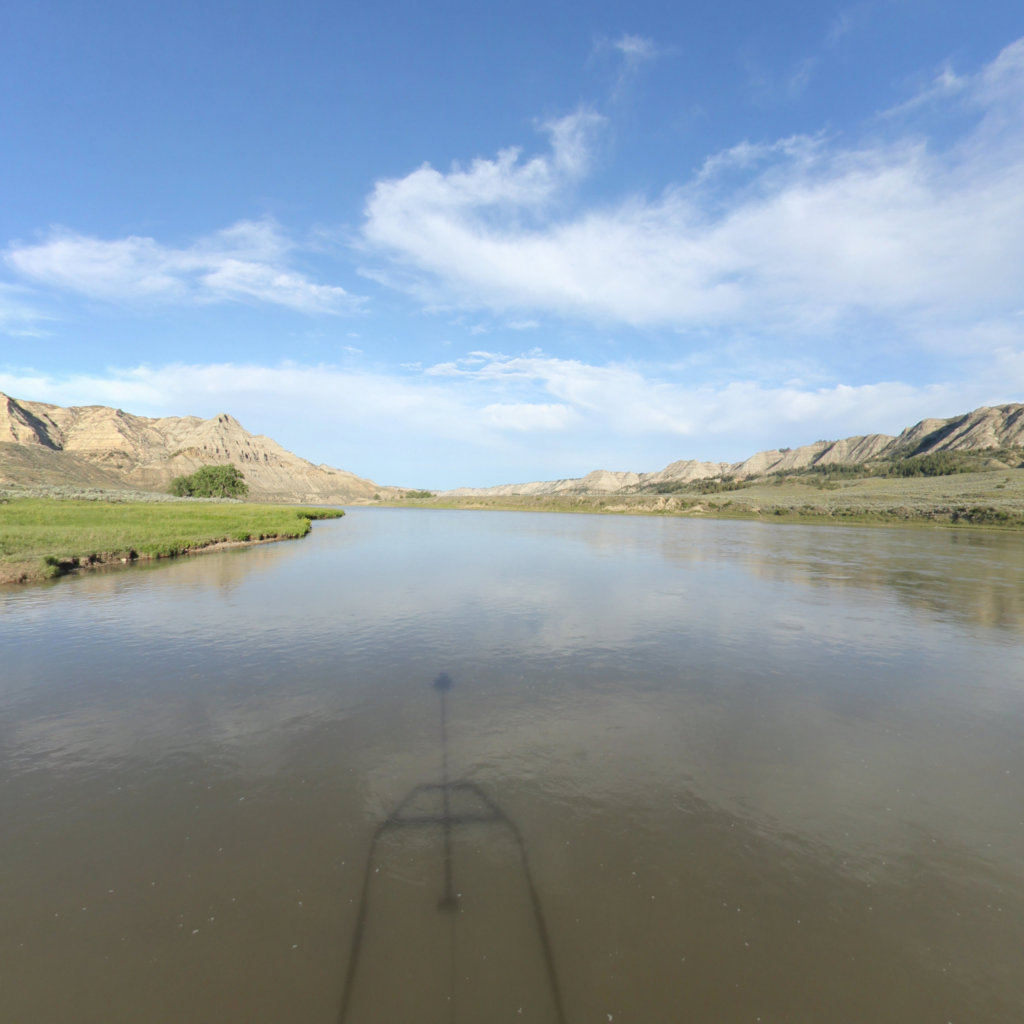
Missouri River, first view of Rocky Mountains
AI Summary

Strong southwest winds delayed departure until about 10 a.m. The party then traveled up a narrow, shoaly stretch of river crowded with rocks washed down from the surrounding bluffs, which created numerous riffles, especially at the mouths of drainages. The hills pressed close on both sides, mostly bare except for scattered pines, and showed colorful strata of sandstone, coal, salts, pumice, and burnt earth. The day was very warm. The men spotted a few small herds of bighorn sheep and two elk, killing one, before camping near two dead-topped trees on the larboard side.

May 27th Monday 1805. The wind blew hard from the S W. which detained us
untill about 10 oClock, at which time we Set out and proceeded on, passed
a Small nacked Island on the Lard Side imediately above the timber in
which we Camped The river is verry Shoaley and the bad places are verry
numerous, i e at the mouth of every Drean the rocks which is a hard dark
gritey Stone is thrown out Some distance in the river which Cause a
Considerable riffle on that Side, the hills approach the river verry Close
on either Side, river narrow & no timber except Some Scattering pine
on the hills & hill Sides, the Salts, Coal, burn hills & Pumice
Stone &c. Continue, the hills are Generally Bluffs of various Coloured
earth most commonly black with different quallities stone intermixed Some
Stratums of Soft Sand Stone, Some hard, Some a dark brown & yellow
hard grit, those Stones are loosened by the earths washing from them into
the river and ultimately role down into the river, which appears to be
Crowded with them. This day is verry wormwe only Saw a fiew Small
herds of the big horn animals on the hills, and two Elk one of which We
killed, we Camped at 2 dead top trees on the Lard Side. The river is Genly
about 200 yards wide and Current very Swift to day and has a verry
perceptiable fall in all its Courseit rises a little.

Read this entry in modern English AI-translated

May 27th Monday 1805. The wind blew hard from the S.W., which detained us until about 10 o'clock, at which time we set out and proceeded on, passed a small naked island on the Lard. (Larboard) side immediately above the timber in which we camped. The river is very shoaly and the bad places are very numerous, i.e. at the mouth of every drain the rocks, which are a hard dark gritty stone, are thrown out some distance into the river, which causes a considerable riffle on that side. The hills approach the river very close on either side; river narrow and no timber except some scattering pine on the hills and hill sides. The salts, coal, burn hills, and pumice stone, etc. continue. The hills are generally bluffs of various colored earth, most commonly black, with different qualities of stone intermixed: some stratums of soft sandstone, some hard, some a dark brown and yellow hard grit. Those stones are loosened by the earth washing from them into the river and ultimately roll down into the river, which appears to be crowded with them.

This day is very warm. We only saw a few small herds of the bighorn animals on the hills, and two elk, one of which we killed. We camped at 2 dead-top trees on the Lard. (Larboard) side. The river is generally about 200 yards wide and the current very swift today, and has a very perceptible fall in all its course. It rises a little.

This modernization is AI-generated for accessibility. The original above is the authoritative version.

Entities mentioned in this entry

Places:
Plants:
Weather:

Auto-extracted from the entry text. Hover any entity for context.

Our Partners